

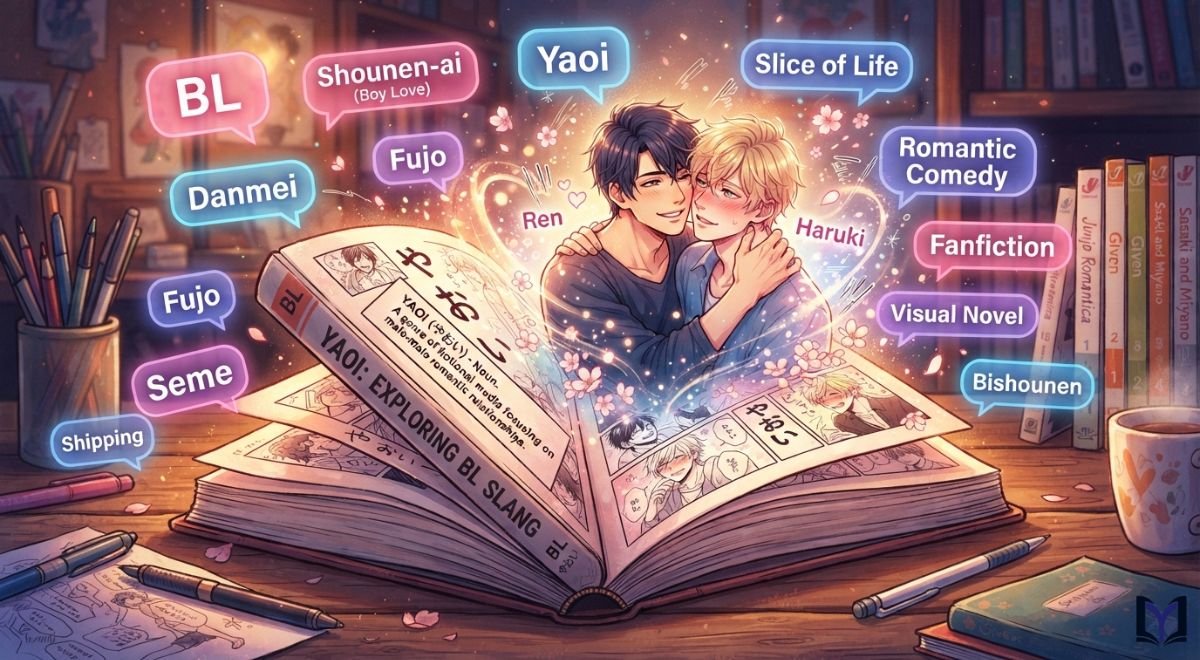
Yaoi Meaning Slang can be confusing if you’ve only seen the word online. It usually refers to fictional stories, manga, or anime featuring romantic relationships between male characters. The term has a long history in Japanese fan culture and is now widely recognized in global BL communities. Depending on the context, yaoi meaning can describe a broad type of male-male romance or content with more mature themes.
You may encounter it in yaoi anime, manga discussions, fanfiction, social media posts, and online fandoms. Understanding the context matters because people use the term differently across Japanese and Western communities. This guide explains its meaning, origins, usage, related terms, and common misconceptions clearly.
What Does Yaoi Mean in Slang?
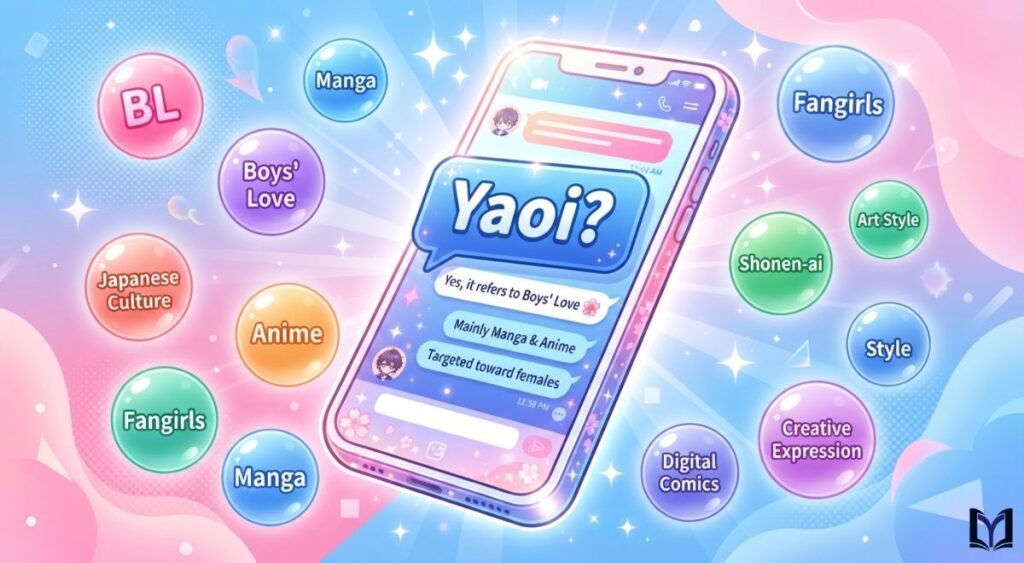
The simplest answer to what does yaoi mean in slang is that it usually refers to fictional media centered on male-to-male relationships, especially romance. The word can describe yaoi stories, manga, anime, fan fiction, fan art, or online discussions about these works. In casual American internet culture, someone might use “yaoi” as shorthand when talking about a particular type of romantic storytelling between male characters. The exact meaning can still depend on the speaker. In some spaces, the word suggests mature or sexual material. In others, it simply identifies a male-male romance category.
The yaoi slang meaning also differs from the word’s historical use. Researchers who study Japanese popular culture place yaoi within a longer development of male-male romance media that includes shōnen’ai and later Boys’ Love genre terminology. Yaoi emerged in the 1980s and originally referred to fan-created works and stories that often had little conventional plot. Today, the term has traveled far beyond its original setting. Therefore, what is yaoi depends partly on whether you’re discussing Japanese publishing history or modern Western fandom.
What Does Yaoi Mean in Text?
When someone asks what does yaoi mean in text, the answer is usually straightforward. The person is normally referring to a genre, fictional pairing, manga, anime, or fandom interest. For example, someone might text, “Is that a yaoi series?” They could simply be asking whether the story contains a male-male romance.
Another person might say, “I found some good yaoi online.” Here, the word acts as a category rather than a description of one specific title. Context matters. If the conversation involves anime recommendations, the meaning will probably relate to yaoi anime or manga. If the conversation involves fan art, shipping, or fanfiction, it may refer to a broader fandom interest.
Where Did the Term Yaoi Come From?
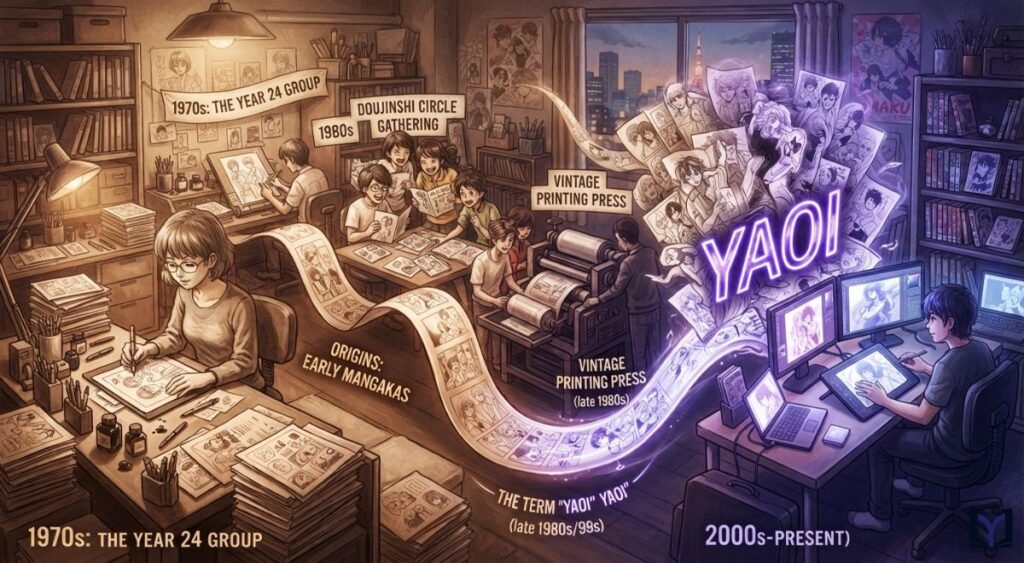
The yaoi origins go back to Japanese fan culture during the late 1970s and 1980s. The term is commonly explained as a shortened form of yama nashi, ochi nashi, imi nashi, a Japanese phrase meaning roughly “no climax, no resolution, no meaning.” It became associated with fan-created works that focused more heavily on male-male relationships than on a traditional story structure. Academic research places the emergence of yaoi in the 1980s after earlier male-male romance traditions had already developed within shōjo manga.
Understanding this history helps explain why the modern word can feel broader than its original meaning. Earlier works existed within Japanese fan publishing and dōjinshi culture, where creators produced and circulated their own material. As these works became more visible, the terminology surrounding them also changed. By the 1990s and later, BL became an increasingly common category in Japan. Scholars note that terms such as shōnen’ai, JUNE, yaoi, and BL have different histories and aren’t always interchangeable. The history of yaoi is therefore less like a straight line and more like a branching road.
Related Articles: IDM Meaning in Text: What Does IDM Mean and How to Use It?
What Does Yaoi Stand For?
The phrase commonly associated with what does yaoi stand for is yama nashi, ochi nashi, imi nashi. The expression describes stories with little emphasis on a conventional dramatic peak, resolution, or larger plot.
That explanation doesn’t mean every modern yaoi title lacks a story. Modern yaoi culture has developed far beyond the playful origins of the label. Many works include detailed character development, conflict, humor, emotional tension, and elaborate relationship dynamics.
What Does Yaoi Mean in Anime and Manga?
The yaoi meaning in anime and manga usually points to fictional stories involving male characters in romantic or sexual relationships. These stories can appear in comics, animation, novels, games, fan works, and other media. The wider tradition is often connected with Boys Love, a Japanese category that includes male-male romance and has developed into a major part of the country’s media culture.
The yaoi meaning in manga can therefore cover more than one style. Some titles focus on emotional intimacy and a gradual romantic bond. Others explore comedy, drama, fantasy, mature themes, or sexual relationships. Not every title has the same tone. Not every work uses the word “yaoi” as its official category either. Publishers and platforms may instead use BL or another genre category.
| Term | General Meaning | Common Context |
| Yaoi | Male-male romance or related fictional media | Fandom and online discussions |
| BL | Broad category for male-male romance media | Japanese publishing and global fandom |
| Shōnen-ai | Older term often linked with softer male-male romance | Historical and fandom usage |
| Yuri | Female-female romance or related media | Anime and manga communities |
| Bara | Distinct male-male media tradition with its own history and conventions | Specialized fandom discussions |
Is Yaoi Always Explicit?
No. Yaoi content doesn’t automatically mean explicit material. Some works emphasize non-explicit romance, friendship, comedy, emotional conflict, or slow-burn romance. Other titles may contain mature themes or explicit sexual material.
Because labels vary across websites, always check the title’s description, age rating, content warnings, and publisher information. A single genre label cannot always tell you everything about a story.
How Is Yaoi Used in Texting and Social Media?
Online, the word “yaoi” often works like a shortcut. Someone may use it to identify an anime, recommend a manga, describe a fictional pairing, or discuss a fandom trend. On yaoi social media, the term can also appear in hashtags and search tags that help users discover related posts. This makes yaoi online less like ordinary slang and more like a searchable community label.
The same thing happens across online communities and fan spaces. A user might describe two fictional male characters as a “yaoi ship” because they enjoy imagining them as a couple. That doesn’t necessarily mean the original story identifies the characters as romantic partners. Here, shipping culture becomes important. Fans may create their own interpretations through fan art, fan fiction, edits, discussions, and other creative works.
What Does Yaoi Mean on Social Media?
On social media, what does yaoi mean on social media usually depends on the post. A hashtag may identify a type of anime or manga. A comment may describe a fictional relationship. A meme may use the term humorously.
For example, “This anime has major yaoi energy” can be an informal reaction to strong chemistry between two male characters. It doesn’t necessarily mean the anime officially belongs to the yaoi category. Context does the heavy lifting.
Yaoi vs BL: What’s the Difference?
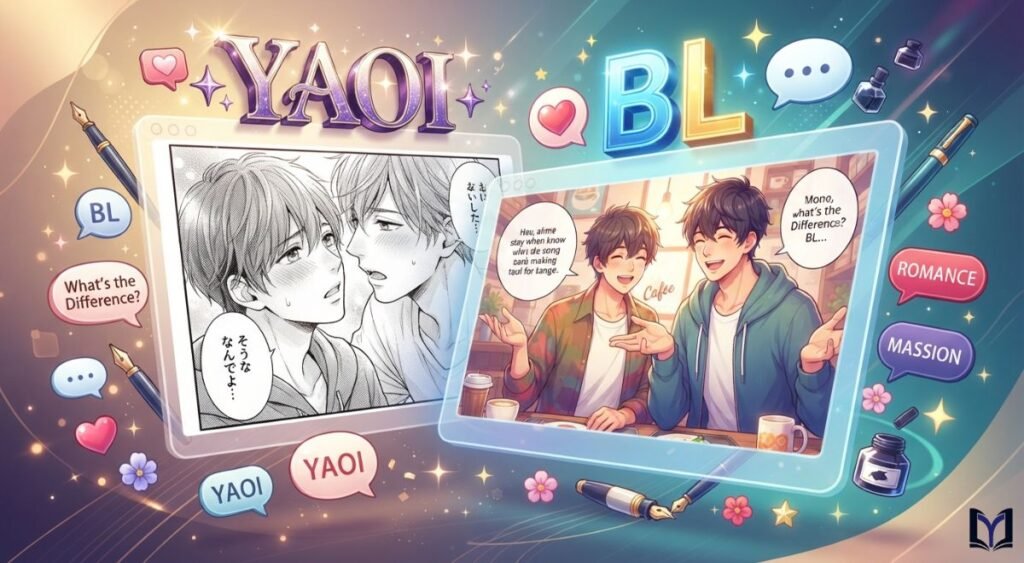
The BL vs yaoi question causes plenty of confusion because the two terms overlap. BL, short for Boys Love, is generally a broader modern category for fictional media involving male-male romance. Academic sources describe BL as a Japanese genre that developed from earlier forms of male-male romance media and later expanded into manga, anime, novels, games, audio dramas, and other formats.
So, is yaoi the same as BL? Not exactly. In casual Western fandom, people may use the terms almost interchangeably. Historically and within Japanese genre terminology, however, the distinction can matter. Yaoi has a particular history tied to fan works and the phrase yama nashi, ochi nashi, imi nashi. BL became a broader and more established category over time. Scholars also point out that Japanese terminology has developed several overlapping classifications rather than one perfectly fixed system.
| Feature | Yaoi | BL |
| Historical roots | 1980s fan culture | Developed from earlier male-male romance traditions |
| Basic subject | Male-male romance and related media | Male-male romance and related media |
| Modern use | Often broad in Western fandom | Broad industry and fandom category |
| Fan usage | Frequently used as a casual genre label | Common umbrella term |
| Relationship to the other term | Often overlaps with BL | Can include works that fans may call yaoi |
What Is the Difference Between Yaoi and BL?
The easiest way to remember what is the difference between yaoi and BL is to think about history and scope. Yaoi has a distinct historical identity. BL functions more broadly as a modern category.
That distinction isn’t absolute. Different publishers, fans, translators, and researchers may use the terms differently. This is one reason yaoi terminology differences can appear confusing when comparing Japanese sources with American websites.
Yaoi vs Yuri and Other Related Terms
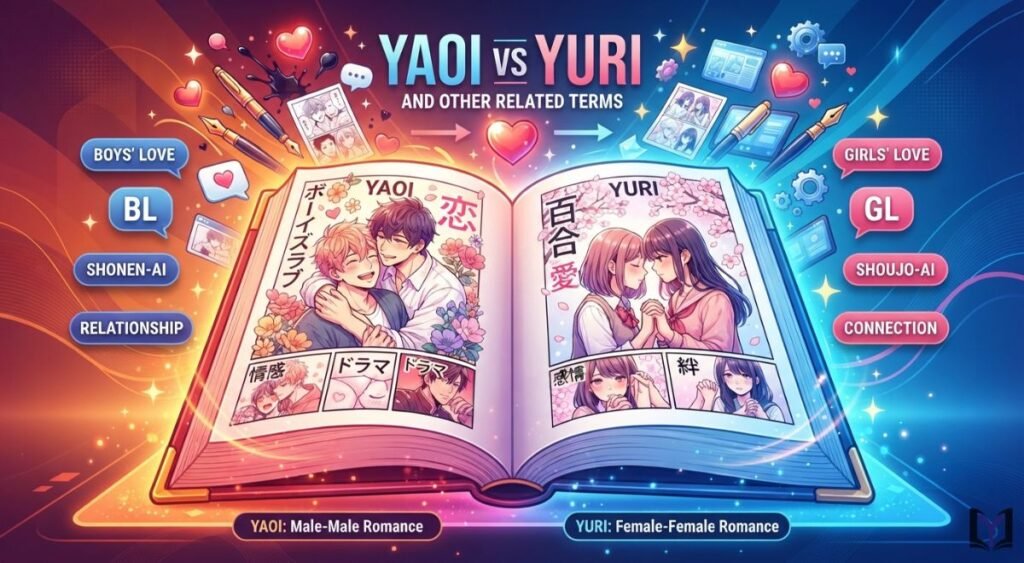
The difference between yaoi vs yuri is easier to understand. Yaoi is generally associated with male-male romance. Yuri is generally associated with female-female romance in fictional media. Both terms can appear in anime, manga, fan communities, and online discussions. However, neither label automatically tells you the exact tone, age rating, or level of intimacy in a particular work.
Other related terms can cause confusion too. Shounen-ai has historically been used in English-speaking fandom to describe softer male-male romantic stories, although terminology varies. Bara is also distinct and should not simply be treated as another word for yaoi. These differences matter because Japanese genre categories have evolved over decades. A label that feels interchangeable in one fandom may carry a narrower meaning somewhere else.
| Related Term | Common Meaning |
| Yaoi | Male-male romance media with a particular historical background |
| BL / Boys Love | Broad modern category for male-male romance media |
| Yuri | Female-female romance media |
| Shounen-ai | Older fandom term often associated with softer male-male romance |
| Bara | Distinct male-male media tradition with different creators, audiences, and conventions |
What Is the Difference Between Yaoi and Yuri?
The simplest distinction is the gender of the romantic focus. Yaoi vs yuri generally compares male-male and female-female romance categories.
Still, don’t assume every work follows a fixed formula. Modern creators use many storytelling styles, character types, and relationship structures. Genre labels provide a starting point rather than a complete description.
Common Misconceptions About Yaoi
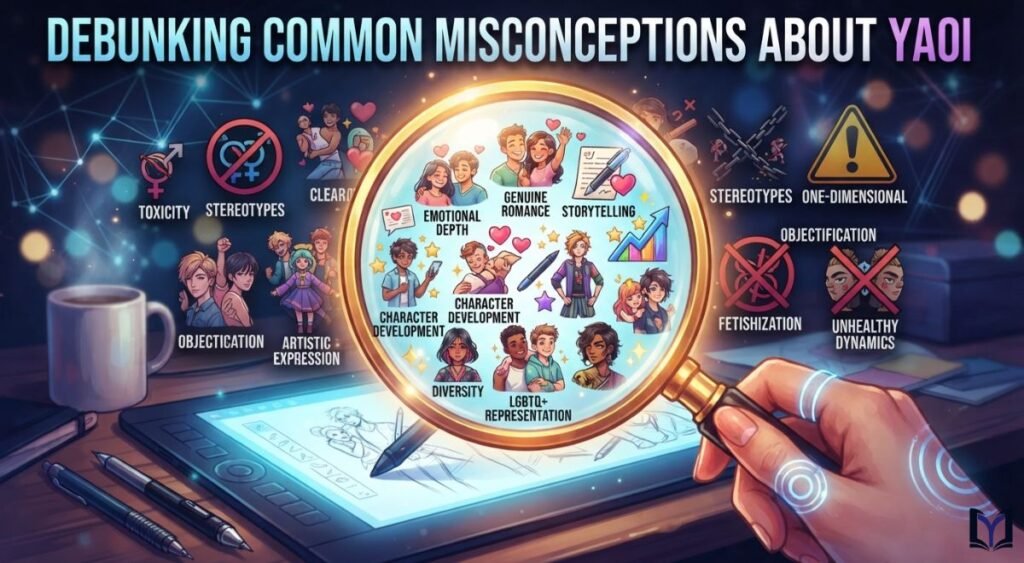
One common misconception is that every yaoi story contains explicit content. That’s not accurate. The broader tradition includes comedy, drama, fantasy, romance, emotional conflict, and emotional growth. Some stories focus strongly on relationships without explicit scenes. Others target mature audiences. The label alone doesn’t provide enough information to determine the exact content.
Related Articles: IDM Meaning in Text: What Does IDM Mean and How to Use It?
Another misconception involves representation. Yaoi relationships are fictional and shouldn’t automatically be treated as realistic portrayals of gay relationships or real-life relationships. Academic research has examined debates around how BL and yaoi portray male desire, gender roles, and intimacy. Those discussions include both appreciation and criticism. The important point is simple: fictional storytelling doesn’t represent every real person’s experience.
Does Yaoi Represent Real-Life Gay Relationships?
Not necessarily. Yaoi stories use fictional characters, dramatic conventions, fantasy, and specific romantic tropes. They aren’t automatically realistic descriptions of LGBTQ+ relationships.
For that reason, it’s better to treat yaoi as fictional media rather than a guide to real-world relationships. Individual works can explore LGBTQ+ representation thoughtfully, while others may rely more heavily on fantasy or established genre conventions.
How People Use Yaoi in Online Communities and Dating Spaces
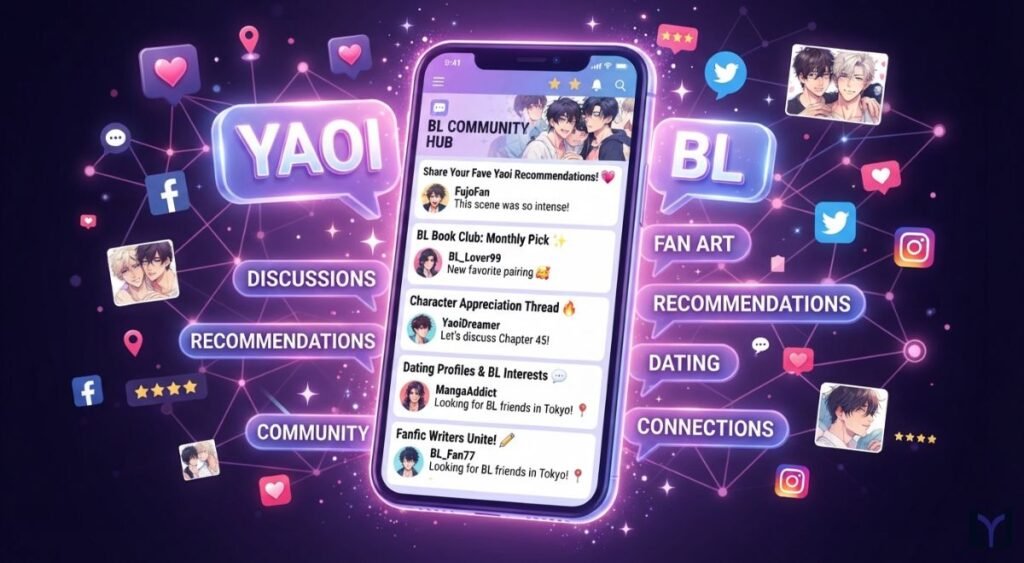
Within online fandom, yaoi can act as a shared interest. Fans may discuss characters, recommend yaoi series, exchange fan art, write yaoi fanfiction, or debate fictional pairings. The term also appears in anime communities where users talk about character chemistry and romantic interpretations. This has helped yaoi become part of wider digital culture and the growing global fandom around Japanese media. Research shows that BL expanded internationally through manga, animation, live-action works, games, audio dramas, and fan creations.
On dating apps, someone might mention yaoi as an entertainment interest. That usually tells you something about the person’s media preferences rather than automatically defining their sexuality or relationship style. The same principle applies to fan communities. If someone says they enjoy yaoi, the safest interpretation is the literal one: they enjoy a particular kind of fictional media. Don’t turn a fandom interest into a personal assumption.
What Does Yaoi Mean on a Dating Profile?
If you see yaoi listed on a dating profile, it most often means the person enjoys yaoi, BL, anime, manga, or related fandoms.
It doesn’t automatically reveal their gender, sexuality, or dating preferences. Those details belong to the person themselves. Treat the term as an entertainment genre unless the person gives additional context.
Is Yaoi an Offensive or Appropriate Word to Use?
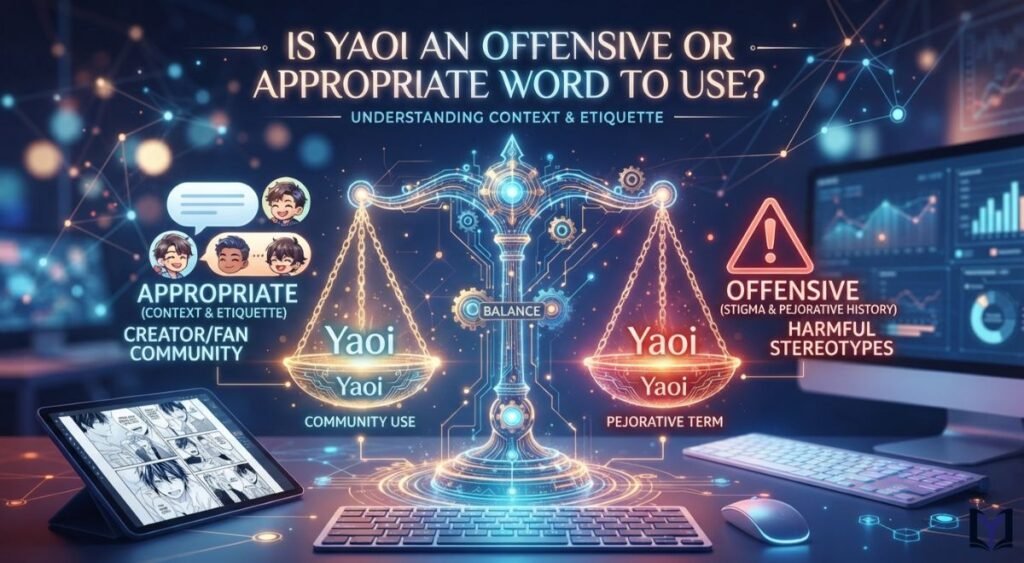
Whether yaoi is appropriate depends on context, audience, and intent. In an anime forum or manga discussion, the term can function as an ordinary genre label. In a conversation about Japanese publishing, it may also have historical value. Problems usually arise when someone uses the word to mock fans, stereotype LGBTQ+ people, or reduce a complex genre to a joke.
The safest approach is to use appropriate terminology for the situation. If you’re discussing a modern Japanese publishing category, “BL” or Boys’ Love genre may be more precise. If you’re discussing a historical fan movement, “yaoi” may be the correct term. In academic or professional communication, explain the term the first time you use it. That gives readers enough context without assuming they already understand fandom vocabulary.
Can You Say Yaoi in a Professional Setting?
Yes, when the subject genuinely concerns manga, anime, publishing, fandom, media studies, or related research. In those situations, precise terminology can make the discussion clearer.
Outside those contexts, however, another phrase may work better. Terms such as “male-male romance media” or “BL” can provide more immediate clarity for people unfamiliar with yaoi terminology.
Conclusion
The yaoi meaning slang is easiest to understand when you separate its historical meaning from modern internet usage. Today, yaoi commonly refers to fictional media involving male-male romance or relationships. You may encounter it in yaoi manga, yaoi anime, fan art, fanfiction, social media posts, forums, and other parts of the yaoi community.
The term also has a fascinating history. It emerged from Japanese fan culture and became part of a larger tradition that later developed alongside BL. That is why yaoi vs boys love isn’t always a simple either-or comparison. The terms overlap, yet their histories and common uses differ. The same applies to yaoi vs shounen-ai and yaoi vs yuri. Context matters.
Ultimately, what does yaoi mean depends on where you encounter it. In a text, it may simply describe an anime or manga. On social media, it can act as a fandom tag. In academic writing, it may refer to a specific historical category. Once you understand those differences, the term becomes much easier to recognize and use accurately.
FAQ’s About Yaoi Meaning Slang
What does yaoi meaning slang?
Yaoi is a term for fictional stories, manga, or anime centered on romantic or sexual relationships between male characters.
What’s it called when a girl is obsessed with BL?
There’s no specific term for a girl who loves BL. She may simply be called a BL fan or fujoshi in Japanese fandom terminology.
What is a yoai?
“Yoai” is usually a misspelling of yaoi, a genre or fandom term associated with male-male romance in fictional media.
What does BL mean from a girl?
If a girl says “BL,” she usually means Boys’ Love, a genre featuring romantic or emotional relationships between male characters.
Can a straight guy like BL?
Yes. Enjoying BL doesn’t determine someone’s sexual orientation; straight men can enjoy BL just like anyone else.
Related Articles: IDM Meaning in Text: What Does IDM Mean and How to Use It?

Welcome to Meanings There! I’m the creator and author behind this website, sharing useful meanings, explanations, and informative content to make words and phrases easier to understand.
1 thought on “Yaoi Meaning Slang: Definition, Anime Meaning & Text Usage”