

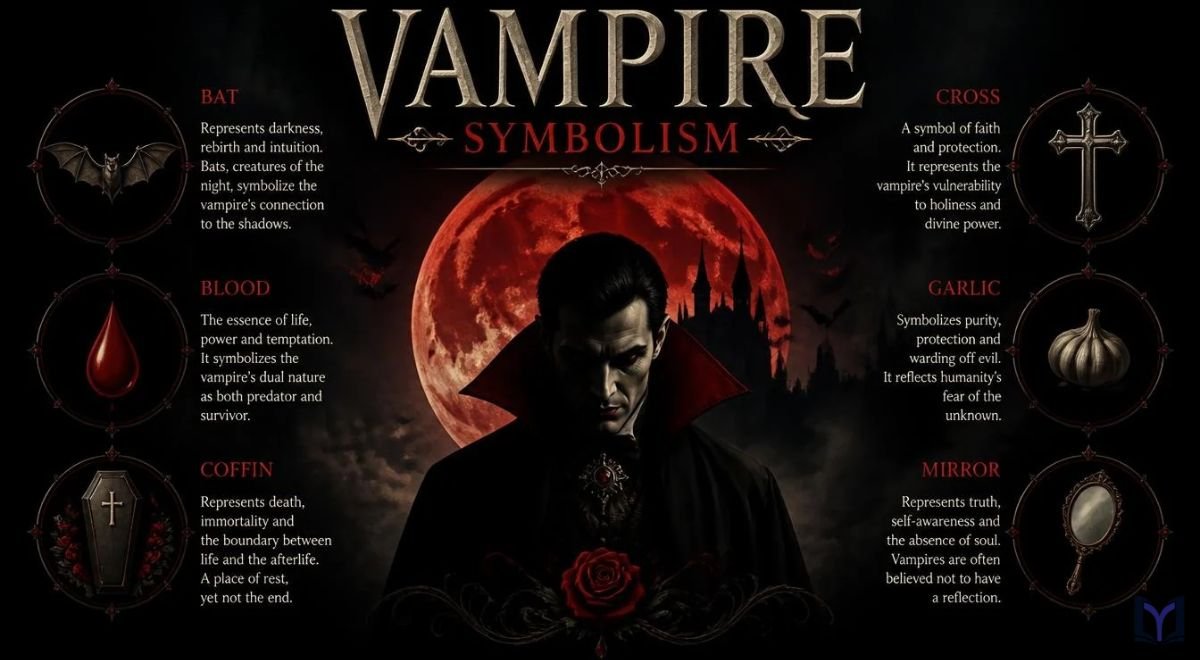
Vampire symbolism has fascinated people for centuries. You see a pale figure with sharp fangs and feel fear and curiosity at once. That mix is no accident. The vampire stands for immortality, seduction, and the dark side of power. It also reflects our deepest worries about death and aging. From old village tales to modern movies, this creature keeps changing shape. In dreams, it can point to emotional drain.
On skin, it becomes a bold tattoo. In spiritual talk, it describes an energy vampire. This guide breaks down the meaning, myths, and modern uses of vampire symbolism so you can read the symbol with fresh eyes and a clear mind.
What Is Vampire Symbolism? (Core Meaning of a Vampire)
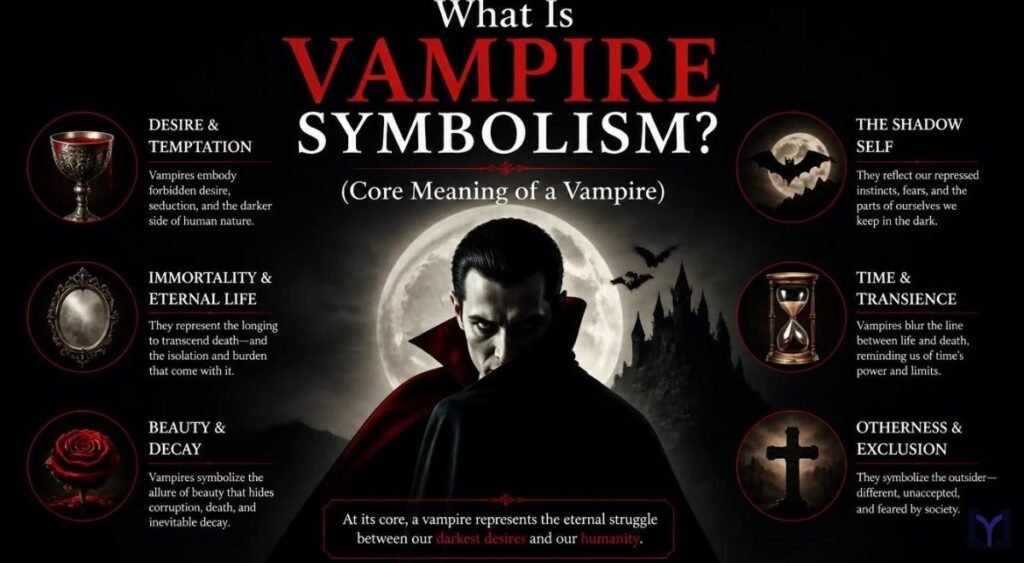
Vampire symbolism has hooked people for centuries. You see a pale figure with fangs and you feel two things at once. You feel fear and you feel curiosity. That mix explains the vampire symbolism meaning better than any textbook. The vampire stands for immortality, seduction, hunger, and the dark side of power.
Think of the vampire as a mirror. It shows what we fear and what we secretly want. We fear death and aging. Yet we also crave eternal youth and attention. This tug of war keeps the vampire mythology alive in books, films, dreams, and even art.
Physical Traits and What They Represent
A classic vampire has pale skin, sharp fangs, dark or red clothing, and a hatred of sunlight. Each trait carries a message. Pale skin points to death. Sunlight hatred points to hidden secrets. Blood is the biggest clue because it stands for life force, energy, and identity. A creature that drinks it often represents someone who drains another person’s strength.
Core Meanings at a Glance
Today the vampire usually points to forbidden desire, fear of death, emotional drain, and outsider identity. These themes feel universal. That’s why the vampire never goes out of style.
Related Articles: Symbolism of Snake: Meanings, Myths, and Spiritual Messages Across Cultures
Historical Origins of Vampire Mythology
Many people link vampires to gothic literature like Dracula by Bram Stoker. The roots run far deeper though. Long before novels, people told stories about restless spirits. They used those stories to explain sickness and sudden death.
Back then, disease seemed like pure magic. No one knew about germs. So communities blamed the dead. This is how early vampire folklore took shape. Fear filled the gaps that science couldn’t.
Ancient and Pre-Christian Roots
Ancient Mesopotamia told tales of female spirits that preyed on the living. Greece had the vrykolakas, a corpse that walked at night. In parts of Eastern Europe, people feared the dead rising from their graves. These beliefs often linked to unexplained illness, sudden death, bad burial rituals, and plague fears.
Medieval and Early Modern Europe
In the 17th and 18th centuries, a wave of vampire panic swept Eastern Europe. Villagers dug up bodies and looked for signs of evil. Bodies swell and leak fluid after death. People saw that as proof. Today we know it’s simple decay. Back then, fear won the argument.
Cross-Cultural Vampire Beliefs Around the World
Vampires feel very Western. Yet similar creatures appear across the globe. Each culture shapes the monster to fit its own worries. That makes vampire symbolism a rich puzzle with many pieces.
Some cultures see these beings as warnings about greed or excess. Others see them as angry spirits seeking revenge. A few treat them as signs of spiritual imbalance. Protection rituals appear almost everywhere.
Global Variations in Vampire Symbolism
Across regions, vampire-like figures often stand for spiritual imbalance, revenge from the dead, and moral warnings against excess. Many traditions also include rituals that guard homes against evil. The names change. The fear behind them stays the same.
Spiritual Meaning of Vampires
The spiritual meaning of vampires isn’t part of any mainstream religion. Still, it shows up in modern spiritual talk. Here the vampire becomes a metaphor. It points to people or habits that suck the energy out of your life.
Think about a friend who leaves you tired after every chat. You walk away feeling empty. Spiritual writers would call that person an energy vampire. The idea feels real because the drain is real.
Energy Vampires and Psychic Meaning
An energy vampire often reflects toxic relationships, emotional dependency, manipulation, and a fear of losing your freedom. In this sense, the vampire turns psychological. No fangs needed. Spotting this pattern helps you protect your peace.
Shadow Self Symbolism
Psychologists talk about the shadow self. It means the traits we hide from others and ourselves. The vampire fits this idea perfectly because it lives in darkness. It can stand for repressed desires, hidden anger, secret cravings, and forbidden fantasies.
Vampire Dream Meaning: What Does It Mean to Dream About Vampires?
A vampire dream can leave you shaken. You wake up with your heart racing. But don’t panic. Vampire dream meaning usually points to everyday stress rather than danger. Dream symbols shift from person to person. Context matters a lot.
A scary dream feels very different from a romantic one. Ask yourself how you felt. Were you afraid or drawn in? That feeling often holds the real message.
Common Vampire Dream Interpretations
Most vampire dream interpretation guides agree on a few themes. You may feel drained, fear betrayal, feel drawn to someone risky, or struggle with temptation. If you become the vampire, the dream may signal a hunger for power, fear of hurting others, or guilt about selfish choices.
Psychological Meaning of the Vampire Archetype
The vampire is a strong archetype. It joins beauty and danger in one figure. That’s why Carl Jung style thinking fits it so well. The vampire shows us parts of the mind we’d rather ignore.
Writers love this figure because it works on many levels. It’s a lover and a predator. It’s lonely yet powerful. This tension drives countless stories.
Immortality and Fear of Death
Humans fear death. So immortality fascinates us. The vampire stands for eternal youth, resistance to aging, and escape from death. It also shows the cost, which is loneliness. In American culture, where youth gets so much praise, this theme hits hard.
Seduction and Control
Unlike mindless monsters, vampires charm their victims. This reflects the power of attraction and the danger of charisma. It also shows how people lose their boundaries. Many stories explore consent and power dynamics through this lens.
Vampire Tattoo Meaning and Popular Designs
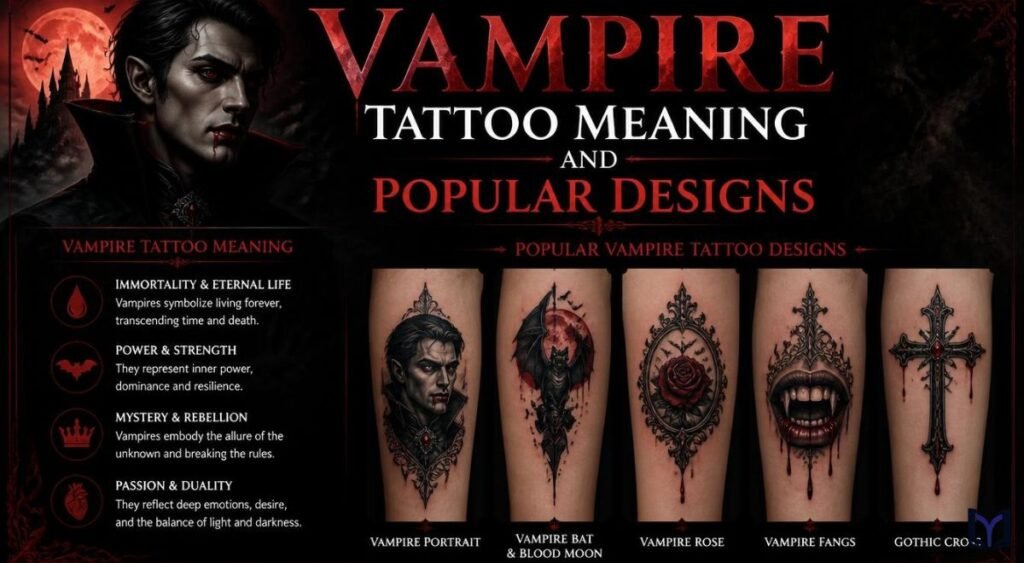
Tattoos turn symbols into personal statements. Vampire tattoo meaning often centers on mystery, rebellion, and strength. In the U.S., these designs stay popular with people who love a dark aesthetic. A vampire tattoo says you’re comfortable being different.
Designs vary widely. Some artists lean into bats and roses. Others create lifelike portraits with fangs and shadows. Each style tells a slightly different story.
Common Tattoo Themes
People choose vampire art to show mystery and allure, love beyond death, personal transformation, and a bold embrace of darkness. A rose may add romance. A bat may add freedom. Gothic fonts finish the look.
Related Articles: Symbolism of Snake: Meanings, Myths, and Spiritual Messages Across Cultures
Vampire Symbolism in Modern Media and American Culture
Modern media changed the vampire forever. The creature used to be a pure monster. Now it’s often a wounded hero. Hollywood, television series, and young adult novels all helped this shift. Fans even express the look through cosplay.
The U.S. didn’t invent the vampire. But American culture reshaped it. Complex characters now win more love than simple villains. This change mirrors shifting social values.
Hollywood and Halloween
Early 20th-century films gave us the elegant, aristocratic vampire. Later movies made it a romantic antihero. On Halloween the vampire becomes a safe way to play with fear. It lets people try on a dark persona for one night.
From Monster to Antihero
At first, vampires symbolized disease and death. Then gothic fiction made them noble villains. Today they often stand for outsider identity, eternal love, moral struggle, and empowered darkness. The monster grew a heart.
Misunderstandings and Controversies
Some people link vampires to evil. Old stories did tie them to demons. Modern fiction often drops that link. It’s wise not to confuse fiction with real spiritual practice. Critics also say romantic vampire tales glamorize harmful relationships. Many newer stories answer this by showing consent and responsibility.
Here’s a quick snapshot of how vampire symbolism works in the USA today.
| Context | Meaning in the USA | Common Associations | Notes |
| Halloween | Playful fear | Costumes, parties | Seasonal symbolism |
| Film and TV | Romantic outsider | Gothic style | Emotional depth |
| Tattoos | Mystery, rebellion | Dark art, roses | Personal identity |
| Dreams | Emotional drain | Anxiety themes | Personal reading |
| Spiritual talk | Energy vampire | Toxic relationships | Metaphor only |
Conclusion
Vampire symbolism stays alive because it mirrors us. It shows our fear of death and our hunger for love, power, and freedom. From ancient myths to modern screens, the vampire keeps changing with each generation.
Now you know what this dark figure can mean in dreams, tattoos, and spiritual talk. Use that insight to understand stories and your own feelings better. The next time you spot a vampire, you’ll see more than fangs. You’ll see a story about being human.
FAQ’s About Vampire Symbolism
What is the spiritual meaning of a vampire?
Spiritually, a vampire stands for energy drain, toxic bonds, and the hidden shadow self. It reminds you to guard your peace and face what you hide.
What are some vampire symbols?
Common symbols include blood, fangs, bats, roses, the moon, coffins, and mirrors. Each one points to life force, night, or hidden identity.
What are things associated with a vampire?
Vampires link to darkness, immortality, garlic, crosses, sunlight, and castles. Gothic style and Halloween also go hand in hand with them.
Is a vampire good or evil?
Old folklore treated vampires as evil omens of death and disease. Modern stories often show them as complex antiheroes who struggle between good and dark instincts.
What can vampires symbolize?
Vampires can symbolize immortality, seduction, power, and forbidden desire. They also stand for outsider identity and the fear of death.
Related Articles: Symbolism of Snake: Meanings, Myths, and Spiritual Messages Across Cultures

Welcome to Meanings There! I’m the creator and author behind this website, sharing useful meanings, explanations, and informative content to make words and phrases easier to understand.
1 thought on “Vampire Symbolism: Meaning, Myths, Dreams and Tattoos Explained”