

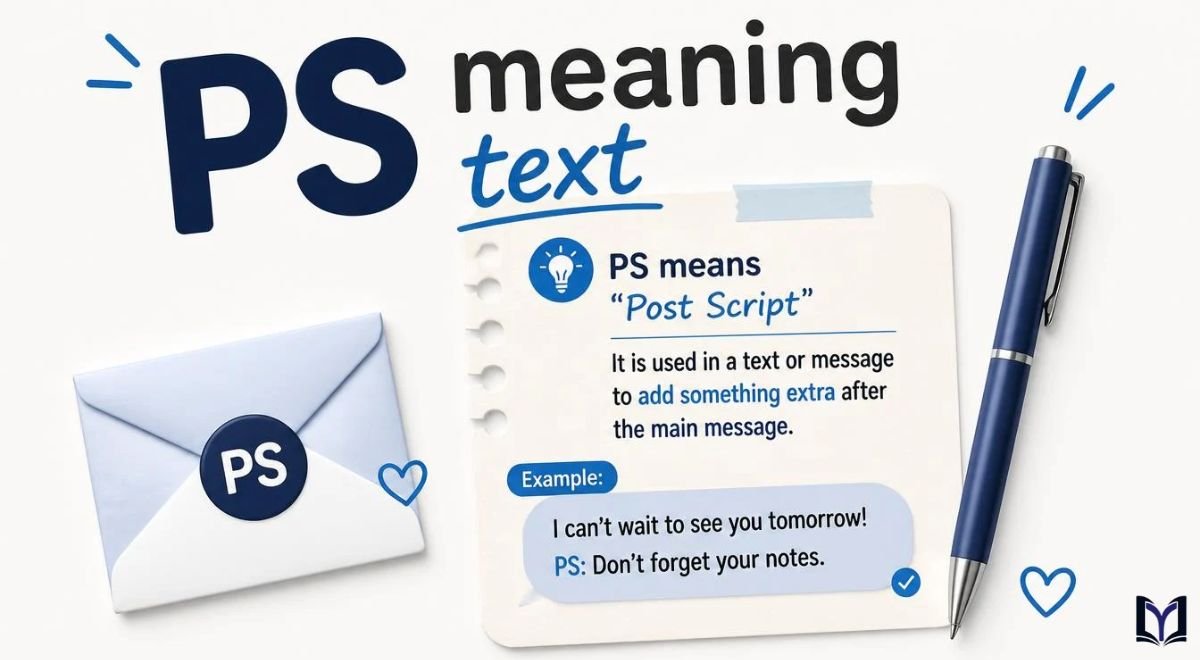
Have you ever finished a text and remembered one more thing you wanted to say? That’s where understanding ps meaning text comes in handy. PS usually stands for Postscript, an extra note added after the main message to share a forgotten detail, reminder, or funny thought. You might see it in everyday chats, emails, or social media conversations.
Although PS has a simple meaning, the words that follow it can make a message sound friendly, playful, or even flirty. This guide explains the PS meaning in text, shows real texting examples, and explores how people use PS on Snapchat, Instagram, TikTok, and WhatsApp.
What Does PS Mean in Text? (Quick Meaning and Definition)
The most common PS meaning in text is Postscript. It comes from the Latin phrase post scriptum, which means written after. Traditionally, people added a postscript after finishing a letter. Today, the same idea appears in text messages, emails, and social media posts. Someone might write, “See you at 6! PS: Bring your jacket.” The first sentence shares the plan, while the second adds an extra thought. This makes PS useful when you remember something after writing the main message.
The PS abbreviation meaning is not usually a secret code or a special slang term. It is a familiar writing abbreviation used in both formal and informal settings. People use it to share additional information, offer a reminder, or add a final thought without rewriting the whole message. For example, “Thanks for helping me today. PS: I owe you coffee!” sounds friendly and natural. The abbreviation itself does not create a hidden meaning. The words that follow it tell you what the sender wants to say.
What Does PS Stand for in Texting?
PS stands for Postscript. It introduces something extra after the main part of a written message. In everyday texting, it often signals that the sender has one more thing to add. This could be a practical detail, a personal comment, or a quick joke. The abbreviation is especially useful when the extra note feels separate from the original message.
For example, imagine your friend texts, “The movie starts at 7:30. I’ll meet you outside.” They then add, “PS: I already bought the popcorn!” The postscript adds a small detail without changing the original plan. This is the usual PS meaning in texting, and it works the same way in most everyday conversations.
PS Meaning in Text Messages: A Simple Example
Consider this message: “Happy birthday! Hope you have an amazing day. PS: Your gift is finally on its way!” The birthday greeting is the main message. The final sentence adds news that the sender remembered to include afterward. This simple PS texting example shows why people use the abbreviation.
PS can also introduce a playful comment. Someone might write, “Thanks for dinner. PS: Your chocolate cake was dangerously good.” Here, the extra note adds humor and makes the message feel more personal. The PS meaning in chat depends on the added words, but the basic purpose remains the same: to include something after the main message.
Is PS Slang or an Abbreviation?
PS is an abbreviation, not traditional internet slang. It has existed in writing for a long time, well before smartphones and social media. However, people often search for “PS slang meaning” because they encounter it in casual chats and want to understand what it means. Its use in modern texting does not change its basic definition.
Some abbreviations have different meanings in different communities. PS can refer to PlayStation in gaming conversations or Photoshop in creative discussions. Yet when someone places PS at the end of a written message, Postscript is usually the most likely meaning. Always consider the surrounding words before deciding what the sender means.
Related Articles: What Does TMW Mean in Text? Meaning, Uses, and Examples
Where Did PS Come From? Origin and History of Postscript

The abbreviation PS comes from the Latin words post scriptum, meaning written after. It became useful in traditional writing because people sometimes remembered an important detail after completing a letter. Instead of starting over, they added a short note at the end. This note became known as a Postscript. The practice was especially helpful when people communicated through handwritten letters, where editing a finished page could take time and effort.
As writing habits changed, PS moved into email and digital communication. People began using it in online messages for many of the same reasons. A postscript could add a missing detail, make a message more personal, or finish a serious note with a lighter comment. Even though sending a second text is easy today, PS remains familiar. It gives the extra information a clear place and helps readers separate it from the original message.
What Does Post Scriptum Mean in Latin?
The phrase post scriptum literally means “written after.” It describes a note that comes after the main text has been completed. The abbreviation PS comes from this phrase. You may also see it written as P.S., with periods between the letters. Both forms are widely understood in modern writing.
The original idea is simple. You finish your message, then add something you forgot or want to emphasize. For example, “Thank you for inviting me. P.S. Your new puppy is adorable!” The final sentence is not the main purpose of the message. It is a personal note added afterward. This meaning still explains how PS works in modern texting.
How PS Became Common in Letters and Emails
In traditional letter writing, a postscript allowed people to add information without rewriting the entire letter. Someone might finish a letter to a friend and then remember to mention a family visit or an upcoming event. They could simply add PS at the bottom. Over time, postscripts also became a way to add affection, humor, or emphasis.
The same habit carried into PS in emails. Although email allows easy editing before sending, people still use PS to highlight an extra point. For example, a business email might explain a meeting and then add, “P.S. Please bring the updated report.” In personal email, the final note might be more playful. The format remains useful because it separates the extra detail from the main body.
Why People Still Use PS in Modern Texting
Modern messaging makes it easy to send another text whenever you remember something. Even so, PS can make a message feel more organized or expressive. It places an extra comment at the end without making the sender start a separate conversation. It can also draw attention to a small detail that might otherwise get lost.
For example, “Thanks for picking me up from the airport. PS: I’ll pay for gas next time.” The postscript adds a useful promise and gives the message a friendly finish. In today’s texting culture, this use feels natural because people often mix practical information with personal expression. PS is old, but the reason people use it is still familiar.
How Is PS Used in Text Messages and Online Chats?
People use PS for several everyday purposes. It can introduce an afterthought, add additional information, or highlight a detail that deserves attention. It can also make a message feel more personal. For example, “Good luck with your interview! PS: Remember how much preparation you’ve done.” The final sentence adds encouragement without changing the original message. In casual messaging, this small addition can make a text feel thoughtful and complete.
PS can also introduce funny messages, playful teasing, or sarcastic texts. For instance, “Thanks for helping me clean. PS: You missed the entire kitchen!” Depending on the relationship, this could be a joke or a complaint. That is why message tone matters. The abbreviation does not automatically make a message funny, rude, or affectionate. The wording and the relationship between the people help readers understand the intention.
PS for Adding an Afterthought
An afterthought is something you remember after writing or sending the main message. PS gives that thought a clear place at the end. Imagine texting, “I’m leaving home now. PS: I forgot your umbrella, but I’ll bring it tomorrow.” The postscript adds information that was not included in the first sentence.
This use is common because people do not always remember everything at once. A PS can also add a small personal detail that does not need a separate text. For example, “Thanks for sending the photos. PS: The last one made me laugh.” The extra sentence adds warmth and personality. It is a simple way to complete an online conversation without changing the original message.
PS for Reminders and Important Details
A postscript can highlight a reminder, especially when the detail is useful but not central to the main message. Someone might write, “Dinner is at my place on Friday. PS: Please bring your favorite board game.” The reminder is easy to notice because it appears separately after the main plan.
However, important information should not always be left until the end. If a message contains a deadline, safety instruction, or essential change, put that detail in the main message. PS works best for extra information rather than something the reader must not miss. Good digital etiquette means making your message easy to understand, not simply adding everything at the bottom.
PS for Jokes, Humor, and Sarcasm
PS can make a joke stand out because readers encounter it after they think the message has finished. For example, “Thanks for sharing your notes. PS: Your handwriting deserves its own detective.” The extra line adds a humorous twist. In friendly conversations, this kind of comment can make a message more memorable.
Sarcasm requires more care. A message such as “Thanks for being on time. PS: Only 45 minutes late!” might make a close friend laugh. Another person could interpret it as criticism. Without facial expressions or voice, sarcasm can be difficult to read in text. If you want your joke to sound friendly, consider the relationship and the situation before sending it.
PS in Casual Chats vs. Professional Messages
In personal chats, PS can be informal, playful, or affectionate. You might use it to mention a forgotten detail, add a joke, or end with a warm comment. For example, “See you tomorrow! PS: Save me a seat near the window.” This feels natural because the postscript fits the casual setting.
In professional communication, PS is also possible, but it should be used thoughtfully. A short note after the main message can highlight a minor detail or provide a polite closing thought. In business emails, however, deadlines, instructions, and essential decisions should remain in the main body. The goal is clarity. PS should add value rather than make the reader search for important information.
Real-Life PS Texting Examples and Conversations
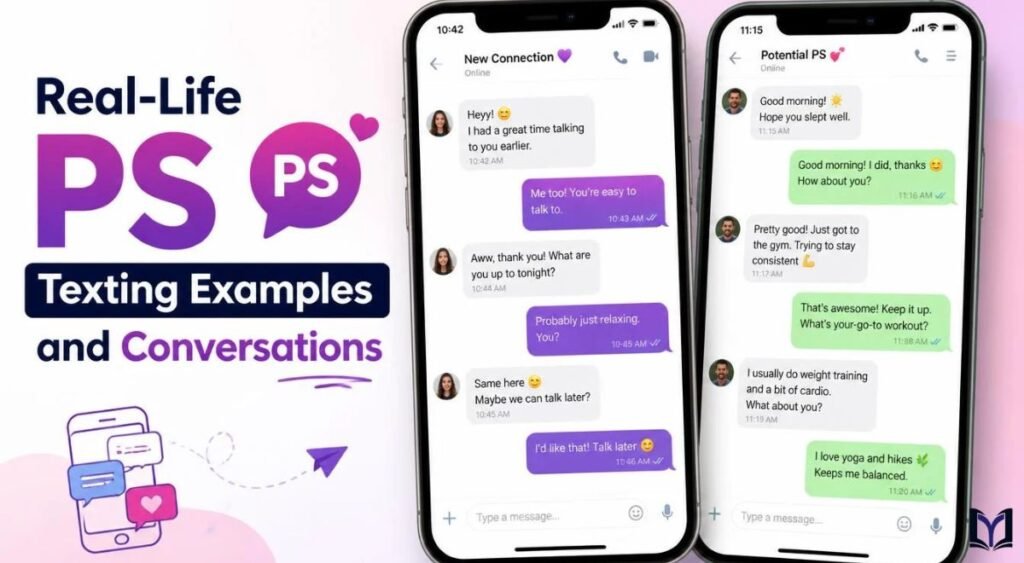
Real-life PS texting examples show how much the added sentence can change a message’s tone. In one conversation, PS might introduce a reminder. In another, it could add a joke or a sweet comment. The abbreviation remains the same, but the wording changes its purpose. Looking at complete messages is more useful than memorizing a single definition because real people use language in different ways.
The following examples cover common situations in everyday life. They show PS in conversations between friends, romantic partners, and coworkers. Each example includes a short explanation of the intended meaning. These texting examples are illustrative rather than fixed rules. In actual real-life conversations, the sender’s personality and the relationship may affect how the message sounds.
PS Meaning in a Conversation Between Friends
Imagine two friends making plans for the weekend.
Alex: “Let’s meet at the coffee shop at 10 on Saturday.”
Jordan: “Sounds good! PS: Bring your sunglasses. We’re sitting outside.”
Here, PS adds a practical detail that supports the original plan. Jordan could have included it in the first sentence, but the postscript keeps the reminder separate. The tone is friendly and helpful.
Another example might be, “Thanks for lending me your hoodie. PS: I’m not giving it back because it looks better on me!” The extra sentence adds playful teasing. A friend who understands the joke may find it funny. Someone who does not know the sender well might need more context. This shows how relationships shape the meaning of a message.
PS in Romantic or Flirty Text Messages
PS sometimes appears in romantic messages because it provides a natural way to add a sweet thought. For example, “I had a great time with you tonight. PS: You looked amazing.” The postscript gives the compliment extra emphasis. It can make the message feel personal without changing the meaning of the first sentence.
However, PS is not automatically a sign of attraction. Someone might use it with a friend, family member, or coworker. Consider the words after PS and the wider relationship before interpreting the message. If a person adds affectionate language, the note may carry an emotional meaning. If the added sentence is practical, it may simply be a reminder. Context matters more than the abbreviation.
Funny and Sarcastic PS Text Examples
Humor is another common reason to add a postscript. Consider this message: “Thanks for helping me move today. PS: You now have official permission to complain about stairs for the next year.” The added line makes the message playful and gives the sender a memorable ending.
Sarcasm can be less clear. For example, “Great job finishing the project. PS: We only had to fix twelve things.” This could be friendly teasing between coworkers, but it could also sound critical. If the relationship is not close, a direct and respectful message is usually safer. The meaning comes from the wording, the context, and the reader’s understanding of the sender’s humor.
PS in Work and Everyday Planning Messages
PS can also appear in practical messages. A coworker might write, “Our meeting is scheduled for Thursday at 2 p.m. P.S. Please review the new slides before we meet.” The postscript adds a useful detail related to the meeting. It remains clear because the extra information is easy to understand.
For everyday planning, someone might text, “I’ll pick you up outside the library. PS: The parking lot entrance is on Oak Street.” This is a helpful addition that makes the plan easier to follow. In professional or practical settings, use PS for secondary details. If the information changes the plan itself, place it in the main message so nobody overlooks it.
How Context Changes the Meaning of a PS Message
The words after PS are the strongest clue to the sender’s intention. “PS: Bring an umbrella” is a reminder. “PS: You owe me ice cream” may be playful. “PS: I miss you” can express affection, depending on the relationship. The abbreviation does not give these sentences their meaning. It simply introduces them as an extra note.
When interpreting PS, consider who sent the message, what you were discussing, and how that person usually writes. Avoid treating every postscript as a hidden signal. Most of the time, it means exactly what the added sentence says. Reading the full message is the best way to avoid common misunderstandings.
What Does PS Mean on Snapchat, Instagram, TikTok, and WhatsApp?
The PS meaning on social media is generally the same as in ordinary texting: Postscript. People may use it in direct messages, captions, comments, or group chats to add an extra detail after the main thought. The exact format varies by platform, but the basic purpose does not change. PS is not known to have one special definition that applies universally to Snapchat, Instagram, TikTok, or WhatsApp.
On social media, the extra note might be practical, humorous, or emotional. Someone could add PS to a caption to mention a detail they forgot, or use it in a direct message to add a playful comment. Still, do not assume the abbreviation has a hidden platform-specific meaning. The words around it provide the most useful clues. When you understand the general definition, it becomes easier to interpret PS across different apps.
PS Meaning on Snapchat
The PS meaning on Snapchat is usually postscript when it appears at the end of a written message. Someone might send, “That was such a fun night! PS: Send me the pictures when you get home.” The final sentence adds a reminder after the main thought. It does not require a special Snapchat definition.
Snapchat conversations often move quickly, so people may add a PS when they remember one more thing. It could also introduce a joke or personal comment. For example, “Your story was hilarious. PS: I was laughing at the last clip for five minutes.” The context makes the meaning clear. If PS appears in a discussion about gaming or technology, another interpretation may be possible, but postscript is the likely meaning in an ordinary chat.
PS Meaning on Instagram
The PS meaning on Instagram is also usually postscript. People may use it in direct messages, comments, or Instagram captions to add information after the main message. For example, a caption might say, “A perfect weekend with my favorite people. PS: The last photo was taken just before we got lost.” The postscript adds a small story that complements the caption.
In Instagram DMs, PS can make a message more personal or playful. Someone might write, “It was great meeting you today. PS: I forgot to ask where you got those shoes.” The extra note gives the sender a natural way to ask a follow-up question. It does not automatically suggest flirting or romantic interest. The added sentence and the conversation determine the intended tone.
PS Meaning on TikTok
The PS meaning on TikTok generally remains postscript when it appears in a written comment, caption, or direct message. For example, someone could comment, “This recipe looks amazing. PS: I’m adding extra cheese.” The postscript adds a personal thought after the main comment. There is no need to assume that PS has a special TikTok-only definition.
In TikTok comments, people may use abbreviations informally because short messages are easy to write and read. PS can add a joke, a reaction, or an extra detail. Still, not every appearance of PS means postscript. If a conversation is about gaming, software, or another specialized subject, the abbreviation could refer to something else. The topic gives you the best clue.
PS Meaning on WhatsApp
The PS meaning on WhatsApp is usually postscript, especially in private messages and group chats. Someone might write, “We’re meeting at the restaurant at 7. PS: The reservation is under my name.” The added note provides a useful detail after the main plan. It works well in casual conversations because it separates the reminder from the main message.
In WhatsApp chats, PS can also introduce a personal comment. For example, “Thanks for checking on me today. PS: Your message really helped.” The extra sentence adds emotional warmth without changing the original message. In a group chat, someone might use PS to mention a forgotten item or a small change. The abbreviation remains the same, but the situation determines what the extra note means.
Does PS Have a Different Meaning on Social Media?
Generally, no. The usual PS meaning on social media is the same as its meaning in letters, emails, and text messages. Snapchat, Instagram, TikTok, and WhatsApp do not automatically give PS a different definition. Most differences come from the type of conversation and the content around the abbreviation.
You should still check the context. A message about a forgotten detail probably uses PS as postscript. A discussion about a console might use PS to mean PlayStation. A conversation about image editing might refer to Photoshop. Instead of guessing from the platform alone, read the entire sentence and consider the topic.
Does PS Have a Hidden, Flirty, or Emotional Meaning in Texting?
The abbreviation PS does not have a secret romantic meaning by itself. However, the extra sentence can express affection, excitement, disappointment, or humor. For example, “I enjoyed talking to you. PS: I wish we had more time together” may sound affectionate. In contrast, “Thanks for the notes. PS: Send them before class tomorrow” is more practical. The emotional meaning comes from the words, the relationship, and the situation rather than the abbreviation itself.
People sometimes overthink short messages because text does not show facial expressions or vocal tone. A postscript can feel more important because it appears after the main message. Still, that placement does not prove the sender is hiding a feeling. When you interpret PS, consider the full conversation instead of assuming every extra note contains a secret message. This approach helps you understand emotional expression without reading too much into ordinary words.
PS Meaning From a Girl or a Guy
The PS meaning from a girl or a guy is generally the same: postscript. The abbreviation does not change its definition based on the sender’s gender. A girl might use PS to add a reminder, while a guy might use it to finish a joke. Both uses follow the same basic writing convention.
If someone adds a personal comment after PS, pay attention to the actual wording. “PS: I had fun talking to you” may show warmth or interest, but it could also be friendly. “PS: Don’t forget your keys” is simply a reminder. The relationship and previous conversations provide better clues than gender alone. Avoid assuming that a person is flirting just because they added PS to a message.
Does PS Mean Something Romantic or Flirty?
PS can introduce flirty texts or romantic messages, but it does not create romantic meaning on its own. Someone might write, “Good night! PS: You’re still making me smile.” The added sentence may suggest affection, especially if the conversation already has a flirty tone. The postscript gives the person a way to add one more personal thought.
Another person might write, “See you tomorrow! PS: Bring the book I lent you.” This message is practical rather than romantic. The same abbreviation appears in both examples, yet the meanings differ. If you’re unsure about someone’s intentions, look at the complete message and their usual behavior. One abbreviation cannot reliably tell you whether someone has a crush on you.
Can PS Sound Rude, Cold, or Passive-Aggressive?
Yes, a postscript can sound rude or passive-aggressive when the added sentence contains criticism or an unfriendly reminder. For example, “Thanks for helping with the project. PS: Next time, try finishing your part before the deadline.” The last sentence may sound annoyed because it points out a problem after the polite opening. However, the sender’s actual intention still depends on the situation.
Short messages can easily create confusion because readers cannot hear the sender’s voice. A sentence intended as a joke might sound harsh when read without context. If a PS seems rude, consider whether the person usually jokes that way and whether something happened earlier in the conversation. When the meaning remains unclear, asking a calm question is often better than assuming the worst.
How to Tell What Someone Really Means by PS
Start by reading the words after PS. A reminder usually communicates a practical need, while a compliment may express warmth or interest. Next, consider the conversation. If you’ve been discussing weekend plans, an extra note probably relates to those plans. If you’ve been exchanging affectionate messages, the postscript may continue that tone.
You should also consider how the sender usually communicates. Some people add jokes and personal comments to almost every message. Others use PS only when they remember something important. These habits can help you interpret the note without overanalyzing it. The safest rule is simple: understand the added sentence first, then use context to interpret its tone.
PS vs. PPS vs. PPPS: What Is the Difference?

The difference between PS vs PPS and PPPS comes down to how many extra notes someone adds after the main message. PS means postscript and introduces the first additional note. PPS commonly means post-postscript and introduces another note after PS. PPPS sometimes means post-post-postscript, adding yet another layer. These forms are most useful when someone wants to add several separate thoughts without rewriting the original message.
These abbreviations are understandable, but you rarely need more than one postscript in an ordinary text. For example, “PS: Bring your jacket” may be enough. If you then remember another detail, PPS can introduce it. PPPS is possible, but it may look playful or unnecessarily complicated in a short message. In everyday writing, clarity matters more than adding multiple layers of extra notes.
What Does PS Mean?
PS stands for Postscript. It introduces the first extra note after the main message. People use it for reminders, additional details, personal comments, or jokes that they want to add after finishing their message.
For example, “Thanks for inviting me to dinner. PS: I’ll bring dessert.” The first sentence expresses appreciation, while the postscript adds a useful detail. You do not need a special format or complicated rule to use PS. Just make sure the extra note is clear and relevant.
What Does PPS Mean in Text?
PPS commonly stands for post-postscript. It introduces another note after an existing PS. Someone might use it when they remember a second detail after already adding the first one.
For example, “PS: Bring your notebook. PPS: The classroom has changed to Room 12.” The first postscript adds a reminder, and the second provides another detail. PPS is less common than PS in everyday texting, but its meaning is usually easy to understand when the notes appear in order.
What Does PPPS Mean in Text?
PPPS meaning usually refers to post-post-postscript. It is sometimes used when someone adds another note after PS and PPS. The form is less common, and people may use it playfully rather than following a strict writing convention.
Imagine a message that says, “PS: Bring snacks. PPS: Bring a charger. PPPS: Don’t forget the tickets!” Each abbreviation introduces another piece of information. Although this example is understandable, most short messages would be clearer if the sender included all three details together. PPPS works best when the repeated postscripts serve a clear purpose or create a humorous effect.
PS vs. PPS vs. PPPS: Quick Comparison
The main distinction is the order of the extra notes. PS introduces the first postscript, PPS introduces the second, and PPPS introduces a third. The exact spelling may vary slightly in informal messages, but these are the common interpretations.
| Abbreviation | Full form | Main purpose |
| PS | Postscript | Adds the first extra note |
| PPS | Post-postscript | Adds another note after PS |
| PPPS | Post-post-postscript | Adds a further note after PPS |
PS vs. BTW vs. FYI
PS, BTW, and FYI all help people share extra information, but they work differently. BTW means “by the way” and often introduces a related point during a conversation. FYI means “for your information” and highlights information someone may find useful. PS, by contrast, usually introduces an extra note at the end of a message.
For example, “BTW, the store closes at 8” adds information during a conversation. “FYI, the meeting has moved to Friday” highlights an update. “The meeting is on Friday. PS: Bring your printed notes” adds a final reminder after the main message. IMO, which means “in my opinion,” serves another purpose by introducing a personal view. These abbreviations are related to online writing, but they are not interchangeable in every sentence.
How to Use PS Correctly: Punctuation, Placement, and Common Mistakes
Using PS correctly is simple once you understand its purpose. Place it after the main message when you want to add an extra detail, reminder, or personal comment. You can write it on a new line to make the note stand out. In informal texting, a short sentence is usually enough. The aim is to make the added information easy to understand rather than turn a simple message into a complicated one.
Pay attention to punctuation, capitalization, and the importance of the information you add. PS can make a small detail stand out, but it should not hide something the reader needs to know. If the added information changes the plan or introduces an important deadline, include it in the main message. Good appropriate usage keeps your writing clear and helps prevent misunderstandings.
Where Should PS Go in a Text Message?
PS usually appears after the main message. You can place it on a separate line or after the final sentence. A separate line makes the extra note easier to spot, especially when the original message contains several sentences.
For example, “Thanks for helping me move today. I really appreciate it.
PS: I’ll return your toolbox tomorrow.”
The postscript is clearly separated from the main message. In a quick text, you can also write, “See you at 6. PS: Bring your ID.” Both formats work. Choose the one that makes your message easiest to read.
Should You Write PS, P.S., or PS:?
Both PS and P.S. are widely recognized forms. Some writing styles prefer periods between the letters, while informal digital messages often omit them. You may also see PS: when the writer wants to introduce the extra note clearly. None of these forms changes the basic meaning.
For example, “P.S. Don’t forget the tickets” and “PS: Don’t forget the tickets” communicate the same idea. You do not need to worry about choosing a perfect format in an everyday chat. Consistency and clarity matter more than minor punctuation differences. In formal writing, follow the style guide or workplace convention if one applies.
Should PS Be Capitalized?
PS is commonly written in uppercase because it comes from the initial letters of post scriptum. The form P.S. is also common. In casual messages, some people use lowercase “ps,” especially when they type quickly or prefer an informal style.
The capitalization rarely changes the meaning. A reader will generally understand “PS: See you tomorrow” and “ps: see you tomorrow” in the same way. However, uppercase PS may look clearer in professional messages or carefully written emails. Choose a format that fits the tone of your message and use it consistently.
Common PS Mistakes to Avoid
One common mistake is assuming PS always carries a hidden or emotional meaning. In most cases, it simply introduces an extra note. Another mistake is using PS for information that belongs in the main message. If you’re telling someone that a meeting has been canceled, make that clear immediately instead of hiding the update at the end.
It is also easy to confuse PS with other abbreviations when you ignore the context. PS may mean PlayStation in a gaming conversation, for example, but that does not make it the default meaning in a personal text. Read the surrounding words before deciding what it means. Keeping the extra note relevant and clear will help you avoid most common misunderstandings.
When Should You Avoid Using PS?
PS is not necessary in every message. If your text contains only one short sentence, adding a postscript may make it feel unnecessarily formal. For example, “I’ll be there at 5. PS: See you soon” repeats the same idea without adding much value. A simple message is often better.
You should also avoid placing essential instructions in a postscript when readers might overlook them. In formal writing and professional communication, the main body should contain the most important information. A postscript works well for a secondary note, but it should not replace clear organization. Use it when it adds something useful, not simply because you can.
Related Articles: What Does TMW Mean in Text? Meaning, Uses, and Examples
How to Respond When Someone Uses PS in a Text
When someone uses PS in a message, you usually do not need to comment on the abbreviation itself. Respond to the extra information instead. If the person adds a reminder, acknowledge it. If they share a joke, respond naturally to the joke. This keeps the conversation moving without making a familiar abbreviation seem more complicated than it is.
Your response should match the situation and the sender’s tone. A friendly postscript may call for a warm reply, while a practical note may need only a quick acknowledgment. If the message sounds flirty, you can respond in a way that reflects your own interest. When the meaning seems unclear or critical, ask for clarification rather than guessing. The best response examples depend on what the person actually wrote after PS.
How to Respond to a Normal PS Message
If someone writes, “PS: Bring your notebook tomorrow,” you can reply, “Got it. I’ll bring it.” There is no need to ask what PS means if the sentence is clear. Simply acknowledge the reminder or answer the question contained in the extra note.
If the postscript adds information, respond to that information directly. For example, “PS: I booked the table for 7” could receive the reply, “Perfect, thanks for booking it!” This response shows that you noticed the update. In everyday conversations, direct replies usually feel more natural than explaining the abbreviation back to the sender.
How to Reply to a Funny or Playful PS
When PS introduces a joke, you can respond with humor if it fits your relationship. Imagine someone writes, “Thanks for sharing your fries. PS: I may have eaten more than half.” You could reply, “More than half? You left me the smell!” This keeps the conversation playful and responds to the actual joke.
You do not need to match every joke with another joke. A laughing emoji or a simple “You’re impossible!” may work just as well. Pay attention to the sender’s tone and your relationship with them. If you are unsure whether the message is teasing or serious, a neutral response can help avoid unnecessary tension.
How to Respond to a Flirty PS
If someone writes, “I had a great time with you. PS: You looked really cute tonight,” your reply depends on how you feel. If you’re interested, you could say, “I had a great time too. Maybe we should do it again soon.” This acknowledges the compliment and leaves room for another conversation.
If you want to remain friendly without encouraging romance, you could say, “Thanks! I enjoyed hanging out too.” You do not owe someone a flirty response just because they sent a flirty message. The abbreviation does not create any obligation. Respond in a way that feels honest and comfortable for you.
What to Do When a PS Sounds Confusing or Rude
If a postscript sounds rude, avoid assuming the sender intended to offend you. Text messages do not carry facial expressions or voice, so a short sentence can sound harsher than intended. For example, “PS: Try being on time next time” might express frustration, but you may not know the full reason behind it.
When the message genuinely confuses you, ask a simple question. You might say, “I’m not sure how you meant that last part. Can you explain?” This gives the sender a chance to clarify. If the comment was intended as a joke, the misunderstanding may end quickly. If the person is expressing a real concern, a calm question can help you discuss it more clearly.
Other Meanings of PS and Common Misunderstandings

Although Postscript is the usual meaning of PS at the end of a written message, the abbreviation can stand for other things in different contexts. For example, it may refer to PlayStation in gaming conversations. In creative work, people sometimes use PS informally to refer to Photoshop. These meanings are not interchangeable. The topic of the conversation usually makes the intended meaning clear.
Another common misunderstanding is assuming PS always means the same thing on every platform or that it signals a secret feeling. In everyday texting, the standard postscript meaning is the safest starting point. In specialized discussions, however, other definitions may fit better. To identify the correct meaning, read the full sentence and consider the subject. Context is more reliable than guessing based on the abbreviation alone.
Does PS Mean “Please See” in Texting?
In ordinary texting, PS usually means Postscript, not “please see.” People sometimes wonder whether PS is a shortened form of “please see,” especially when they encounter abbreviations in work messages. However, that is not the standard interpretation of PS at the end of a casual text.
In a workplace, a person may use different abbreviations based on company habits or a specialized document. Do not assume that those local meanings apply to everyone. If a message says, “PS: I left your keys at reception,” postscript is the likely meaning. If the abbreviation appears in a technical document or workplace instruction, check the surrounding sentence before interpreting it.
PS Meaning in Gaming: PlayStation
In gaming conversations, PS often refers to PlayStation, the video game console brand. For example, someone might ask, “Do you play this game on PS or Xbox?” Here, PS refers to a gaming platform rather than a postscript. The surrounding topic makes the meaning clear.
The distinction is important because abbreviations often have multiple meanings. If a friend says, “I just bought a new PS,” they may be talking about a console. If they write, “Thanks for coming over. PS: I found your jacket,” the abbreviation means postscript. The sentence and subject tell you which meaning makes sense.
PS Meaning in Software and Other Contexts
In some creative conversations, PS may be used informally as a short reference to Photoshop, image-editing software. For example, a designer might discuss editing a photo in PS. This usage depends on the speaker and the context, so it should not be treated as a universal abbreviation for Photoshop.
PS can also have specialized meanings in technical, educational, or professional fields. These meanings may be familiar to people who work in a particular area but confusing to everyone else. When you see PS in a message, consider whether the topic is writing, gaming, design, or another field. The most likely meaning is the one that fits the conversation.
How to Identify the Correct PS Meaning
Start by checking where PS appears. At the end of a letter, email, or text, it usually means postscript. In a conversation about consoles or games, it may mean PlayStation. In a discussion about photo editing, it may refer to Photoshop. The same two letters can serve different purposes in different settings.
Next, read the words around the abbreviation. “PS: Don’t forget your appointment” clearly introduces an extra note. “Which PS console do you own?” points toward gaming. If the meaning remains uncertain, ask the sender what they mean. A quick question is often better than relying on a guess and misunderstanding the message.
Is PS Still Common in Text Messages?
Yes, PS remains recognizable in modern texting, even though people can easily send a separate follow-up message. Some people like using it because it gives the extra thought a clear place at the end. Others use it to add humor, affection, or a reminder without starting a new message.
Its use may vary from person to person. Some people use PS regularly, while others prefer phrases such as “one more thing” or “also.” These alternatives to PS in texting can sound more natural in a quick conversation. There is no need to use PS in every message. Choose the format that makes your meaning clear and fits your writing style.
Conclusion
The ps meaning text most commonly refers to Postscript, an extra note added after the main message. People use PS in personal texts, emails, and social media conversations to share forgotten details, add reminders, make jokes, or include a final thought. Its basic meaning stays consistent across Snapchat, Instagram, TikTok, and WhatsApp, although the tone depends on the words that follow it.
Remember that PS does not automatically signal romance, sarcasm, or hidden feelings. Read the complete message and consider the situation before interpreting it. If you see PPS or PPPS, those forms usually introduce additional postscripts. Once you understand these simple differences, you’ll find it easier to interpret PS in everyday conversations and use it naturally in your own messages.
FAQ’s About Ps Meaning Text
What is PS meaning text?
PS usually means Postscript, an extra note added after the main message to share a reminder, additional detail, or final thought.
What does PS mean in Gen Z?
Gen Z generally uses PS to mean Postscript, just like other generations. It can introduce an extra thought, joke, or playful comment in a chat.
How do you use PS in text?
Add PS at the end of your message when you remember something extra. For example: “See you tomorrow! PS: Don’t forget your jacket.”
What is PS in social media?
On social media platforms like Instagram, Snapchat, TikTok, and WhatsApp, PS usually introduces an additional thought or detail after the main message.
Does PS mean “I love you”?
No, PS does not directly mean “I love you.” However, the words after PS can express love or affection, depending on the context.
Related Articles: What Does TMW Mean in Text? Meaning, Uses, and Examples

Welcome to Meanings There! I’m the creator and author behind this website, sharing useful meanings, explanations, and informative content to make words and phrases easier to understand.
1 thought on “PS Meaning Text: What Does PS Mean in Chat, Slang & Social Media?”