

Have you ever noticed certain words in a message that seem to stand out more than the rest? Understanding emphasized text meaning can help you read online conversations with greater clarity. Emphasized text simply means giving extra attention or importance to specific words, phrases, or sentences. People use text emphasis to make an idea clearer, show emotion, or draw attention to important information.
You may see emphasis through bold letters, capital words, italics, punctuation, spacing, or emojis. The meaning can change with the situation and online conversations. For example, “Come here” sounds different from “COME HERE!” Learning how emphasis works can help you understand tone and communicate your message more effectively.
What Does Emphasized Text Mean in Texting?
The basic emphasized text meaning is text that receives extra attention or importance. When someone asks you to emphasize text, they usually want a certain part of the message to stand out. The meaning of emphasized text can come from its appearance or from the words themselves. For example, “Please call me today” sounds normal. “Please call me TODAY” puts much more weight on the final word. This is a simple example of text emphasis and emphasis in text. The writer wants the important words to catch the readers’ attention quickly.
The emphasize definition is “to give special importance or attention to something.” Therefore, the emphasize meaning goes beyond simply making letters darker. You can emphasize important text, emphasize important words, emphasize a word, or emphasize a sentence. You can also give text extra importance through your wording. This creates what can be called meaning-based emphasis. In contrast, changing the appearance of words creates visual emphasis. Both methods help make text stand out and make text more noticeable.
Simple Definition of Emphasized Text
Emphasized text means text that receives extra attention, importance, or stress. The emphasized meaning depends on the surrounding message and the method used.
For example, compare these sentences:
| Normal text | Emphasized text | Likely effect |
| Please remember Friday. | Please remember FRIDAY. | Stronger reminder |
| I really like it. | I really like it. | More emotional weight |
| Call me later. | CALL ME LATER. | Stronger or more urgent |
| That was surprising. | That was SO surprising! | More excitement |
Emphasized Text Meaning vs. Normal Text
Normal text usually presents information without giving one part special visual weight. Emphasized text guides your eyes toward a particular word or idea. Think of it like a highlighter on a printed page. The entire page remains important, yet one sentence catches your attention first.
This difference becomes especially useful in digital communication. A long message can contain many details. Strategic emphasis helps you find the main point, key information, or important information faster.
Related Articles: What Does KK Mean? Meaning, Slang, Examples & How to Reply
What Does “Emphasize” Mean in a Text Message?
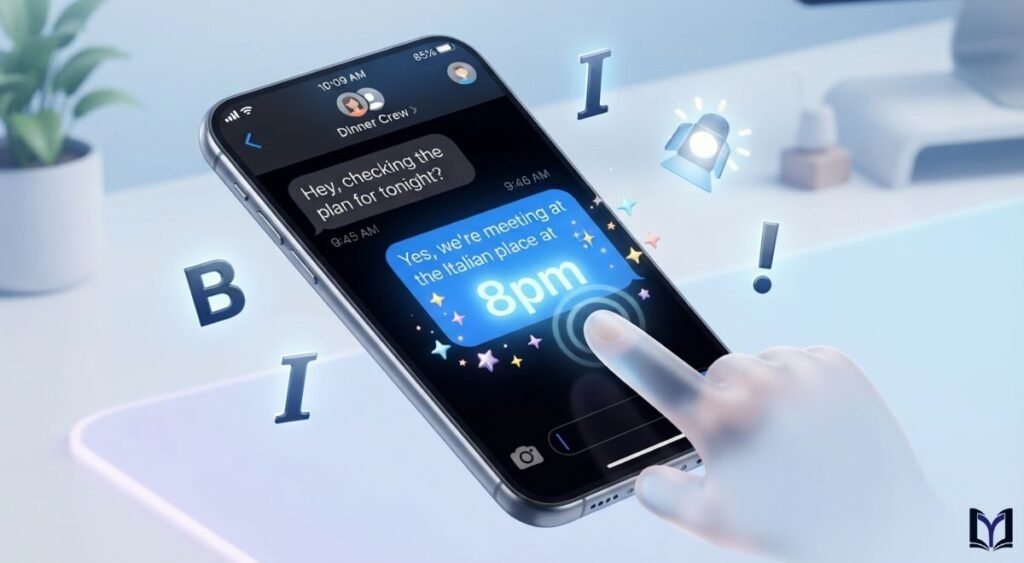
So, what does emphasize mean in text? It means to stress something or make it especially important. If someone writes, “I want to emphasize one thing,” they are telling you to pay close attention to what comes next. The phrase can appear in casual chat, workplace messages, school conversations, or formal writing. The exact method isn’t always stated. The writer may want stronger wording, formatting, or simply more attention on one idea.
The meaning of emphasize can therefore change slightly with the situation. In a text message, emphasis may show urgency or emotion. In professional communication, it may simply point readers toward a deadline or instruction. In academic writing, it may show which finding deserves attention. In every case, the central idea remains the same: give special importance to something.
What Does Emphasize Mean in Texting?
When someone says “emphasize this,” they don’t automatically mean “make this bold.” They may want you to stress a point, highlight a point, or draw attention to text.
For example, “Please emphasize the deadline” could mean making the deadline bold. It could also mean putting the deadline in a heading or rewriting the sentence so the date becomes clearer.
Examples of “Emphasize” in Text Messages
Consider these examples:
| Text | What receives emphasis? |
| Please call me tonight. | The requested action |
| The deadline is Friday. | The deadline |
| I really mean it. | The speaker’s seriousness |
| DO NOT OPEN this file. | The warning |
| I want to emphasize one thing. | The next idea |
These examples of emphasize show why context matters. The same technique can work in a friendly casual chat or a serious work message.
Emphasize vs. Emphasized
Emphasize is the base verb. Emphasized is its past-tense form. For example, “Please emphasize the title” gives an instruction. “The teacher emphasized the title” describes something that already happened.
Both words share the same core emphasize meaning in text. The difference comes from grammar, not meaning.
Why Do People Emphasize Text in Chats and Social Media?

People use emphasis because digital communication removes many natural signals. During spoken communication, your voice can become louder or softer. You can use vocal stress to show which word matters most. You can also use facial expressions and gestures. A written message doesn’t provide those signals in the same way. As a result, emphasis in messaging helps replace some of those missing cues. It can show emotion, urgency, excitement, anger, seriousness, or affection.
Emphasis also improves readability. Imagine opening a long message with ten dates, names, and instructions. Without structure, finding the useful detail takes longer. A few carefully emphasized terms can guide the eye. This approach appears in emphasis on social media, email, digital documents, and online text emphasis. However, good emphasis stays selective. If every word receives special treatment, nothing feels special anymore.
Emphasizing Important Information
A writer may emphasize a deadline, warning, price, location, or instruction. This makes the most useful detail easier to find.
For example:
Deadline: September 30
The formatting immediately tells the reader where to focus.
Emphasizing Emotion in Texting
Emotion often drives emphasis in personal messages. Consider “I can’t wait!” compared with “I CAN’T WAIT!!!” The second version carries much stronger visual energy. It may communicate excitement rather than anger.
However, emphasis doesn’t have one fixed emotional meaning. Context remains essential. “I’M SO HAPPY!” sounds positive. “SEND IT NOW!” may sound demanding. The words and situation work together.
Why Context Matters
The audience changes how emphasis feels. A message between close friends may tolerate stronger capitalization and playful punctuation. A business email usually needs more controlled visual formatting.
The relationship also matters. A person who writes “YOU ACTUALLY CAME!” may express surprise and excitement. Another person could read the same format as criticism. That’s why formatting alone cannot tell you exactly what someone feels.
How Do People Emphasize Text in Online Conversations?
There are many ways to emphasize text online. Common text formatting methods include bold text, italic text, underlined text, capital letters, a larger font, spacing, punctuation, emojis, and a different text style. Some platforms also provide highlighting tools. Others offer only basic formatting. When traditional formatting isn’t available, people often use capitalization or punctuation instead.
The goal of how to emphasize text remains consistent across platforms. You want to make text stand out without making the message confusing. For example, a single bold phrase can guide attention immediately. Ten bold sentences can overwhelm the reader. Good effective text emphasis works like a road sign. It tells readers where to look without blocking the road.
Bold, Italics, Capital Letters, and Punctuation
Bold formatting creates strong visual weight. Italic formatting usually feels softer. Capitalization can create very strong emphasis. Underlining can also draw attention, although it may look like a hyperlink online.
Punctuation adds another layer. Compare “Really?” with “REALLY?!” The second version carries more energy. Exclamation marks, question marks, repeated letters, and emojis can all affect the perceived tone.
Can You Emphasize Text Without Formatting?
Yes. You can emphasize an idea through word choice alone. For example, “This deadline is extremely important” places emphasis through language.
You can also repeat a key phrase or place it in a short standalone sentence. “The deadline is Friday. Friday.” gives the date extra weight without using formatting.
How Much Emphasis Is Too Much?
Excessive emphasis can make writing difficult to read. If every sentence contains capital letters, multiple exclamation marks, and bold formatting, the reader loses the visual hierarchy.
Good effective emphasis should answer one question: “What should the reader notice first?” If the answer isn’t clear, the formatting may need simplification.
What Does “Emphasize” Mean on iPhone Messages?
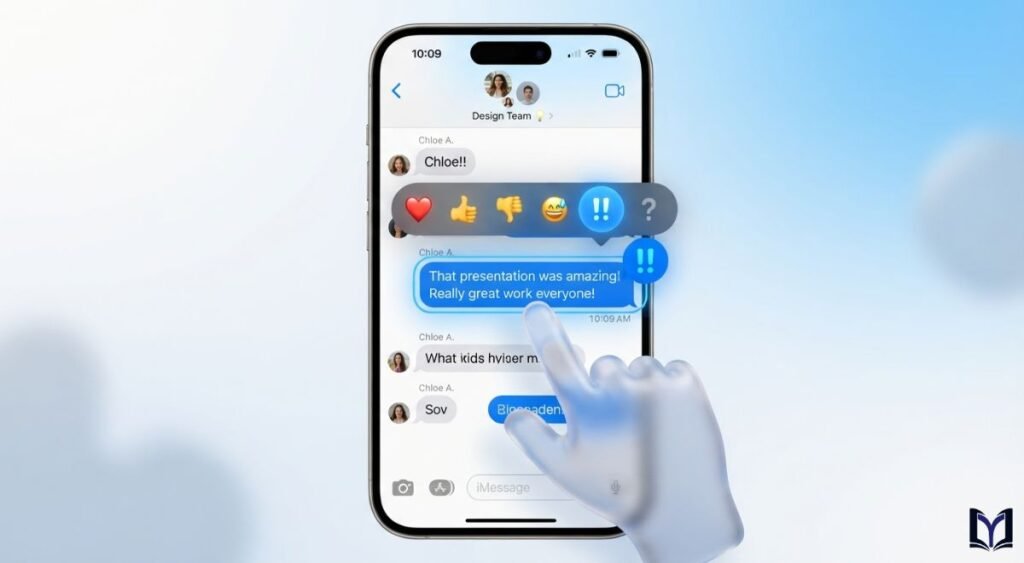
On an iPhone, the word “Emphasize” can also appear in connection with iMessage reactions. This creates a different search intent from ordinary text formatting. Here, “Emphasize” may refer to a message reaction rather than changing the appearance of individual words. Understanding this difference prevents a common misunderstanding. Someone isn’t necessarily asking you to make their sentence bold or larger.
In ordinary iPhone messaging, formatting and reactions serve different purposes. Formatting changes how written content appears. A reaction responds to an existing message. Therefore, when someone searches for what does emphasize mean on iPhone Messages, the surrounding interface matters. The word can describe an action within the messaging system rather than a general instruction about text formatting.
What Is the Emphasize Reaction in iMessage?
An iMessage reaction lets you respond to a message without typing a separate reply. The reaction communicates acknowledgment or a particular response to the message.
This is different from emphasize text online. One changes or stresses the written content. The other interacts with an existing message.
What Does It Mean When Someone Emphasizes Your Message?
When someone uses an Emphasize reaction, the meaning depends on the message and conversation. It can signal that they want to give the message special attention or react to it without writing a full response.
The safest interpretation comes from the surrounding context. A reaction doesn’t always carry the same emotional meaning in every conversation.
Emphasize Reaction vs. Regular Text Formatting
| Feature | Purpose | Example |
| Emphasize reaction | React to a message | A reaction on an iMessage |
| Bold text | Add visual weight | Important |
| Italic text | Add softer emphasis | Important |
| CAPITALIZATION | Create strong emphasis | IMPORTANT |
| Highlighting | Make an area visually noticeable | Highlighted phrase |
This distinction is useful when discussing emphasized text meaning on an iPhone. The word “emphasize” can refer to either an ordinary language concept or a messaging feature.
How Does Emphasized Text Change the Tone of a Message?
Emphasis can change how a reader hears a message in their head. Consider “Okay,” “OKAY,” and “Okay!!!” The words remain similar. The perceived tone changes. The first may sound neutral. The second may sound firm or excited. The third can sound enthusiastic, surprised, or irritated. The tone comes from several signals working together. These include capitalization, punctuation, wording, relationship, and context.
This matters because written communication lacks many signals found in face-to-face conversations. You can’t hear someone’s voice or see their expression. As a result, readers often use formatting as a clue. Still, emphasis isn’t a perfect emotional decoder. A person may use capital letters simply because they’re excited. Another person may use them for a joke. Meaning depends on the entire conversation.
Emphasis Can Show Excitement
Strong emphasis often creates energy. “I GOT THE JOB!” clearly carries more excitement than “I got the job.”
Similarly, “That was AMAZING!!!” can communicate enthusiasm. The capitalization and punctuation work together.
Emphasis Can Show Anger or Urgency
Some emphasis feels forceful because it resembles shouting. “CALL ME NOW” can sound urgent or angry.
Yet the same format doesn’t prove anger. The sender could be dealing with an emergency. The surrounding message provides the missing information.
Emphasis Can Show Sarcasm, Surprise, or Affection
Emphasis can also support sarcasm, surprise, or affection. “Oh, you finally replied” could sound playful or critical.
Likewise, “I REALLY missed you” may feel affectionate. The relationship between the people helps determine how the message lands.
Why Emphasis Doesn’t Always Reveal Emotion
Formatting provides clues rather than certainty. A reader shouldn’t assume that bold letters automatically mean anger. Likewise, capital letters don’t always mean shouting.
Words, punctuation, timing, relationship, and previous messages all contribute to communication. Read the whole exchange before interpreting a strong tone.
Emphasized Text Meaning on WhatsApp, Instagram, TikTok & Other Platforms

The emphasized text meaning stays broadly similar across platforms. However, each service offers different tools. WhatsApp supports several useful text styles. Instagram uses emphasis in captions, Stories, comments, and visual posts. TikTok often uses on-screen captions and large text to direct attention. Snapchat relies heavily on visual overlays, captions, and creative text. The platform changes the method. The basic purpose remains the same.
On social media, emphasis often has an additional goal: stopping the scroll. A creator may use large text or strong wording to make an idea noticeable within seconds. This is especially useful in digital writing where readers scan rather than read every word. However, excessive styling can make content look crowded. Effective emphasis on social media should improve clarity rather than compete with the message.
Emphasized Text on WhatsApp
WhatsApp gives users several ways to create visual emphasis. People can use bold, italics, strikethrough, and other supported text styles.
For example, a message might emphasize a deadline or important instruction. The goal isn’t decoration. It is to help the reader identify the detail that matters most.
Emphasized Text on Instagram and TikTok
On Instagram, emphasis can appear in captions, Stories, comments, and designed graphics. A creator may enlarge a phrase or place it in a prominent position.
On TikTok, text placed over video can emphasize a joke, warning, quote, or key statement. Timing also matters because viewers see the words while the video plays.
Emphasized Text on Snapchat, Discord, Messenger, and X
Snapchat, Discord, Messenger, and X can use different combinations of formatting, capitalization, emojis, punctuation, and visual design.
The platform doesn’t completely determine the meaning. The words and context still matter. A capitalized message from a close friend may feel playful. The same message from a manager could feel much more serious.
Emphasized Text Examples in Different Situations
Real examples make the emphasized text meaning easier to understand. In everyday texting, emphasis often highlights plans, feelings, or urgent requests. At work, it usually points toward deadlines, responsibilities, or important details. In school assignments and academic writing, emphasis can help readers identify key terms and ideas. The same principle works across each setting. Only the level and style of emphasis change.
A useful way to understand this is to imagine emphasis as a spotlight. The spotlight doesn’t change the object. It simply makes that object easier to notice. Strong writing uses that spotlight carefully. When too many things receive equal attention, the reader doesn’t know where to look.
Emphasized Text Examples for Friends
| Situation | Example | Likely purpose |
| Reminder | DON’T FORGET TONIGHT! | Reminder |
| Excitement | I CAN’T WAIT! | Excitement |
| Surprise | You ACTUALLY came! | Surprise |
| Affection | I REALLY missed you. | Affection |
| Urgency | CALL ME WHEN YOU CAN. | Urgent attention |
These emphasized text examples show that formatting doesn’t have one universal emotional meaning. The surrounding conversation always adds important clues.
Emphasized Text Examples at Work or School
In professional communication, restrained emphasis usually works better. A message such as “Project deadline: Friday” gives the reader useful information without sounding aggressive.
In academic writing, headings, carefully chosen terms, and structured sentences can emphasize a point. In school assignments, emphasis should support the argument rather than distract from it.
Emphasized Text Examples in Dating and Personal Chats
Personal messages can use emphasis to increase warmth or emotional intensity. “I really enjoyed talking with you” places extra weight on “really.”
A stronger message such as “I REALLY WANT TO SEE YOU AGAIN!” may feel more intense. Whether it feels sweet, dramatic, or overly strong depends on the relationship and the rest of the conversation.
Normal vs. Emphasized Text Examples
| Normal message | Emphasized version | Tone difference |
| I need you to call me. | I NEED you to call me. | More urgent |
| That was surprising. | That was SO surprising! | More excited |
| Please remember Friday. | Please remember FRIDAY. | Stronger reminder |
| I liked talking to you. | I really liked talking to you. | More personal |
Is Emphasized Text Rude, Angry, or Flirty?

Emphasized text isn’t automatically rude, angry, or flirty. Its effect depends on the words, formatting, relationship, and situation. A message with capital letters can express anger, yet it can also show excitement. A bold word can create clarity rather than aggression. In a romantic conversation, emphasis may increase emotional intensity. That doesn’t mean the formatting itself is inherently flirtatious.
Readers should therefore avoid treating one formatting choice as a fixed emotional code. For example, “I LOVE this!” usually sounds enthusiastic. “I TOLD YOU!” may sound confrontational. Both use capitalization. Their wording creates different impressions. This is why context remains one of the most important parts of interpreting emphasis in online conversations.
When Emphasized Text Can Sound Rude
Strong capitalization can feel harsh when paired with commands or criticism. “STOP DOING THAT NOW” sounds forceful because the words already carry pressure.
Multiple exclamation marks can increase that effect. However, the same formatting may feel normal between friends who regularly communicate in an energetic style.
Related Articles: What Does KK Mean? Meaning, Slang, Examples & How to Reply
When Emphasized Text Can Sound Friendly or Excited
Positive wording can soften strong formatting. “YOU DID IT!!!” usually feels celebratory.
Emojis can also change the impression. “I CAN’T WAIT! 😊” feels different from “I CAN’T WAIT.” The words are similar. The added signal changes the tone.
Can Emphasized Text Be Flirty?
It can add intensity to a romantic or playful message. For example, “I really want to see you again” may sound warmer than the unaccented version.
Still, formatting alone doesn’t prove romantic interest. The relationship, wording, and conversation provide the stronger clues.
Emphasized Text vs Bold, Italic, Capitalized & Highlighted Text
A common misunderstanding is treating all forms of emphasis as identical. They’re connected, but they aren’t the same thing. Emphasis describes the purpose of drawing attention to something. Bold text, italic text, capitalization, and highlighted text are methods that can achieve that purpose. In other words, emphasis is the goal while formatting is one possible tool.
This difference becomes especially useful when someone gives an editing instruction. “Emphasize the title” leaves the method open. “Bold the title” gives a specific formatting instruction. “Underline the title” is even more specific. Understanding these differences helps you respond correctly in formal writing, schoolwork, workplace documents, and online communication.
Emphasized Text vs Bold Text
Bold text adds visual weight. It makes selected words appear darker and stronger.
However, bold text is only one form of visual emphasis. You can emphasize something without bolding it.
Emphasized Text vs Italic Text
Italic text usually creates a lighter visual signal. Writers often use it for subtle emphasis, titles, or certain stylistic purposes.
Therefore, emphasize vs stress isn’t the same comparison as formatting methods. “Stress” describes importance. Italics describe appearance.
Emphasized Text vs Capitalized Text
Capital letters create a powerful visual signal. Online, ALL CAPS can sometimes resemble shouting.
Still, capitalization can also express excitement, celebration, or surprise. The meaning depends on the surrounding message.
Emphasized Text vs Highlighted Text
A highlight normally means marking text with a visual background or another noticeable treatment. It can help highlight important text in a document.
Emphasize has a broader meaning. You can emphasize text through wording, placement, formatting, or delivery.
Emphasize vs Highlight vs Stress vs Underline
| Term | Basic meaning | Common use |
| Emphasize | Give special importance | Words, ideas, instructions |
| Highlight | Make something noticeable | Important information |
| Stress | Give strong importance | Ideas or spoken points |
| Underline | Mark text with a line | Titles or specific text |
| Accentuate | Make something more noticeable | Design and style |
| Reinforce | Strengthen an idea | Arguments and explanations |
| Point out | Direct attention toward something | Everyday communication |
| Draw attention to | Make someone notice something | Warnings and key details |
This table also clarifies emphasize vs highlight, emphasize vs stress, and emphasize vs underline. Each term can overlap with emphasis. Yet each one carries its own usual meaning.
Common Misconceptions About Emphasized Text
One of the biggest common misconceptions is that emphasis always means bold formatting. It doesn’t. Bold is simply one way to create emphasis.
Another misconception says that capital letters always signal anger. That’s also inaccurate. “HAPPY BIRTHDAY!” can show pure excitement. Finally, some people assume that every important sentence needs emphasis. In reality, effective emphasis works best when you use it selectively.
Conclusion
The emphasized text meaning is straightforward: it means giving certain words, phrases, or ideas extra attention or importance. What does emphasized text mean in everyday communication? Usually, it means that something deserves more focus. You can create emphasis through bold text, italics, capital letters, punctuation, spacing, wording, or other text formatting methods. You can also create meaning-based emphasis without changing the appearance of the words.
The key is to consider context, audience, and purpose. In texting, emphasis can show urgency or excitement. In social media, it can help important information stand out. On iPhone and iMessage, “Emphasize” may refer to a message reaction rather than ordinary formatting. In professional or academic settings, restrained emphasis often improves readability. Ultimately, good emphasized text acts like a spotlight. It helps readers notice what matters without overwhelming them.
FAQ’s About Emphasized Text Meaning
What does emphasized text mean?
Emphasized text means certain words or phrases are given extra importance or attention through formatting, capitalization, punctuation, or other methods.
What does it mean if someone emphasizes a text?
It usually means they want you to notice or focus on a specific part of their message, often to add importance, emotion, or urgency.
What does it mean if something is emphasized?
It means extra attention or importance has been given to that word, idea, statement, or detail.
How do I turn off emphasized text on my iPhone?
If you mean the iMessage “Emphasize” reaction, you can’t disable the reaction itself. You can remove your reaction by tapping the same reaction again.
What does it mean when someone exclamation marks your text?
If someone adds an exclamation mark to a message, it can show excitement, emphasis, surprise, urgency, or strong emotion depending on the context.
Related Articles: What Does KK Mean? Meaning, Slang, Examples & How to Reply

Welcome to Meanings There! I’m the creator and author behind this website, sharing useful meanings, explanations, and informative content to make words and phrases easier to understand.
1 thought on “Emphasized Text Meaning: What Does It Mean in Texting & Online?”