

Ever seen a post get flooded with replies while barely collecting any likes? That’s where the ratioed meaning comes into play. On today’s social media platforms, “ratioed” describes a situation where a post or comment receives a much weaker reaction than an opposing response. It often signals disagreement, criticism, or an unpopular take. You may see this social media slang on X, TikTok, Instagram, and other apps where likes, replies, and reposts are visible.
Sometimes, users even write “L + Ratio” to mock someone after a heated exchange. Understanding this ratio slang can help you follow online conversations, recognize public reactions, and understand why a simple comment can suddenly take over the discussion.
What Does Ratioed Mean on Social Media?
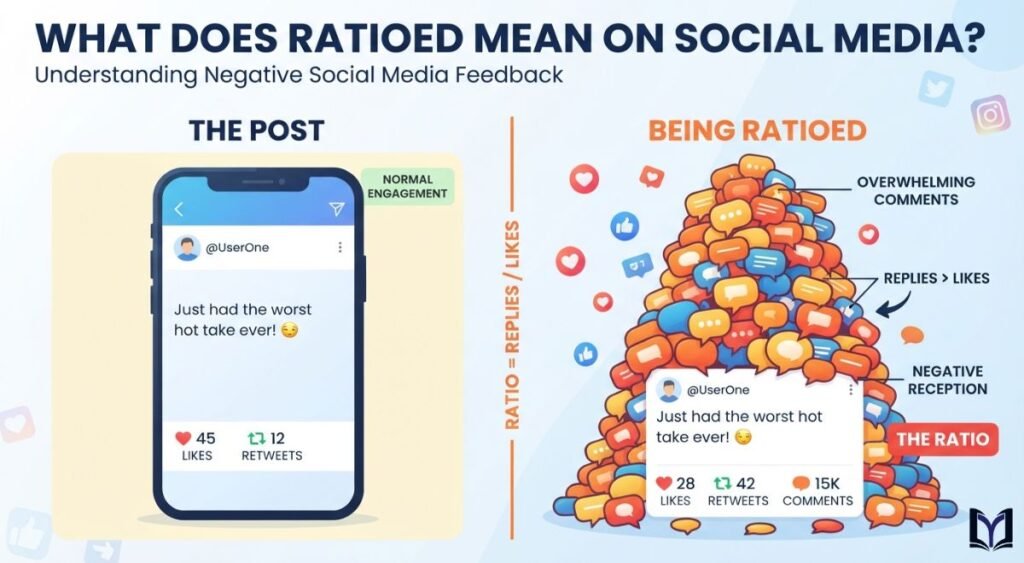
The simplest answer to what does ratioed mean is this: someone gets ratioed when their post or comment receives a much weaker reaction than an opposing response or attracts unusually strong negative engagement. On older Twitter usage, the clearest sign was a post with many more replies than likes or retweets. That pattern suggested that people were responding to the content instead of simply supporting it. Dictionary.com defines the social-media use of “ratio” around this relationship between replies and positive engagement.
Imagine that you publish a tweet with 100 likes and 2,000 replies. Most readers would immediately notice the imbalance. If many of those replies criticize your opinion, another user might comment, “You got ratioed.” The phrase can also describe a reply that gets more likes than the post it challenges. For example, your post might get 300 likes while an opposing comment gets 8,000. In that situation, users may say the reply “ratioed” you. The important point is that being ratioed reflects visible audience reaction. It doesn’t automatically prove that the original argument is wrong.
| Situation | What It May Mean |
| Many replies but few likes | Strong disagreement or controversy |
| Opposing reply gets more likes | The reply appears more popular |
| “Ratio” appears under a post | Someone is calling for stronger engagement |
| “You got ratioed” | The audience reaction appears unfavorable |
| “L + Ratio” | A mocking way to say someone took a loss |
What Does “Ratioed” Mean in Texting?
In texting, ratioed meaning can become more casual because private messages usually don’t have public engagement numbers. Someone might say, “You got ratioed in the group chat,” when most people supported another person’s response. The phrase borrows the idea of online popularity and applies it to a smaller conversation.
What Does “Ratio” Mean in Slang?
The ratio meaning in slang comes from the way people compare reactions to online content. In ordinary English, a ratio describes a relationship between quantities. Online, however, “ratio” became a shorthand for comparing audience reactions. The term became strongly associated with Twitter in 2017, when users noticed that some tweets received dramatically more replies than retweets or likes.
Over time, the word became an action as well as a noun. People could ratio someone by replying to a controversial post and trying to receive more engagement than the person who posted it. A user might simply comment “ratio” as a challenge. If that ratio comment attracts huge support, the commenter has achieved what users call a successful ratio. If hardly anyone engages with it, the attempt becomes a failed ratio. This playful competition helped turn the term into a recognizable piece of online slang and social media slang.
Related Articles: What Does ICL Mean in Text? Meaning, Slang, Example & Usage
The modern ratio slang vocabulary includes several related forms. “Ratio” can name the phenomenon. “Ratioed” describes what happened. “Ratioing” describes the act of trying to outperform another post. “Getting ratioed” describes receiving the unfavorable reaction. These forms all revolve around one idea: public reaction becomes a scoreboard.
How Is Ratio Used as a Slang Term?
When someone writes “ratio” under a controversial post, they’re often challenging other users to support their comment. The goal may be to receive more likes than the original content or to demonstrate that more people agree with the response.
How Does Getting Ratioed Work Online?
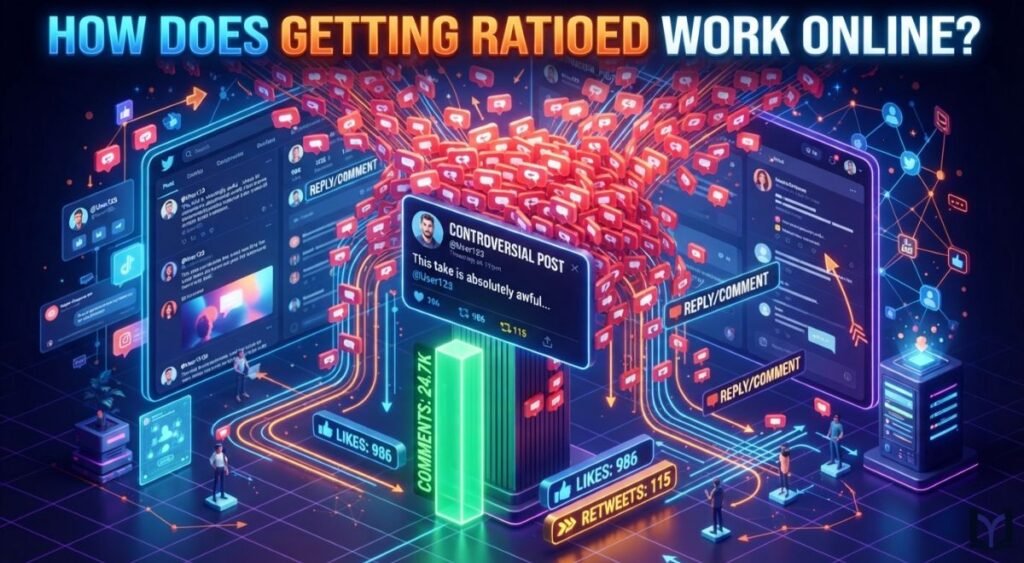
Getting ratioed online usually starts with an original statement that attracts disagreement. Someone replies with a criticism, joke, correction, or stronger opinion. Other users then interact with that response. If the opposing comment collects significantly more engagement than the original post, people may describe the situation as a ratio. On platforms where replies, reposts, likes, and comments are visible, the imbalance can become obvious within minutes.
Consider this example. A creator publishes a controversial post that receives 250 likes. Another user replies with a sharp criticism. That reply receives 4,500 likes. The numbers don’t establish who is objectively correct. Still, they create a clear picture of public reaction. The reply appears to have much stronger support. That is the basic idea behind a social media ratio.
The numbers can also work differently. A post might receive 100 likes and 2,000 replies. That high comment-to-like ratio suggests that the post has generated intense discussion rather than simple approval. The classic Twitter version focused heavily on this relationship between replies and positive engagement.
What Is a Ratio Request?
A ratio request asks other users to help a comment gain more engagement. Phrases such as “ratio me” and “ratio 1:1” can signal this goal. A 1:1 ratio may mean that a commenter wants their comment to receive the same number of likes as the content being challenged.
For example, if a video has 5,000 likes, someone might write “ratio me 1:1” under it. They’re asking other users to help their comment reach roughly 5,000 likes. This version treats the ratio as an engagement challenge rather than simply an insult.
What Is the Origin of the Term “Ratioed”?
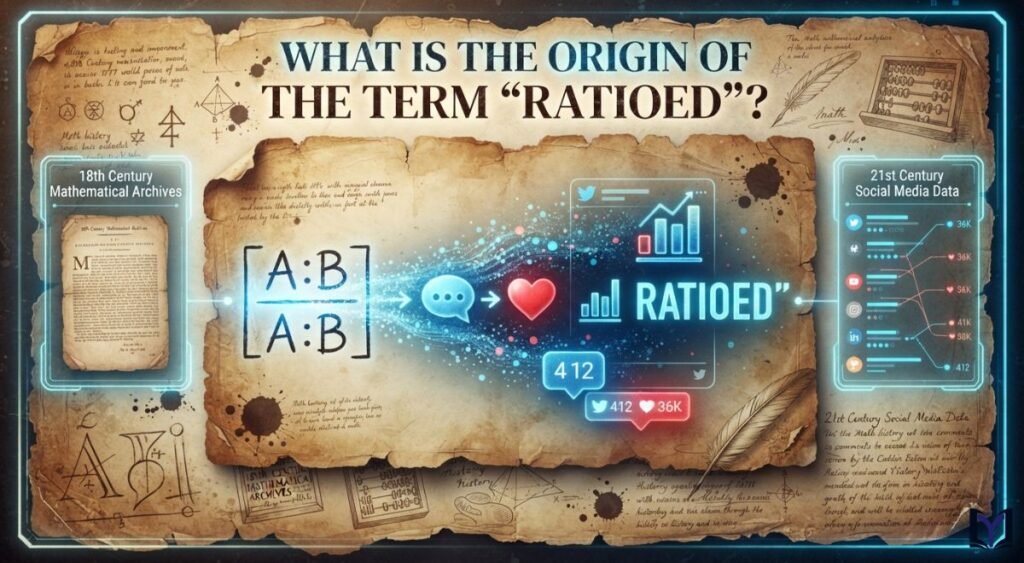
The modern ratioed slang meaning developed on Twitter during the mid-2010s. Historical records commonly point to early 2017 as the period when users began openly discussing “the ratio.” One widely cited March 2017 example involved a tweet with hundreds of replies but far fewer retweets and likes. Other users soon began describing these unusual engagement patterns as evidence that a tweet had badly missed the mark.
The idea gained wider attention when writers and internet communities started explaining the pattern. Know Your Meme records the development of “The Ratio” in 2017 and notes that users treated it almost like an unofficial rule: unusually high replies compared with retweets and likes could indicate that a tweet had upset or disappointed its audience.
That history explains why the word feels different from ordinary engagement ratio language. It isn’t simply a neutral marketing measurement. The early slang carried a punchy social message. A bad ratio could publicly expose disapproval without requiring anyone to write a long explanation. The numbers became part of the argument.
The concept later moved beyond Twitter. As social apps developed their own comment and engagement cultures, users adapted the term. Today, ratio can describe several kinds of engagement imbalance. The exact mechanics vary by platform, but the underlying idea remains familiar.
How Do You Know If Someone Has Been Ratioed?
You can usually spot being ratioed by comparing the engagement around an original statement with the engagement around opposing responses. On X, a large number of replies compared with likes or reposts can be a classic warning sign. Another common signal appears when a reply receives dramatically more likes than the content it challenges. Dictionary.com describes “ratio” in both of these social-media contexts.
For example, imagine a creator posts an unpopular opinion. The post receives 150 likes. A response criticizing that opinion receives 7,000 likes. Users may start calling the original poster “ratioed.” The response has become more popular than the original content. That difference creates the sense of an online scoreboard.
Still, don’t treat every strange number as proof of a ratio. A large audience can behave unpredictably. A post may attract comments because it is funny, confusing, informative, or controversial. Sometimes people comment heavily because they want clarification. A ratio can suggest public disapproval, but context matters.
| Signal | Possible Interpretation |
| Replies greatly exceed likes | Strong discussion or disagreement |
| Opposing reply gets more likes | The reply has stronger visible support |
| Many negative comments appear | The content may have upset its audience |
| A “ratio” comment gains traction | Users may be trying to challenge the original poster |
| Engagement rises rapidly | The post may be receiving viral attention |
Example of Someone Getting Ratioed
Suppose a user posts, “Nobody watches this show anymore.” Another user responds, “The finale broke streaming records.” The original post receives 400 likes. The factual response receives 12,000 likes. Other users might call the original poster ratioed because the opposing viewpoint has gained much stronger visible support.
That doesn’t automatically settle the factual argument. It simply shows that the second response attracted more online engagement.
What Does “L + Ratio” Mean?
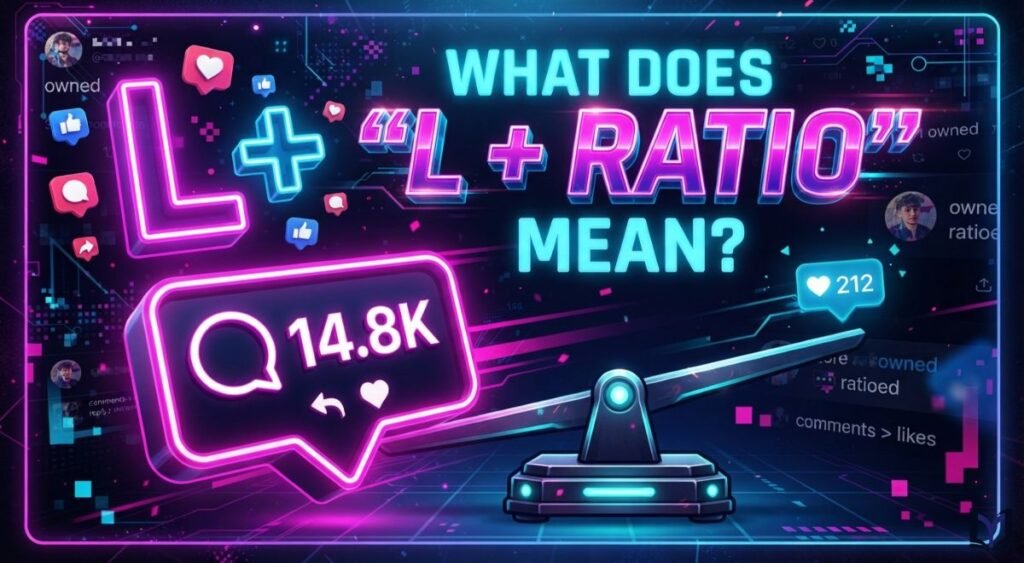
“L + Ratio” is a mocking internet phrase that combines two pieces of slang. “L” means “loss,” while “ratio” refers to the unfavorable engagement pattern. Together, the phrase basically tells someone, “You lost this exchange, and the audience reaction proves it.” Dictionary.com describes L + Ratio as a mocking insult that became a common social-media meme format.
The phrase can appear by itself or as the beginning of a longer joke. Users may write “L + Ratio + fell off” or create an exaggerated chain of insults. The humor comes partly from how dramatic the response becomes. What began as a simple judgment about engagement turned into a reusable meme format.
For example:
Original post: “That movie was the greatest film of the decade.”
Reply: “L + Ratio.”
The reply doesn’t explain why the movie was bad. Instead, it uses internet slang to dismiss the opinion and predict that other users will disagree.
The phrase can be playful among friends. It can also become rude when users pile onto a person simply to humiliate them. That distinction matters because digital etiquette still applies even when a phrase is used as a joke.
Is “L + Ratio” Always an Insult?
Usually, yes. L + Ratio carries a mocking tone because “L” represents a loss. However, friends sometimes use it jokingly when someone makes a harmless mistake or says something deliberately ridiculous.
What Do W Ratio and L Ratio Mean Online?
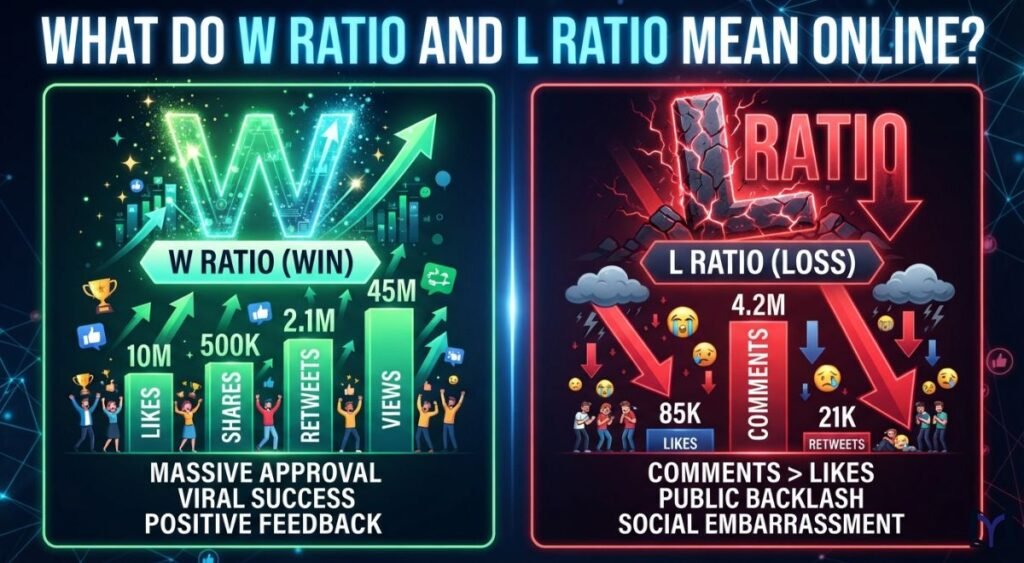
A W ratio and an L ratio describe the perceived result of a ratio. “W” means “win,” while “L” means “loss.” These letters come from broader internet slang such as “take a W” and “take an L.” When a response receives stronger support, users may call it a W ratio. When someone appears to lose the exchange, users may call it an L ratio.
Imagine two people arguing in a comment section. Person A makes the original claim and receives 300 likes. Person B replies with a counterargument and receives 6,000 likes. People supporting Person B might comment “W ratio.” They’re celebrating the response’s apparent popularity. If Person A receives overwhelming criticism, others might instead write “L ratio.”
| Term | Basic Meaning | Typical Tone |
| W ratio | A successful or winning ratio | Celebratory |
| L ratio | A losing or unfavorable ratio | Mocking |
| L + Ratio | A direct insult based on the ratio | Teasing or harsh |
| Ratio | A call to compete for engagement | Competitive |
A successful ratio doesn’t necessarily mean someone produced the better argument. Social media rewards attention in complicated ways. Humor, timing, follower count, existing rivalries, and controversy can all influence popularity. A witty one-line reply may receive thousands of likes even when a longer original argument contains more useful information.
Is W Ratio the Opposite of L Ratio?
In casual social media slang, yes. A W ratio suggests that a person or reply appears to have won the engagement battle. An L ratio suggests that the person appears to have lost it.
What Does Ratioed Mean on TikTok, Twitter/X, and Other Platforms?
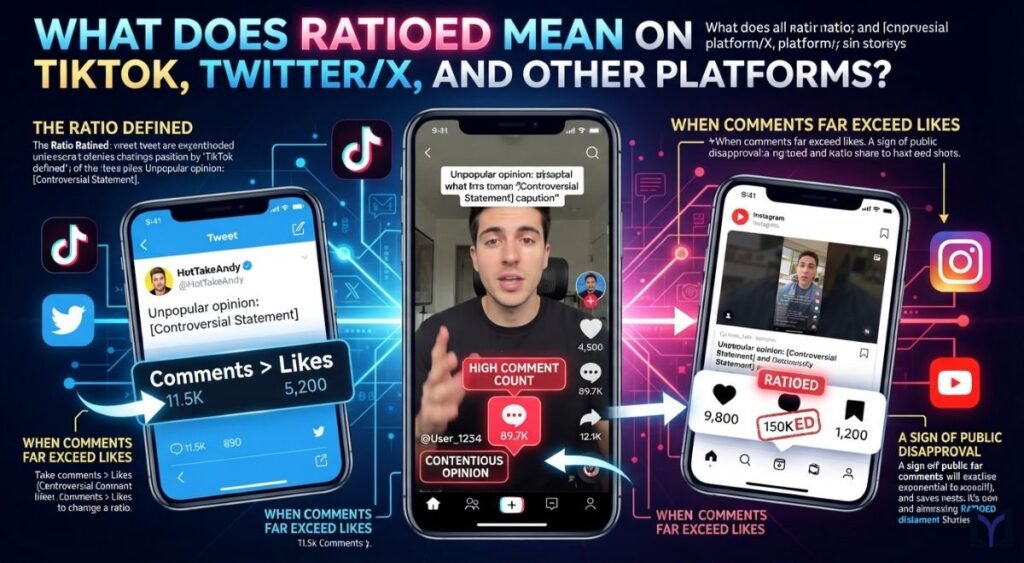
The meaning of c changes slightly from one platform to another. On Twitter/X, the classic version remains closely tied to replies compared with likes or reposts. Users may also call a reply successful when it receives more engagement than the post it challenges. This is where the original ratio trend became especially recognizable.
On TikTok, users commonly use “ratio” around comments and video reactions. Dictionary.com notes that the term can indicate strong disagreement with a video, opinion, or other content on TikTok. On Instagram, the idea may appear in comments beneath posts or Reels. Facebook users can also use the term when a controversial post attracts a wave of opposing comments. The exact numbers matter less than the social meaning.
This platform-by-platform shift shows why ratio meaning isn’t locked to one formula. The word has become flexible. A ratio can refer to replies versus likes, a popular comment versus the original comment, or an engagement imbalance that clearly favors one side.
Related Articles: What Does ICL Mean in Text? Meaning, Slang, Example & Usage
| Platform | Common Ratio Context |
| Twitter/X | Replies versus likes or reposts; popular opposing replies |
| TikTok | Video comments, replies, and ratio requests |
| Comments and reactions around posts or Reels | |
| Strongly debated posts and comment sections | |
| Other communities | Popular replies or comments outperforming the original |
What Does Ratioed Mean on TikTok?
On TikTok, “ratio” often appears in the comment culture surrounding a video. Someone might ask others to “ratio” a comment or write “ratio me 1:1.” A popular comment can also become the center of the conversation when it receives much stronger engagement than another comment.
That makes TikTok’s version more flexible than the original Twitter model. The core idea remains the same: users compare visible reactions and treat the difference as a sign of approval, disapproval, or popularity.
Are Ratios Bad? Understanding the Impact of Being Ratioed
Getting ratioed usually carries a negative meaning because the term often signals criticism, negative feedback, or public disagreement. Nobody enjoys seeing thousands of people criticize their content. For some creators, a ratio can feel like public embarrassment because the numbers make the reaction visible to everyone.
However, a ratio isn’t automatically harmful. Controversy can create viral attention and increase visibility. A controversial post might attract thousands of comments and become widely discussed. In some cases, that attention can help an issue reach people who would never have seen it otherwise. High engagement can also create meaningful discussion when users disagree respectfully.
The problem begins when disagreement turns into harassment. A ratio can encourage people to pile onto an original poster simply because others are doing it. That can lead to insults, negative comments, misinformation, or targeted abuse. A healthy online interaction should leave room for disagreement without turning every unpopular opinion into a personal attack.
Does Getting Ratioed Mean You Are Wrong?
No. A ratio measures online reactions, not objective truth. People can dislike accurate information. They can also support incorrect claims. A large audience can create a powerful impression of public opinion, but popularity and truth aren’t the same thing.
For example, a creator might post an unpopular scientific fact. Hundreds of people could disagree in the comments. That reaction doesn’t make the fact false. It simply shows that the audience rejected or questioned the perspective being presented.
How to Respond to or Avoid Getting Ratioed Online
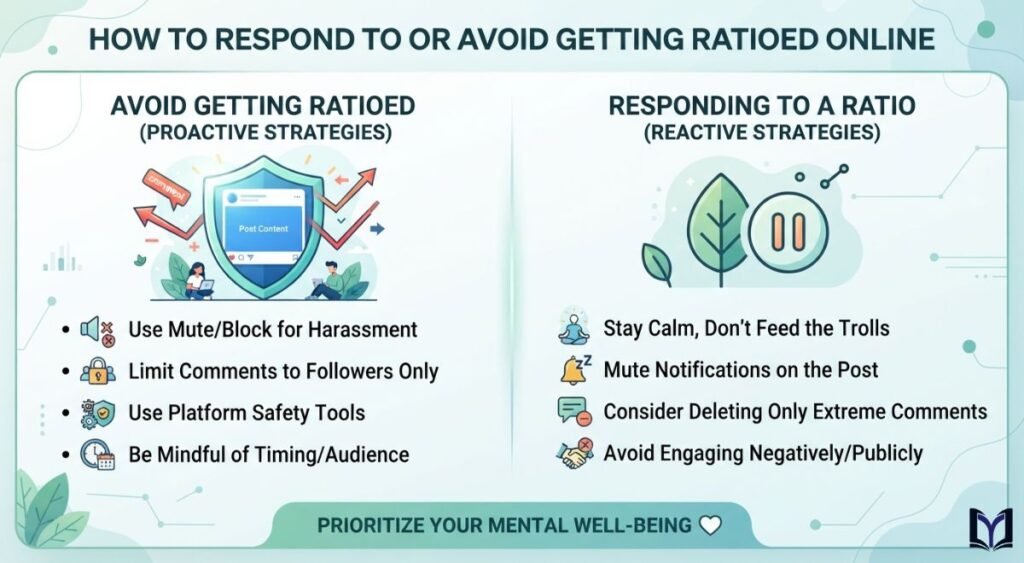
If you want to avoid getting ratioed, start by thinking about your claim before publishing it. Check facts. Consider your wording. Ask whether the statement invites useful conversation or simply provokes people. You don’t need to make every opinion bland. Strong opinions are part of social media engagement. Still, clarity and respectful communication can prevent unnecessary conflict.
If you do get ratioed, don’t panic. You can respond to a ratio calmly or decide not to engage at all. Fighting every reply often makes the situation larger. Sometimes the smartest move is to leave the comment section alone. If the criticism contains useful information, consider addressing it. If the replies contain harassment or misinformation, moderation tools may be more useful than another argument.
Good ratio etiquette also means understanding that other people are real people. Don’t encourage harassment simply because you dislike someone’s opinion. Don’t mistake a pile-on for proof. And don’t judge your personal value by engagement numbers. Social platforms turn reactions into visible statistics, but those numbers never tell the whole story.
How Should You Reply If Someone Says “You Got Ratioed”?
You can keep your response playful if the situation is harmless. A simple “Fair enough” can end the exchange. If you disagree, explain your position without insulting the other person. You can also ignore the comment completely. Sometimes no response is the strongest response.
The best approach depends on the situation. A friendly joke between friends is different from a large social media controversy involving harassment. When the conversation becomes toxic, stepping away usually works better than trying to win every exchange.
Conclusion
The ratioed meaning is fairly simple once you understand the culture behind it. Someone gets ratioed when their post receives an unfavorable engagement pattern or when an opposing comment attracts far more support than the original content. The term became popular through Twitter and later spread across other social media platforms. Today, it can describe everything from a heavily criticized tweet to a TikTok comment that completely outperforms another response.
The related terms are just as useful. “Ratio” can describe the phenomenon or act as a challenge. “L + Ratio” mocks someone for supposedly losing an online exchange. W ratio signals a perceived win, while L ratio signals a loss. A ratio request such as “ratio me” asks users to boost a response. Despite all the numbers, remember one important point: engagement measures reaction. It doesn’t automatically measure truth, intelligence, or the value of someone’s content.
In short, when someone asks “what does ratioed mean?”, the easiest answer is: it means receiving a noticeably worse public reaction than the content or person you’re being compared with. On today’s internet, that reaction may show up through replies, comments, likes, reposts, or other forms of engagement. Understanding the term helps you read internet slang more easily and recognize what people mean when they say someone “got ratioed.”
FAQ’s About Ratioed Meaning
What does ratioed mean?
“Ratioed” means a post or comment gets a much stronger negative reaction than support, often shown by more replies than likes or more likes on an opposing reply.
What is being ratioed on Twitter?
On Twitter/X, being ratioed usually means your tweet receives many replies or an opposing reply gets more likes than your original tweet, signaling public disagreement.
What does L ratio mean in slang?
“L ratio” combines L (“loss”) with “ratio,” mocking someone whose post or opinion has received an unfavorable reaction.
What does ratio mean in Gen Z slang?
In Gen Z slang, “ratio” is a way of pointing out that people strongly disagree with someone online, often through likes, replies, or reposts.
How do you say ratioed?
“Ratioed” is pronounced RAY-shee-ohd. It sounds like “ratio” followed by a quick “d” sound.
Related Articles: What Does ICL Mean in Text? Meaning, Slang, Example & Usage

Welcome to Meanings There! I’m the creator and author behind this website, sharing useful meanings, explanations, and informative content to make words and phrases easier to understand.
1 thought on “Ratioed Meaning: What Does “Ratioed” Mean in Text and on Social Media?”