

If you have seen “ima” in a text or social media post, you may wonder what it means. The most common ima meaning is “I’m going to” or “I am going to.” People use this informal expression to talk about a plan, intention, or future action. You may notice it in text messages, group chats, comments, and casual conversations. It can also appear as “imma,” “I’ma,” or “I’mma,” with little difference in meaning.
Understanding ima slang makes online conversations easier to follow. This guide explains what does ima mean in text, where the expression came from, how people use it, and when you should choose standard English instead of this casual form.
IMA Meaning – Quick Answer
The most common ima meaning is “I’m going to” or “I am going to.” It usually describes a planned or upcoming action. For example, “Ima eat” means “I’m going to eat,” while “Ima call you tonight” means “I’m going to call you tonight.” This is the main ima meaning in text and the meaning most people expect in casual chats.
The word is an informal expression, not standard formal English. It works well when you are talking with friends, family, or people who understand your casual style. The following table gives a quick view of the ima text meaning.
| Expression | Common meaning | Tone | Typical use |
| IMA | I’m going to | Very casual | Texting and chats |
| I’ma | I’m going to | Casual | Spoken-style writing |
| Imma | I’m going to | Casual/slang | Social media and texts |
| I’mma | I’m going to | Very casual | Informal speech and writing |
| I’m gonna | I’m going to | Casual | Everyday conversation |
| I’ll | I will | Neutral | Casual and formal writing |
So, if you are asking what does ima mean, the safest answer is “I’m going to.” The exact tone can change with the sentence. Context matters because uppercase “IMA” can also represent unrelated abbreviations in professional or technical settings.
What Does IMA Mean in Text and Slang?
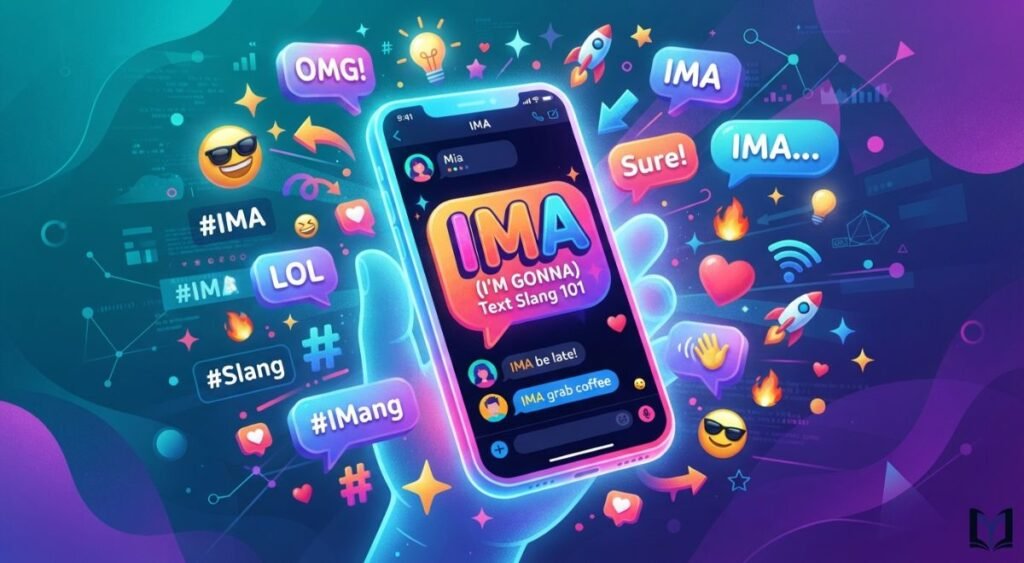
The main ima slang meaning is “I’m going to.” It tells the reader that someone plans to do something. It often comes before an action verb. For example, “Ima leave,” “Ima study,” and “Ima check” all describe a future action. In this sense, ima in text works almost like “I’m gonna” in everyday speech.
You may also search for what does ima mean in slang because the expression is strongly connected with informal language. It is a form of texting slang, internet slang, and online slang. People use it because it sounds closer to natural casual speech. Instead of typing “I am going to,” someone may type “ima” because it is shorter and more relaxed.
The following examples show how the expression works naturally:
| IMA sentence | Standard English meaning |
| Ima call you later. | I’m going to call you later. |
| Ima go home. | I’m going to go home. |
| Ima eat first. | I’m going to eat first. |
| Ima check it. | I’m going to check it. |
| Ima tell him tomorrow. | I’m going to tell him tomorrow. |
Is IMA an Acronym or Abbreviation?
People often ask is ima an abbreviation or is ima an acronym. In casual texting, it is better understood as a slang spelling of a spoken phrase rather than a traditional acronym. A normal acronym forms from the first letters of several words. “Ima” does not work that way.
The phrase developed from spoken forms connected with I’m going to. That is why calling it an ima acronym can be misleading. You may see “IMA abbreviation” searches online, but the texting form is better described as an informal expression or slang expression.
The distinction becomes especially important when you see uppercase IMA in another context. For example, a professional organization may use IMA as an abbreviation for its name. Therefore, IMA meaning depends on the words around it.
Related Articles: OFC Meaning? OFC Meaning, Snapchat, Slang & Examples
Where Did IMA Come From? Origin and Background
If you wonder where did ima come from, its story goes back further than modern social media. Informal spoken forms of “I am going to” have developed naturally in English over time. “I’m going to” can become “I’m gonna” in everyday speech. Other spoken forms, including “I’ma,” have also appeared in varieties of American English.
The spelling became more visible through African American English, often shortened to AAE, as well as music and popular culture. It also became familiar through hip-hop culture, music lyrics, movies, television, and everyday speech. Digital platforms later gave these forms a new written life.
There is no single confirmed moment when “ima” was invented. Language usually changes gradually. A spoken form becomes familiar, people begin writing it phonetically, and eventually the spelling becomes recognizable online. This is why the history of ima slang cannot be reduced to one website, one generation, or one social media platform.
A useful way to understand the development is shown below:
| Earlier form | Common casual form | Digital spelling |
| I am going to | I’m going to | I am going to |
| I’m going to | I’m gonna | I’m gonna |
| I’m gonna | I’ma | I’ma |
| I’ma | Imma | ima |
This development also explains why phonetic spelling plays an important role. People often write words the way they sound in spoken language. The spelling “ima” captures a relaxed style of American English rather than following the rules of standard English.
How Is IMA Used in Text Messages and Social Media?
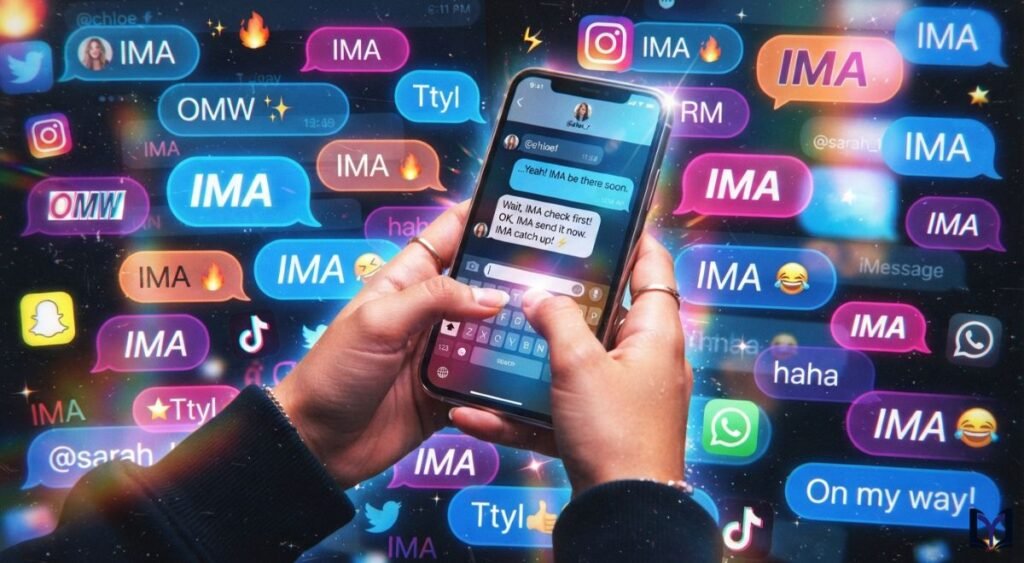
The most common use of ima in texting is to announce an action or intention. You might receive “ima sleep,” “ima call you,” or “ima be there soon.” In each case, the person is talking about something they plan to do. The expression is especially common in casual texting because it feels quick, direct, and conversational.
You can find the same social media slang across many platforms. People may use it in Snapchat, TikTok, Instagram, Discord, WhatsApp, and Reddit. It can appear in comments, captions, direct messages, group chats, and gaming chats. The platform does not normally change the basic meaning.
For example, someone on TikTok might write, “Ima try this tomorrow.” Someone on Instagram might say, “Ima post the pictures tonight.” A friend on WhatsApp might send, “Ima call you after work.” These are all examples of the same informal communication pattern.
What Does IMA Mean on Snapchat and TikTok?
If you are searching what does ima mean on Snapchat, the answer is usually “I’m going to.” The same applies to what does ima mean on TikTok. These platforms encourage quick and conversational writing, so shortened expressions are common.
On Snapchat, “ima head out” might mean “I’m going to leave.” On TikTok, “ima make one too” can mean “I’m going to make one too.” The surrounding words make the meaning clear.
The same rule applies when asking what does ima mean on Instagram. A sentence such as “ima text you later” clearly expresses a planned action. It is simply an informal form of I’m going to.
IMA Meaning in Different Contexts
The basic IMA meaning stays fairly consistent, but the tone changes with the situation. Someone may use “ima” when making plans, describing an upcoming action, announcing a decision, or saying what they intend to do. “Ima head home” sounds like a simple decision. “Ima fix it” can sound more confident. “Ima call you later” sounds like a casual promise.
Context can also help you identify less common meanings of uppercase IMA. In some informal references, IMA can mean “I must admit.” For example, “IMA, that was a great movie” could be read as “I must admit, that was a great movie.” This meaning is much less common than “I’m going to” in ordinary texting.
| Context | Example | Likely meaning |
| Making plans | Ima meet you at six. | I’m going to |
| Leaving | Ima head home. | I’m going to |
| Future action | Ima finish it tonight. | I’m going to |
| Personal intention | Ima try again. | I’m going to |
| Casual promise | Ima call later. | I’m going to |
| Admission | IMA, that was impressive. | I must admit |
This is why future intention and personal intention are strong clues. When “ima” comes before an action verb, the meaning is usually obvious. Words such as “go,” “call,” “eat,” “check,” “try,” “leave,” and “tell” strongly suggest the “I’m going to” meaning.
The expression can also communicate different emotional shades. A sentence may have a casual tone, friendly tone, or conversational tone. The word itself is not automatically rude. The complete sentence and the relationship between the speakers determine how it feels.
IMA Texting Examples in Real Conversations
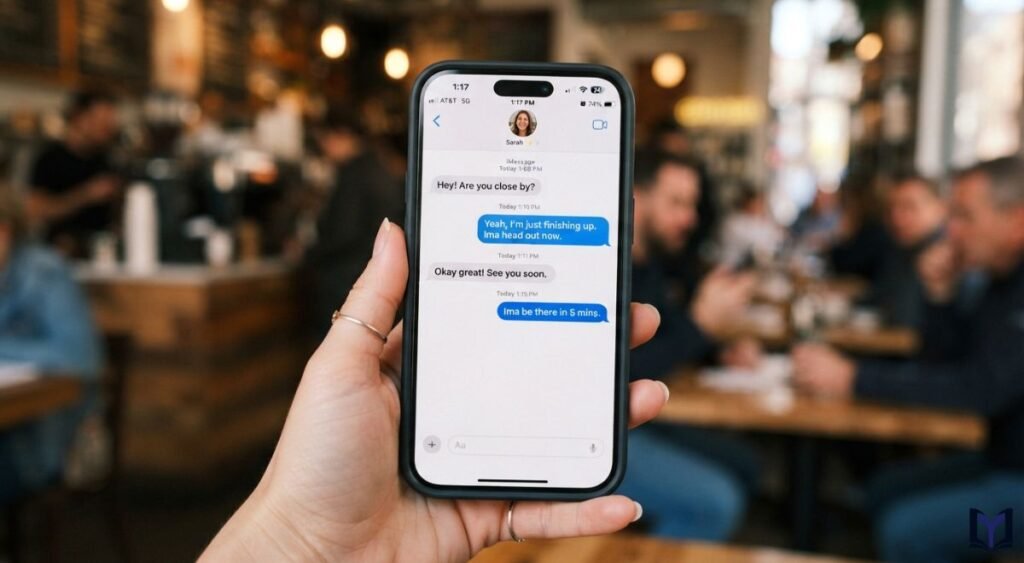
Real conversations make the ima text meaning easier to understand. Imagine a friend asking, “Are you coming to the party?” A natural reply could be, “Yeah, ima be there around eight.” The meaning is simple: “Yes, I’m going to be there around eight.”
Another example could involve making plans. One person might write, “What are you doing tonight?” The other could answer, “Ima stay home and watch a movie.” Here, “ima” introduces the person’s plan. It makes the response sound relaxed and natural.
| Conversation | Meaning |
| “You coming over?” “Yeah, ima leave soon.” | I’m going to leave soon. |
| “Did you call Sarah?” “Not yet. Ima call her tonight.” | I’m going to call her tonight. |
| “Are you eating?” “Yeah, ima grab something.” | I’m going to get something to eat. |
| “You playing tonight?” “Yeah, ima join later.” | I’m going to join later. |
| “When will you finish?” “Ima finish it after dinner.” | I’m going to finish it after dinner. |
The expression can also appear in online conversations where people want their writing to sound like real speech. A person might say, “Ima check the comments,” or “Ima watch that later.” This gives the message a more relaxed feeling than formal wording.
How to Use IMA in a Sentence
If you are wondering how to use ima in a sentence, place it before the action you plan to take. The basic pattern is “Ima + action.” For example, “Ima call,” “Ima go,” “Ima study,” or “Ima check.”
The following structure can help you understand it:
| Pattern | Example |
| Ima + verb | Ima call. |
| Ima + verb + object | Ima call my friend. |
| Ima + verb + time | Ima call tonight. |
| Ima + verb + place | Ima go home. |
| Ima + verb + reason | Ima leave because I’m tired. |
These examples show why the expression is closely connected with future action. It tells someone what you plan to do next.
IMA vs I’M Gonna vs Imma: What’s the Difference?
The main difference between “ima,” “I’ma,” “imma,” and “I’m gonna” is usually spelling and style. Their basic meaning is often the same: I’m going to. They are all associated with casual speech, but they can feel slightly different depending on the speaker and context.
When comparing ima vs imma, there is usually no major difference in meaning. The same applies to ima vs I’ma and ima vs I’mma. These forms represent different ways of writing a similar spoken expression. The exact spelling can depend on personal preference, community, pronunciation, or platform.
| Form | Common meaning | Style |
| ima | I’m going to | Very casual |
| imma | I’m going to | Casual/slang |
| I’ma | I’m going to | Casual, speech-like |
| I’mma | I’m going to | Very informal |
| I’m gonna | I’m going to | Casual and widely familiar |
| I’ll | I will | Neutral |
| I plan to | I plan to | Neutral |
| I intend to | I intend to | Formal/neutral |
The I’m gonna meaning is especially close to “ima.” Both expressions describe a planned action. However, “I’m gonna” is easier to use in many forms of casual writing because it remains closer to the familiar phrase “I’m going to.”
The imma meaning is also usually “I’m going to.” The same applies when someone asks what does imma mean or what does I’ma mean. These are informal alternatives rather than completely different expressions.
Common Misunderstandings About IMA
One common misunderstanding is that “ima” is simply a typing mistake. In most casual messages, that is not the case. It is a recognized informal spelling used to represent a spoken expression. Another misunderstanding is that “ima” means only “I am.” In texting, it normally carries the idea of “I’m going to” or “I am going to.”
People also sometimes assume that “ima” was invented by Gen Z. That is too simple. The form has roots in older patterns of informal spoken English. Social media helped spread it, but modern slang often grows from speech that existed before the internet.
Another common question is is ima rude or is ima offensive. The word itself is generally neither rude nor offensive. It is informal. A sentence can still sound rude if the words around it are rude, but “ima” alone does not create an offensive message.
| Misunderstanding | Better understanding |
| IMA is always an acronym. | In texting, it usually represents “I’m going to.” |
| IMA means “I am.” | It normally means “I’m going to.” |
| Gen Z invented IMA. | The form has roots in older informal speech. |
| IMA is rude. | It is mainly informal, not automatically rude. |
| Ima and Imma have totally different meanings. | They usually express the same basic idea. |
| IMA always has one meaning. | Context can create different meanings. |
It is also important to understand different spellings. Someone may prefer “ima,” while another person writes “imma” or “I’ma.” These choices often reflect writing style rather than a major change in meaning.
When Should You Use or Avoid IMA?
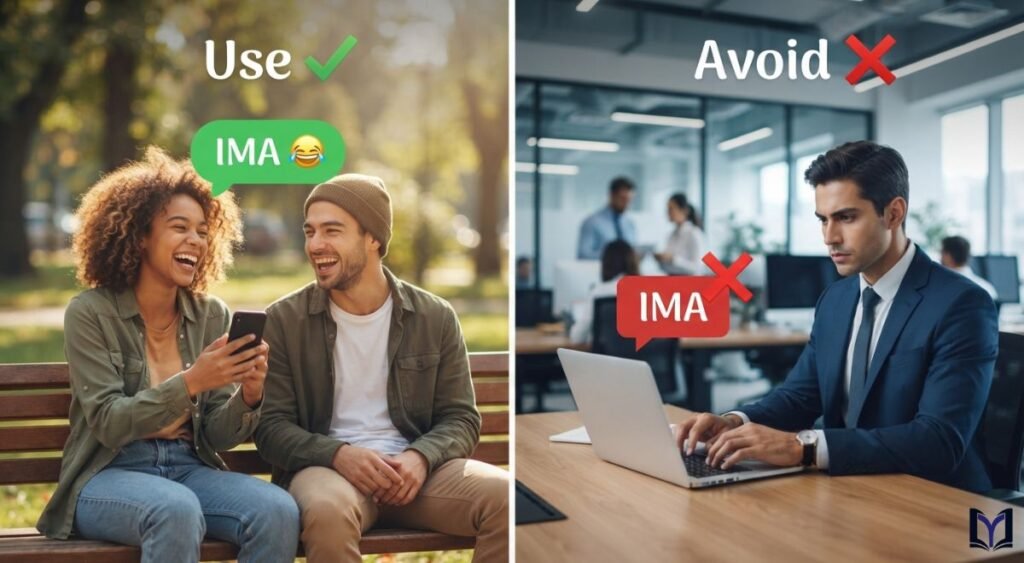
Use “ima” when the conversation is relaxed and informal. It fits messages between friends, casual family chats, social media posts, gaming conversations, and other situations where conversational language feels natural. It can make a message sound less stiff and more like everyday speech.
Related Articles: OFC Meaning? OFC Meaning, Snapchat, Slang & Examples
You should usually avoid it in formal communication. This includes professional communication, academic writing, business emails, school assignments, job applications, and formal documents. These situations usually require standard English instead of informal English or texting slang.
| Situation | Better choice |
| Texting a close friend | “Ima call you later.” |
| Group chat | “Ima join soon.” |
| Social media comment | “Ima try this.” |
| Professional email | “I’m going to call you later.” |
| School assignment | “I am going to discuss…” |
| Job application | “I plan to…” |
| Formal report | “I intend to…” |
This does not mean that “ima” is bad English in every situation. It simply belongs to a different register. Language changes according to the audience. You would speak differently with a close friend than you would in a job interview.
For formal situations, there are several polite alternatives to ima. “I’m going to” works in most settings. “I’ll” is shorter and neutral. “I plan to” sounds clear and professional. “I intend to” sounds more formal and deliberate.
Similar Slang Terms and Alternatives to IMA
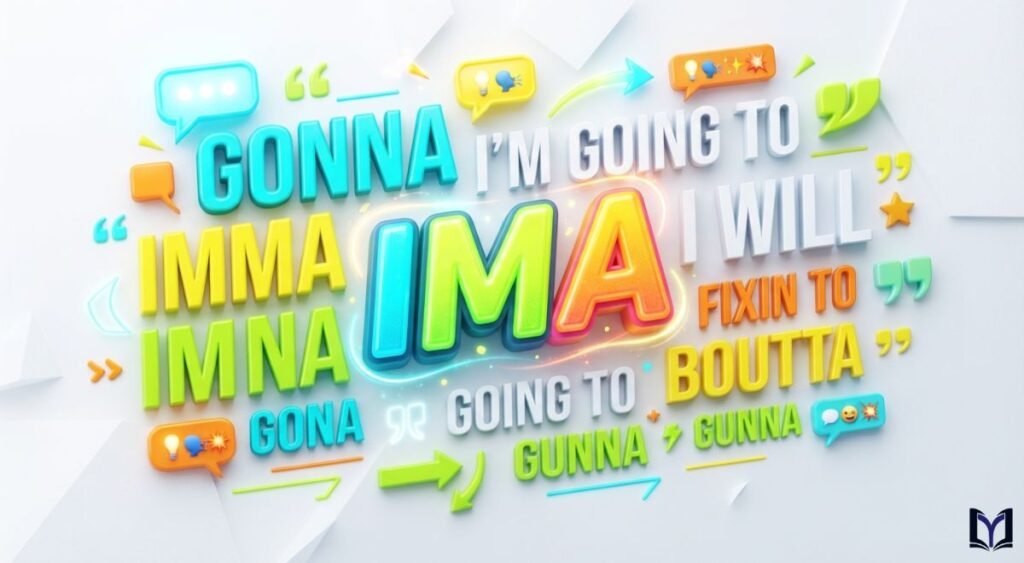
Several expressions can replace “ima” while keeping a similar meaning. “Imma,” “I’ma,” and “I’mma” are the closest slang forms. “I’m gonna” is also very close because it directly expresses the idea of “I’m going to.”
If you want more neutral or formal slang alternatives, you can use “I’ll,” “I plan to,” “I’m going to,” or “I intend to.” The best option depends on the audience and the tone you want.
| Expression | Meaning | Tone | Example |
| Ima | I’m going to | Very casual | Ima call you. |
| Imma | I’m going to | Casual/slang | Imma call you. |
| I’ma | I’m going to | Casual | I’ma call you. |
| I’m gonna | I’m going to | Casual | I’m gonna call you. |
| I’ll | I will | Neutral | I’ll call you. |
| I plan to | Planned action | Neutral | I plan to call you. |
| I intend to | Planned intention | Formal | I intend to call you. |
| I’m going to | Future action | Neutral/formal | I’m going to call you. |
The I’m going to meaning is the clearest standard-English equivalent. It works in almost every situation. “I’ll” can also work well, although it can sometimes express a decision made at the moment rather than an already planned action.
For example, “Ima visit New York next month” focuses on a plan. “I’ll help you” can sound more like an offer or decision. Small differences like these show why choosing the right expression matters.
Conclusion
The most common IMA meaning in text is “I’m going to” or “I am going to.” It is an informal way to express a plan, intention, or upcoming action. You may see it as “ima,” “imma,” “I’ma,” or “I’mma.” These spellings usually have the same basic meaning.
The expression is common in text messages, social media, and casual online communication. Its roots also reach into informal spoken language and American English. It was not simply created by the internet. Digital platforms helped make the spelling more visible and familiar.
The biggest lesson is simple: context matters. If “ima” appears before an action such as “go,” “call,” “eat,” “check,” or “leave,” it almost certainly means “I’m going to.” Use it naturally with people who understand casual language. For work, school, and other formal situations, choose clearer alternatives such as “I’m going to,” “I’ll,” “I plan to,” or “I intend to.”
Understanding what does ima mean in text is therefore easy once you recognize the pattern. When you see “ima,” think of a relaxed way of saying “I’m going to.”
FAQ’s About Ima Meaning
What does ima mean?
“Ima” usually means “I’m going to” or “I am going to” in casual texting and slang.
What does IMA mean in text?
In text messages, IMA generally means “I’m going to,” often used to describe a future action or intention.
Why do people say “IMA”?
People say “IMA” because it is a quick, casual way to express “I’m going to” and reflects natural spoken language.
What is an IMA?
An IMA can refer to different things depending on the context. In casual texting, it usually means “I’m going to,” while uppercase IMA can represent other terms.
What does IMA stand for in medical terms?
In medicine, IMA can stand for inferior mesenteric artery, a blood vessel supplying parts of the large intestine.
Related Articles: OFC Meaning? OFC Meaning, Snapchat, Slang & Examples

Welcome to Meanings There! I’m the creator and author behind this website, sharing useful meanings, explanations, and informative content to make words and phrases easier to understand.
1 thought on “IMA Meaning In Text? IMA Meaning, Slang, Examples & Usage”