

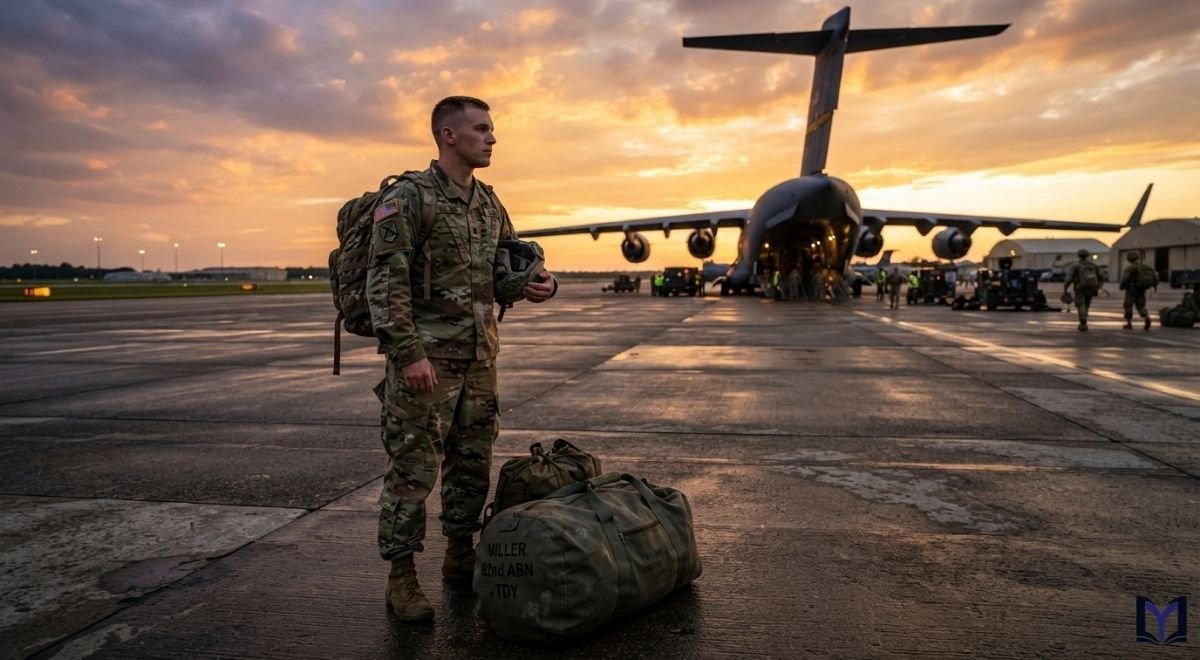
If you’ve ever heard someone in the military say, “I’m going TDY next week,” you may have wondered what those letters mean. The TDY military meaning is simple: TDY stands for Temporary Duty. It describes a temporary assignment that sends a service member away from their normal duty station for official work, training, or a specific mission. Unlike a permanent move, the person usually returns to their regular post after finishing the assignment.
You may see TDY mentioned in TDY orders, travel paperwork, or everyday military conversations. Whether you’re a military family member, new recruit, or simply curious, understanding temporary duty assignment, TDY travel, and TDY per diem makes military terminology much easier to follow.
What Does TDY Mean in the Military?
The short answer to what does TDY mean in the military is Temporary Duty. A TDY sends a service member away from their normal military duty station for a limited period. The assignment might involve a training course, leadership course, conference, inspection, special project, or another form of official duty. The key point is that the person does not permanently relocate. Their home duty station, regular duty station, and regular unit remain the same while they complete the temporary assignment. Think of it like a work trip for a civilian employee. The destination changes for a while. The employee’s main job location does not.
So, what does TDY stand for in the military? It stands for Temporary Duty. You might hear a commander say that someone needs to “go TDY,” while another service member might say they are “on TDY.” Both expressions describe temporary official work away from the person’s usual base. The term applies to many kinds of travel. A soldier could travel to another base for specialized instruction. An Air Force member could travel to another state for equipment work. A Navy or Marine Corps member may use the related term TAD instead. The exact rules can vary by situation, orders, branch, and travel status. The central TDY military definition, however, remains temporary official duty away from the normal station.
What Does TDY Stand For?
TDY stands for Temporary Duty in common U.S. military usage. The phrase describes the duty itself rather than a specific aircraft, unit, weapon, or location. When you see TDY meaning military terminology in an order, the surrounding information usually explains where the service member must travel, why the trip is necessary, and how long the assignment should last.
A quick reference makes the TDY military meaning easier to remember:
| Term | Meaning | Basic Idea |
| TDY | Temporary Duty | Temporary official duty away from the normal station |
| PCS | Permanent Change of Station | A permanent relocation to a new duty station |
| TAD | Temporary Additional Duty | Similar temporary travel terminology used mainly by the Navy and Marine Corps |
| deployment | Deployment | Assignment away from the normal station for an operational purpose |
| leave | Leave | Approved time away from normal military duties |
What Is a TDY Assignment?
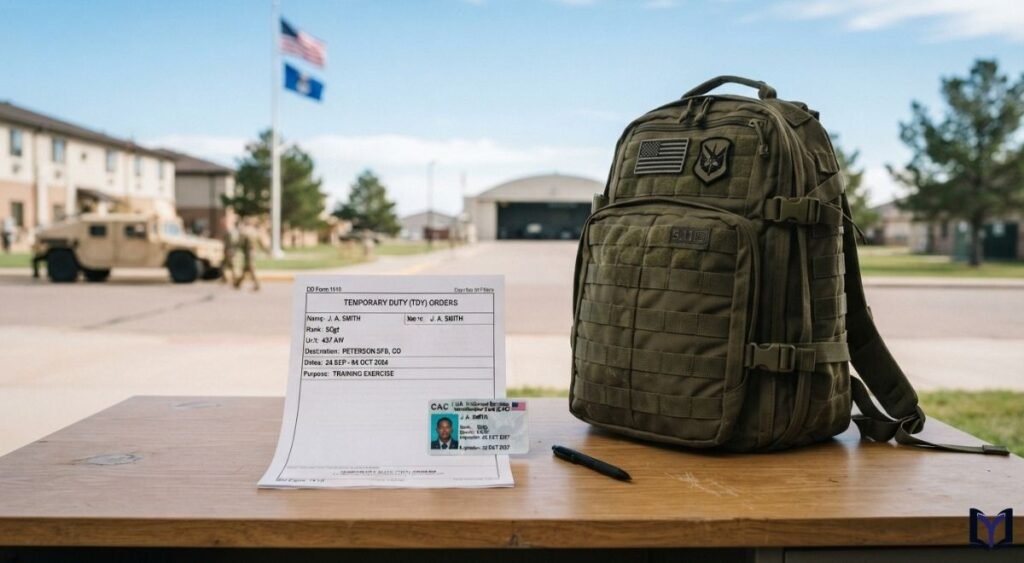
A TDY assignment is a temporary duty assignment that takes a service member away from the place where they normally work. The military may send someone to a temporary location because that person needs training, special skills, support, or access to equipment that isn’t available at the home base. The assignment can happen within the United States or involve overseas travel. For example, an Army technician might leave Texas for another location to repair specialized equipment. An Air Force officer might travel to a different installation for a conference. A member of the Space Force might travel for a specialized program. Each situation can qualify as temporary military duty when the travel follows the applicable authorization and rules.
Related Articles: What Does YH Mean in a Text? Meaning, Slang, Examples & How to Use It
The assignment normally begins with official military orders or an authorized travel process. Those TDY orders establish important details such as the destination, dates, purpose, and authorized travel arrangements. The service member then prepares for the trip, travels to the TDY location, performs the assigned work, and completes the return travel when the assignment ends. Depending on the circumstances, the person may stay in government quarters, approved commercial lodging, or another authorized accommodation. The person generally keeps their original military assignment and returns to their regular unit afterward. That temporary nature separates a TDY from a permanent move.
What Happens During TDY?
What happens during TDY depends on the mission. A service member may spend several days in a training course, attend a military school for several weeks, support a joint exercise, or complete a special project. Someone else may spend the assignment working on equipment repair or attending a professional event.
The common thread is simple: the military temporarily sends the person somewhere else to perform authorized temporary work or official duty. Once the assignment finishes, the member normally returns to the home duty station or follows the next set of official orders.
TDY vs. PCS, TAD, and Other Military Terms
Understanding TDY vs PCS becomes much easier when you focus on one question: Is the person temporarily traveling or permanently relocating? TDY normally means temporary travel for official duty. PCS, or Permanent Change of Station, involves moving to a new permanent duty location. A PCS can affect a household, housing arrangements, dependents, and the member’s long-term assignment. A TDY usually leaves the person’s permanent duty location unchanged. That difference matters because military travel rules and allowances can change depending on the type of assignment. TAD, or Temporary Additional Duty, carries a similar idea to TDY and appears especially in Navy and Marine Corps terminology. The terminology may differ even when the practical concept looks similar.
TDY vs deployment creates another common point of confusion. A TDY doesn’t automatically mean combat, an overseas operation, or a long absence. A person can travel to another state for a school and return home after the course. A military deployment, by contrast, generally involves sending personnel away from their normal location for an operational mission. The exact legal and administrative treatment depends on the orders and circumstances. Is TDY the same as deployment? No, not automatically. Is TDY considered deployment? The answer depends on the specific assignment and status. You should always look at the official orders instead of relying on casual military slang.
TDY vs. PCS, TAD, and Deployment
| Military Term | Full Meaning | Main Difference |
| TDY | Temporary Duty | Temporary official duty away from the normal station |
| PCS | Permanent Change of Station | Permanent relocation to another duty station |
| TAD | Temporary Additional Duty | Temporary duty terminology commonly associated with the Navy and Marine Corps |
| deployment | Deployment | Operational assignment away from the normal station |
| leave | Leave | Approved personal time away from duty |
This comparison also answers several common searches, including TDY vs PCS, TDY vs TAD, and TDY vs deployment. A temporary assignment should not automatically be called a deployment. Likewise, a PCS isn’t simply a longer TDY. Each status has its own administrative purpose and rules.
How TDY Works for Military Members
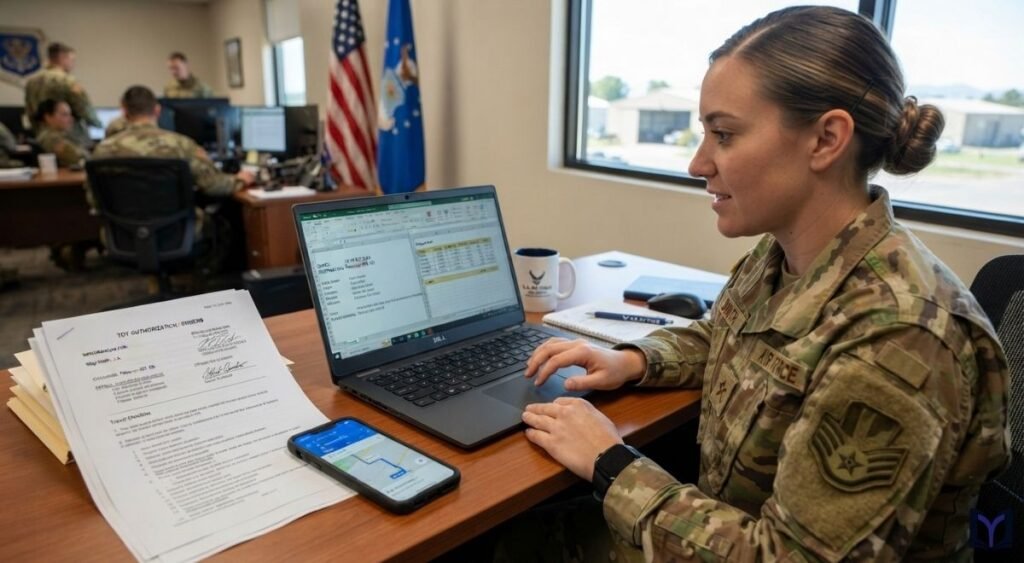
The basic process starts when a commander, approving official, or authorized office determines that a service member needs to perform duty somewhere other than the normal duty station. The member receives official military orders or an authorized travel arrangement. Those documents tell the traveler where to go and what the military authorizes. Modern TDY travel often uses the Defense Travel System, commonly called DTS. DFAS explains that DTS can support travel authorizations, reservations, approvals, vouchers, and payment for TDY travel.
After authorization, the member handles the required military paperwork, travel arrangements, and preparation. The actual trip can involve flights, rail, rental vehicles, government transportation, or authorized mileage depending on the orders and applicable rules. Once the member reaches the TDY location, they complete the assigned military training, project, meeting, inspection, or mission. Afterward, they complete the required return travel and settle the travel claim. DFAS advises travelers to read their travel orders before leaving because unauthorized arrangements can create expenses that aren’t reimbursable.
How Does TDY Work?
A simple TDY journey looks like this:
TDY Orders → Travel Preparation → TDY Location → Temporary Duty → Travel Claim → Return to Home Duty Station
The process may look straightforward, yet the details matter. Your orders determine what travel and expenses the military authorizes. That’s why you shouldn’t assume that every hotel, rental vehicle, meal, or other expense will receive automatic reimbursement.
TDY Pay, Travel, Per Diem, and Benefits
One of the biggest questions surrounding TDY is do you get paid for TDY? A service member normally receives their regular military pay while performing authorized duty. TDY also involves travel-related allowances that can cover eligible travel costs, lodging, meals, and incidental expenses. These aren’t simply extra salary. They exist to help cover authorized costs created by official travel. TDY pay can therefore refer to different things in everyday conversation. A person might mean normal military pay while TDY. Another person might mean TDY per diem or reimbursement for authorized military travel expenses. Those are separate concepts.
The amount a traveler receives depends on the TDY location, travel dates, type of lodging, meals provided, orders, and applicable regulations. DFAS states that per diem rates depend on the travel location. It also explains that lodging rules can require government or approved lodging in certain circumstances. For example, an assignment may provide approved housing or government quarters rather than allowing unlimited commercial lodging. Travelers should also keep receipts, invoices, and proof of payment when required. DFAS specifically recommends saving documentation because the records may be needed when submitting a travel voucher.
What Is TDY Per Diem?
TDY per diem generally refers to allowances for eligible lodging, meals, and incidental expenses during authorized temporary travel. The rate isn’t one universal number for every military traveler. It depends heavily on the location and circumstances.
For example, DFAS explains that different meal rates can apply when meals come from government dining facilities or when meals are provided at no cost. Lodging reimbursement can also depend on whether government quarters or an applicable lodging program is available.
| TDY Cost | What It Generally Relates To |
| transportation | Authorized movement to and from the TDY location |
| flights | Commercial or government-authorized air travel |
| mileage | Authorized use of a privately owned vehicle |
| lodging | Government quarters or authorized commercial lodging |
| meals | Eligible meal allowance under the applicable rate |
| per diem | Lodging, meals, and incidental travel allowances |
| travel expenses | Authorized costs connected with official travel |
| reimbursement | Payment for eligible authorized expenses |
The TDY benefits available to a traveler aren’t identical in every case. The safest approach is to follow the travel authorization and current Joint Travel Regulations rather than relying on an old social media post or a friend’s previous TDY experience.
How Long Does TDY Last?
There isn’t one universal answer to how long does TDY last. A short-term military assignment can last only a few days. Another temporary assignment might continue for few weeks or few months. The purpose of the trip often explains the difference. A short meeting might require a quick trip. A training course or military school could require much longer travel. A major special project may also keep someone away from the regular duty station for an extended period. The important factor isn’t simply the number of days. The orders and applicable rules determine how the assignment gets treated.
Related Articles: What Does YH Mean in a Text? Meaning, Slang, Examples & How to Use It
For some specific travel situations, duration can have major administrative consequences. For example, DFAS guidance for certain Reserve TDY situations states that travel allowances can apply for 180 days or less at one location, while 181 or more consecutive days at one location can be treated as a PCS under those circumstances. That example shouldn’t be treated as a universal rule for every member or every TDY situation. Different statuses and orders can have different requirements. If you’re trying to understand a real assignment, the exact orders and current regulations matter more than a general internet definition.
Can TDY Last for Months?
Yes, a TDY can sometimes continue for an extended period. A longer assignment doesn’t automatically turn into a PCS on day one. However, certain duration thresholds and circumstances can change the applicable travel status or allowances.
That distinction is important when you search how long does TDY last. Duration matters, yet it works together with the type of orders, duty status, location, and applicable military travel rules.
Real-Life TDY Military Examples
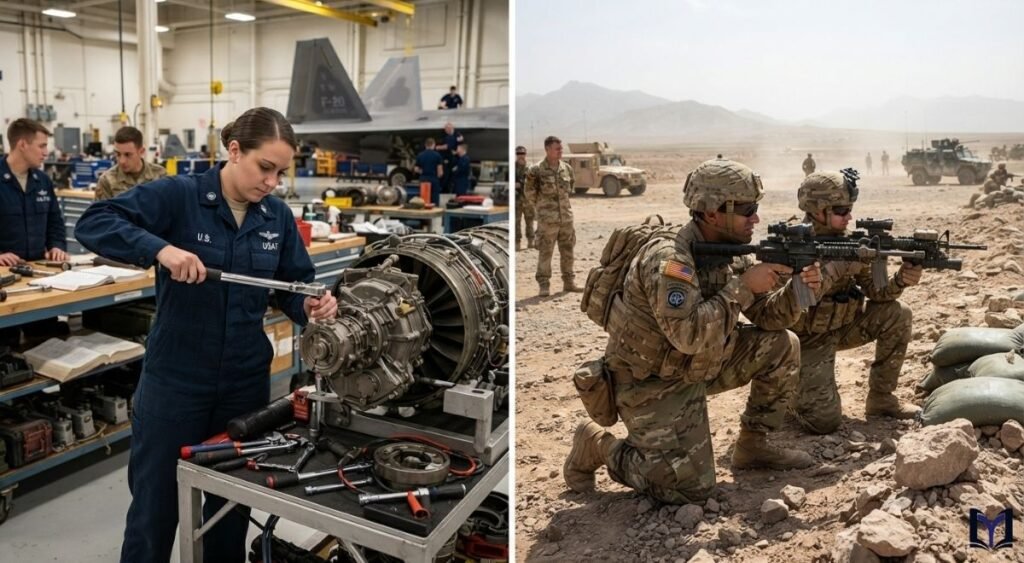
Real-life scenarios make the TDY military meaning much easier to understand. Imagine an Army sergeant stationed in Texas who receives orders for a three-week leadership course in Georgia. She keeps her normal unit and returns to Texas after finishing the course. That is a straightforward example of a TDY assignment. Now imagine an Air Force technician who travels to another base for ten days to help with equipment repair. The technician performs an official job away from the normal station, then returns to the home base. Neither person permanently changes duty stations.
Consider a third example involving an officer who attends a professional conference in another city. The trip may involve transportation, a hotel, meals, and authorized travel expenses. Another service member might travel for specialized training that isn’t available at the home installation. A different member could support joint exercises with personnel from several military branches. These examples show why what is TDY in the military has a broader answer than “a trip to another base.” TDY can support education, readiness, technical work, coordination, inspections, and many other forms of official duty.
Examples of TDY Assignments
| Scenario | Reason for Travel | What Happens |
| Army member attends a training course | Professional training | Member completes the course and returns to the regular station |
| Air Force technician performs equipment repair | Technical support | Member works temporarily at another installation |
| Space Force member attends specialized instruction | specialized training | Member travels for a limited training period |
| Navy member attends a conference | Professional development | Member participates in an authorized event |
| Multiple branches support joint exercises | Operational readiness | Personnel temporarily work at another location |
These scenarios also answer why do military members go TDY. The military needs people, skills, and expertise in different places at different times. TDY provides a practical way to meet those needs without permanently relocating every person involved.
Common TDY Rules, Mistakes, and Misconceptions
The first major mistake involves confusing TDY with a Permanent Change of Station. A PCS changes a person’s permanent duty location. A TDY generally doesn’t. Another mistake involves assuming that every TDY trip means combat or a military deployment. That’s not true. Many TDY assignments involve military schools, training, meetings, inspections, technical support, or professional development. People also sometimes believe that every expense gets reimbursed automatically. In reality, authorization matters. DFAS warns that travelers should review their orders because failing to follow authorized travel instructions can lead to expenses that aren’t reimbursed.
Another common misunderstanding concerns lodging and meals. A traveler shouldn’t assume they can always choose any hotel and receive the full cost back. Depending on the location and circumstances, government quarters or an Integrated Lodging Program facility may apply. DFAS notes that failing to follow applicable lodging requirements can reduce reimbursement. Travelers should also retain receipts and other documentation because the travel voucher may require proof of expenses. In short, the safest TDY habit is simple: read the orders, follow the authorized travel process, and keep your records.
Common TDY Mistakes
| Common Belief | More Accurate Explanation |
| TDY means a permanent move | TDY generally means temporary duty away from the normal station |
| TDY always means combat | Many TDYs involve training, schools, meetings, or technical work |
| TDY and PCS mean the same thing | PCS involves a permanent change of station |
| Every TDY expense gets paid automatically | Reimbursement depends on authorization and applicable rules |
| TDY always lasts only a few days | Assignments can vary from days to weeks or longer |
| TDY and deployment are identical | The terms describe different concepts and statuses |
These distinctions matter because military terminology carries administrative consequences. If you need an exact answer about a real assignment, don’t rely on a generic definition alone. Read the official military orders and check the current travel rules that apply to that specific situation.
Why TDY Matters in the Military

TDY matters because modern military operations often require personnel to move temporarily without changing their permanent assignments. A unit may need a technician with a rare skill. A commander may need personnel at another installation for an exercise. A recruit, officer, or experienced soldier may need a course that isn’t available at the home duty station. Sending the person TDY can solve the immediate need without creating a permanent move. This flexibility supports readiness while keeping the broader force organized.
TDY also supports professional development, technical expertise, and cooperation between military personnel. Training teams can travel. Specialists can provide support. Members from different military branches can work together during joint exercises. A person can spend several weeks away from home while still maintaining their connection to the regular unit. That’s why temporary military duty remains an important part of military life. Technology has reduced some travel through remote meetings and online training. Still, hands-on work, specialized equipment, formal schools, and many operational activities require people to be physically present.
Why Do Military Members Go TDY?
Military members go TDY because certain duties require them to work, train, learn, or support operations somewhere other than their normal station. The reason might be a special mission, training course, equipment repair, medical appointment, military hospital visit, conference, inspection, or temporary staffing need.
The common thread remains the same. The military temporarily places the person where their skills or presence are needed. Once the authorized assignment ends, the member normally completes the return travel and goes back to the home duty station.
Conclusion
The TDY meaning in military language is straightforward: TDY means Temporary Duty. It describes official temporary work away from a service member’s normal duty station. A TDY can involve military training, military schools, a conference, a special project, equipment support, professional development, or another authorized mission. The person normally keeps their regular assignment and returns to the normal station after completing the temporary duty. Understanding this distinction makes military conversations and military paperwork much easier to follow.
If you’ve been asking what does TDY mean in the military, think of it as an official military work trip with a temporary purpose. TDY orders establish the details. TDY travel, lodging, TDY per diem, and other TDY expenses depend on the authorization and applicable rules. TDY isn’t automatically a PCS or a deployment. It serves a different purpose within the military system. When you see the term in military documents, the simplest translation is temporary official duty away from the normal station.
FAQ’s About Tdy Military Meaning
What does TDY military meaning?
TDY means “Temporary Duty” in the U.S. military. It refers to a temporary assignment away from a service member’s normal duty station.
Do you get paid on TDY?
Yes. You continue receiving your regular military pay. Authorized TDY travel may also include per diem, lodging, and travel reimbursement.
What’s the difference between TDY and deployment?
TDY usually involves temporary duty such as training or meetings. Deployment generally involves an operational mission away from the normal duty station.
What does the Y stand for in TDY?
The Y doesn’t officially stand for a separate word. TDY is simply the established abbreviation for Temporary Duty.
How long is the TDY Army?
An Army TDY can last anywhere from a few days to several weeks or months. The exact duration depends on the assignment and official orders.
Related Articles: What Does YH Mean in a Text? Meaning, Slang, Examples & How to Use It

Welcome to Meanings There! I’m the creator and author behind this website, sharing useful meanings, explanations, and informative content to make words and phrases easier to understand.
1 thought on “TDY Military Meaning: What Does TDY Mean in the Military?”