

If you’ve seen “ima” in a text, TikTok comment, or Instagram DM, you may wonder what does ima mean and why people use it so often. In most casual conversations, “ima” means “I’m going to” or “I am going to.” It’s a popular ima meaning in text that expresses a future plan, intention, or upcoming action. You may also see forms like “imma” and “I’ma” in internet slang.
The expression appears frequently in text messages, social media posts, and everyday chats, especially among people who prefer relaxed language. In this guide, you’ll learn the ima slang meaning, common examples, variations, and the right situations to use this informal expression naturally.
What Does IMA Mean in Text?
So, what does ima mean when someone sends it in a message? In most casual conversations, “ima” means “I’m going to.” It can also communicate “I am about to” when the speaker expects an action to happen soon. For example, “Ima call you later” means “I’m going to call you later.” Likewise, “Ima leave now” tells you that the person plans to leave immediately. This ima meaning in text is informal rather than formal English. Cambridge Dictionary lists “imma,” along with forms such as “Ima,” “I’mma,” and “I’ma,” as slang used to say what you intend to do.
The ima meaning in texting becomes clearer when you look at the tone. “I am going to finish my work” sounds neutral and complete. “Ima finish my work” sounds much more relaxed. The second version fits casual conversation, especially between friends or people who already communicate informally. In that sense, ima definition can be summarized as a slang contraction that expresses a planned future action, future intention, or immediate intention. It isn’t normally a formal texting abbreviation such as “FYI.” Instead, it represents how a phrase sounds in spoken American English and everyday speech.
| Expression | Meaning | Tone | Common Setting |
| Ima | I’m going to | Very casual | Texting and social media |
| I’ma | I’m going to | Casual slang | Speech and informal writing |
| Imma | I’m going to | Very casual | Internet slang |
| I’m gonna | I’m going to | Informal | Everyday speech |
| I’m going to | Future intention | Neutral | General communication |
| I will | Future action | Neutral to formal | Professional communication |
What Does IMA Stand For?
When people ask “what does ima stand for,” they usually want to know whether each letter represents separate words. Technically, “ima” works more like a spoken contraction than a conventional acronym. Its meaning connects to “I’m going to” and “I am going to.” Cambridge specifically identifies “imma” as a slang short form of “I’m going to.” The form “I’ma” has also been documented in linguistic research as a reduced form expressing “I’m going to.”
The path from “I am going to” to “ima” reflects how American English changes during fast, natural speech. People often reduce several words when speaking quickly. Over time, those sounds can appear in writing through phonetic spelling. That helps explain why you may see “ima,” “imma,” and “I’ma” used for the same basic idea. Linguistic research has connected “I’ma” with varieties of American English, including African American English. The expression later became much more visible across broader internet culture, music, entertainment, and online communication.
Related Articles: What Does ATP Mean in Text? Meaning, Slang, Examples & More
How Is “IMA” Used in Texting and Social Media?
People use ima in text messages when they want to announce something they plan to do. The phrase often comes right before a verb. You might see “Ima eat,” “Ima sleep,” “Ima call you,” or “Ima check.” In each example, the writer expresses an intention. The expression can suggest something happening soon, although it doesn’t always guarantee that the action will happen immediately. This flexibility makes “ima” useful in online conversations, where people often prefer quick and expressive language.
You’ll also find ima meaning on social media across different platforms. Someone might write “Ima delete this later” in a post or “Ima try this recipe” under a video. On Instagram, ima meaning on Instagram usually follows the same slang pattern in captions and Instagram DMs. On TikTok, ima meaning on TikTok can appear in captions, jokes, reactions, and TikTok comments. On Snapchat, ima meaning on Snapchat generally carries the same “I’m going to” sense. The platform changes the setting, not the core meaning.
| Platform | Example | Meaning |
| “Ima post this tomorrow.” | I’m going to post this tomorrow. | |
| TikTok | “Ima try this trend.” | I’m going to try this trend. |
| Snapchat | “Ima call you later.” | I’m going to call you later. |
| “Ima grab some food.” | I’m going to get some food. | |
| X | “Ima say this once.” | I’m going to say this once. |
IMA Meaning in Different Contexts
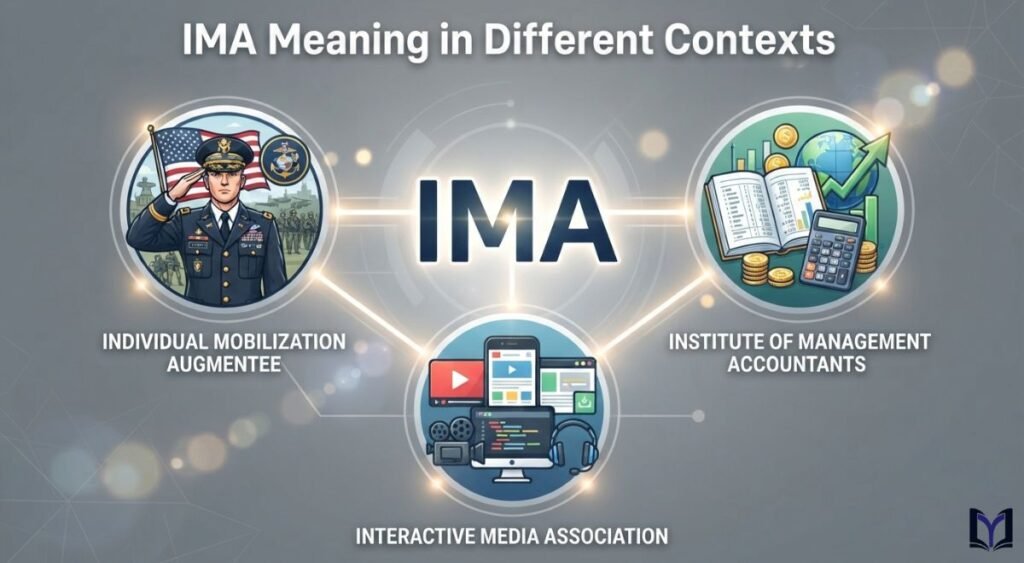
The ima slang meaning stays fairly consistent, yet the tone can change with the situation. Among friends and relationships, “ima” can sound warm, relaxed, funny, or spontaneous. “Ima come over after dinner” sounds like casual planning. “Ima miss you” can sound affectionate. “Ima be honest” often introduces a personal opinion. In each case, the surrounding words give you important clues. That’s why understanding ima meaning in chat requires more than translating the word by itself.
Context also determines whether “ima” feels appropriate. In casual planning, it works naturally because the conversation already allows relaxed language. The same expression can feel out of place in professional communication. For example, “Ima send the report tomorrow” may sound too informal in a business email. “I’ll send the report tomorrow” sounds clearer and more polished. The difference isn’t about intelligence or correctness. It’s about choosing the right register for the audience.
| Context | Example | Natural? | Reason |
| Friends | “Ima call you tonight.” | Yes | Casual conversation |
| Family | “Ima head home.” | Yes | Relaxed language |
| Social media | “Ima try this.” | Yes | Informal expression |
| Romantic chat | “Ima see you soon.” | Yes | Friendly tone |
| Workplace chat | “Ima send it later.” | Sometimes | Depends on company culture |
| Business email | “Ima send the report.” | No | Too informal |
| Academic writing | “Ima explain this.” | No | Formal communication |
| Legal document | “Ima agree.” | No | Requires precise language |
Examples of IMA in Text Conversations
Real conversations make ima text meaning much easier to understand. Imagine your friend asks whether you’re coming to a movie. You could reply, “Yeah, ima leave around seven.” Here, “ima” means “I’m going to.” The message feels natural because the conversation is informal. You’re not writing a formal announcement. You’re simply telling someone what you plan to do. That’s where informal texting slang works best.
Consider another example. Your friend sends you a picture of a new restaurant and says, “This place looks amazing.” You might answer, “Ima try it this weekend.” The phrase communicates a plan without sounding stiff. In another casual conversation, someone might say, “Ima think about it” when they haven’t made a final decision. The expression still points toward an intended action. However, the context shows that the decision remains uncertain.
| Text Conversation | Meaning of “IMA” |
| “Ima call you after work.” | I’m going to call you after work. |
| “Ima grab some food.” | I’m going to get some food. |
| “Ima head out.” | I’m going to leave. |
| “Ima try that tomorrow.” | I’m going to try that tomorrow. |
| “Ima check and let you know.” | I’m going to check and tell you. |
| “Ima be honest with you.” | I’m going to be honest with you. |
| “Ima see what happens.” | I’m going to see what happens. |
| “Ima text her later.” | I’m going to text her later. |
IMA vs. I’m Gonna: What’s the Difference?
The ima vs gonna question comes up because both expressions can communicate the same basic idea. “Ima” and “I’m gonna” usually point toward a planned or expected action. For example, “Ima call him” and “I’m gonna call him” both mean that you plan to make the call. The biggest difference involves style. “I’m gonna” is widely recognized as informal spoken English. “Ima” feels more compressed and slang-heavy. Both belong comfortably in casual communication.
The ima vs imma comparison is even simpler. In many online contexts, “ima” and “imma” communicate essentially the same meaning. The spelling varies because informal language rarely follows one fixed writing system. “I’ma” provides another written form. Linguistic sources document these reduced forms in American English, while Cambridge lists “Ima” and “I’mma” among the slang variants of “imma.”
| Expression | Basic Meaning | Formality | Example |
| I’m going to | Future intention | Neutral | “I’m going to call her.” |
| I’m gonna | Future intention | Informal | “I’m gonna call her.” |
| Ima | Future intention | Very informal | “Ima call her.” |
| Imma | Future intention | Very informal | “Imma call her.” |
| I’ma | Future intention | Informal slang | “I’ma call her.” |
| I will | Future action | Neutral | “I will call her.” |
The important point is that I’m going to slang and “ima” belong to the same broader family of future-intention expressions. The spelling changes the flavor more than the basic message. If you’re writing to a friend, “ima” may sound perfectly natural. If you’re preparing a formal report, “I’m going to” or “I will” remains the safer choice.
Common Variations of IMA You May See Online
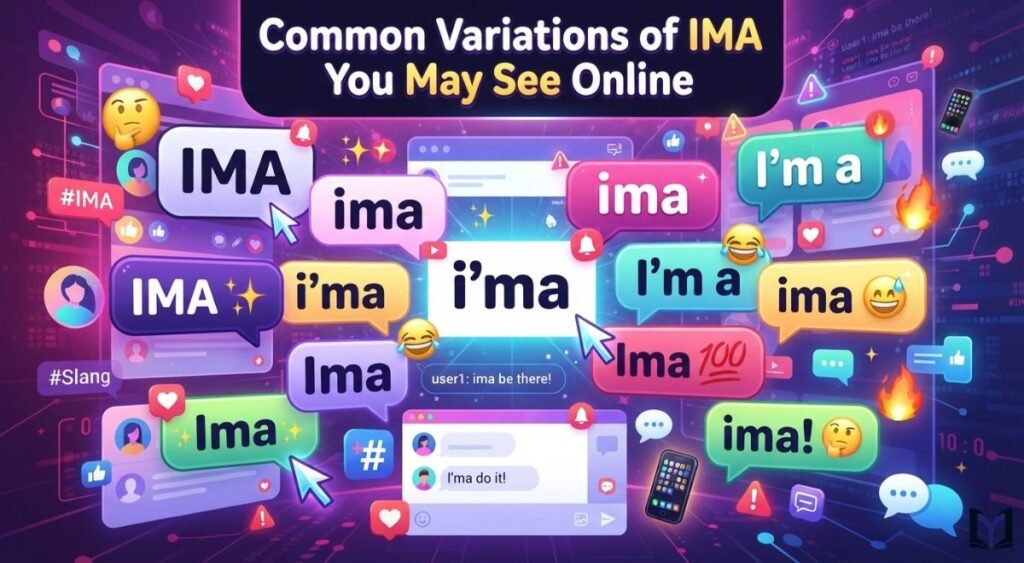
You may encounter several spellings while reading internet slang. The most common forms include “ima,” “imma,” “I’ma,” and “I’mma.” These versions developed from the way speakers reduce words in casual speech. Online writers often reproduce those sounds through phonetic spelling. As a result, informal writing can look different from textbook English while still communicating a very clear message.
Related Articles: What Does ATP Mean in Text? Meaning, Slang, Examples & More
The meaning usually remains stable across these forms. “Imma go now,” “Ima go now,” and “I’ma go now” all communicate the idea that the speaker plans to leave. You may also see longer expressions such as “Ima head out,” “Ima try,” or “Ima let you know.” These phrases show how a short slang form can fit naturally into many kinds of everyday conversations.
| Variation | Typical Meaning | Example |
| ima | I’m going to | “Ima call you.” |
| imma | I’m going to | “Imma call you.” |
| I’ma | I’m going to | “I’ma call you.” |
| I’mma | I’m going to | “I’mma call you.” |
| I’m gonna | I’m going to | “I’m gonna call you.” |
The spelling can also reflect personal preference, platform culture, or the writer’s usual style. It doesn’t automatically reveal someone’s age or personality. Likewise, you shouldn’t assume that every person who writes “ima” belongs to a particular community. The form has spread widely through digital culture, entertainment, music lyrics, memes, and online communities. Its history includes linguistic patterns associated with African American English and hip-hop culture, yet modern usage extends far beyond those settings.
Common Misunderstandings About the Meaning of IMA
One common misunderstanding is that “ima” must be a typing mistake. Usually, that isn’t the case. When someone writes “Ima call you later,” they intentionally use an informal expression. Another misunderstanding involves treating “ima” as a standard acronym where every letter represents a separate word. It’s more accurate to view it as a reduced spoken form connected to “I’m going to.” Cambridge describes “imma” as a slang short form of “I’m going to,” which supports this interpretation.
Another important point involves formality. Ima in messages can sound perfectly natural between friends. The same wording can look unprofessional in a formal document. You generally wouldn’t write “Ima submit the application tomorrow” in job applications, academic writing, or legal documents. Those situations require clearer standard language. The issue isn’t that slang has no value. Slang gives people a quick way to signal identity, familiarity, humor, and a relaxed relationship. The key is knowing your audience.
| Situation | “IMA” Recommended? | Better Alternative |
| Texting a close friend | Yes | “I’m going to” |
| Group chat | Yes | “I’m gonna” |
| Social media comment | Yes | “I’m gonna” |
| Family conversation | Yes | “I’m going to” |
| Professional Slack message | Usually avoid | “I’ll” |
| Business email | No | “I will” |
| Academic writing | No | “I am going to” |
| Job application | No | “I plan to” |
| Legal documents | No | Precise formal wording |
It’s also worth remembering that regional usage and cultural context can influence how expressions sound. Linguistic research has documented “I’ma” as a form associated with African American English and examined its relationship with other future forms such as “gonna” and “going to.” Modern online usage has broadened considerably. You may encounter it across many communities without knowing anything about the writer’s background. Treating the expression as a simple slang form avoids unnecessary assumptions.
How to Respond When Someone Says “IMA”
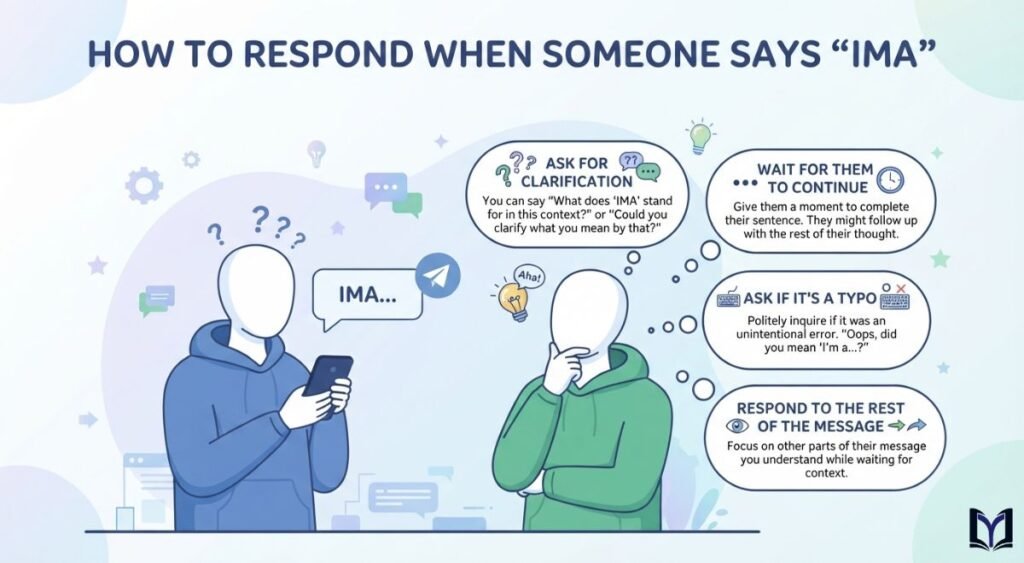
Your response depends on what comes after “ima.” If someone says, “Ima grab dinner,” a simple “Sounds good” works naturally. If they say, “Ima call you later,” you could respond with “Okay, talk soon.” When someone says, “Ima try that new place,” you might answer, “Let me know how it is.” These responses match the friendly tone that usually surrounds informal slang. You don’t need to correct the spelling unless the person specifically asks about grammar.
Sometimes “ima” appears in a funny or dramatic statement. Someone might post, “Ima disappear from social media for a month.” A playful response could be “See you tomorrow 😂.” In a more serious conversation, a calm response may fit better. If someone says, “Ima take some time to think,” you could reply, “Take your time.” The goal is to respond to the meaning rather than focusing on the slang itself.
| Message | Natural Response |
| “Ima call you later.” | “Okay, talk soon.” |
| “Ima head home.” | “Drive safe.” |
| “Ima try it tonight.” | “Let me know how it goes.” |
| “Ima order pizza.” | “Get me one too 😂.” |
| “Ima think about it.” | “Sure, take your time.” |
| “Ima see you tomorrow.” | “Sounds good!” |
| “Ima finally start working out.” | “You got this!” |
If you’re unsure about ima meaning in messages, read the complete sentence before responding. The surrounding verb usually gives away the intended meaning. “Ima sleep” points toward an upcoming action. “Ima call” suggests a future phone call. “Ima try” communicates an intention to attempt something. Once you recognize this pattern, ima meaning in chat becomes easy to understand.
Conclusion
So, what does ima mean in everyday texting? In most casual situations, “ima” means “I’m going to” or “I am going to.” It expresses a plan, intention, or upcoming action. You’ll commonly find it in text messages, social media, DMs, comments, memes, and other forms of online communication. Its informal style makes it especially natural in conversations where people already use relaxed language.
The expression also has a deeper linguistic story. “Ima,” “imma,” and “I’ma” reflect reduced forms of future “going to” expressions. Linguistic research has documented “I’ma” in American English varieties, including African American English, while modern dictionaries recognize forms such as “Ima” and “I’mma” as slang. Whether you’re reading a Snapchat message or a TikTok comment, the meaning usually stays straightforward. If someone writes “Ima do it,” they’re simply saying, “I’m going to do it.”
FAQ’s About What Does Ima Mean
What does IMA mean?
IMA usually means “I’m going to” or “I am going to” in casual texting and online slang.
What does IMA mean in text?
In text messages, IMA means “I’m going to” and usually introduces something the person plans or intends to do.
Why do people say “IMA”?
People say “IMA” because it’s a quick, relaxed way to express an intention or upcoming action in casual conversations.
What does “ima girl” mean?
“Ima girl” usually means “I’m a girl” in casual internet slang, although the exact meaning can depend on the sentence.
What does IMA stand for in medical terms?
In medical terminology, IMA can mean inferior mesenteric artery, a blood vessel that supplies parts of the large intestine.
Related Articles: What Does ATP Mean in Text? Meaning, Slang, Examples & More

Welcome to Meanings There! I’m the creator and author behind this website, sharing useful meanings, explanations, and informative content to make words and phrases easier to understand.
1 thought on “What Does IMA Mean? Text, Slang, Social Media & Examples”