

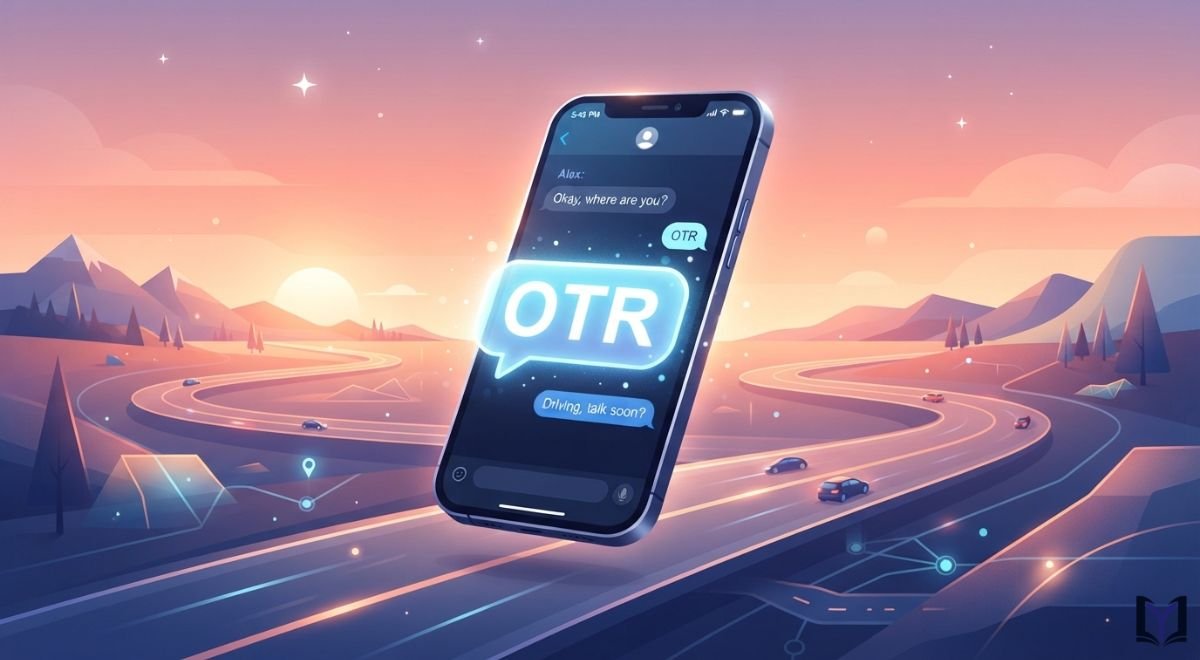
Ever received a message saying “I’m OTR rn” and wondered what those three letters meant? If you’re asking, What Does OTR Mean in Text, the answer is usually On The Road. People use this short expression when they’re traveling, driving, or moving between places. You’ll often see OTR in casual chats, social media messages, and quick updates about someone’s location or availability.
For example, “I’m OTR, I’ll call you later” means the person is currently on the road. However, OTR can have other meanings depending on the conversation. Understanding the context helps you choose the right definition and avoid confusion when reading modern texting slang or online messages.
What Does OTR Mean in Text?
The most useful answer to what does OTR mean depends on the conversation. When someone discusses traveling, driving, or moving from one place to another, OTR commonly means On The Road. In this sense, the On The Road meaning tells you that the person is traveling or currently away from a fixed location. For example, “OTR rn” can mean “I’m on the road right now.” Likewise, “Still OTR” can mean “I’m still traveling.” The abbreviation works as a compact chat abbreviation that saves typing during a busy moment. It can also describe someone who is currently traveling, in transit, or heading somewhere.
The basic structure is simple: O stands for “On,” T stands for “The,” and R stands for “Road.” Therefore, OTR On The Road is simply the shortened form of the phrase. In casual text messages, people often prefer abbreviations because they make short messages faster to send. You might see “OTR,” “otr,” or “OTR rn,” depending on the writer’s style. Capitalization usually doesn’t change the intended travel meaning. A useful rule is this: if the conversation mentions a car, trip, traffic, arrival, or location, OTR meaning in chat most likely points to On The Road.
| Term | Meaning | Typical Context |
| OTR | On The Road | Travel or movement |
| OTR rn | On The Road right now | Current travel status |
| Still OTR | Still traveling | Delayed arrival or commute |
| OTR soon | About to travel | Upcoming movement |
| OTR driver | Over-The-Road driver | Trucking and logistics |
What Does OTR Mean on Snapchat, Instagram, TikTok, and in Text Messages?
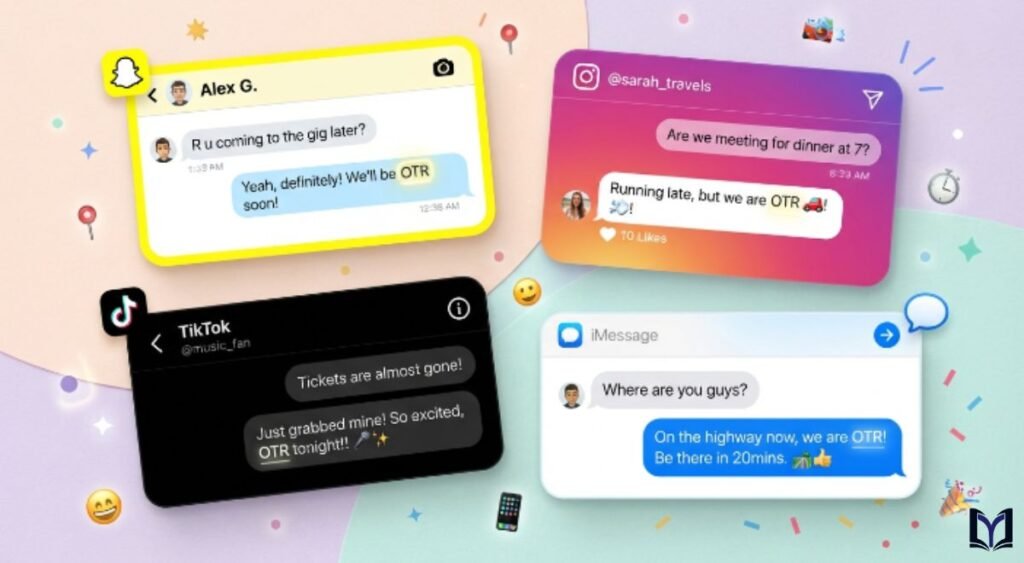
The OTR meaning on Snapchat usually follows the same casual travel sense when someone discusses where they are or where they’re going. You might see “OTR rn” in Snapchat chats after someone asks, “Where are you?” The same pattern can appear in Instagram DMs, TikTok conversations, WhatsApp, SMS, and other messaging apps. On social media, users often shorten common phrases because quick communication feels more natural. Therefore, OTR meaning in social media usually comes from the surrounding topic rather than the platform itself. A travel Story, road-trip post, or message about traffic gives you strong clues that OTR means On The Road.
The OTR meaning on TikTok and OTR meaning on Instagram can also depend on the community using it. In TikTok DMs, for example, someone might write “OTR, text you later” to explain why they can’t chat. In WhatsApp messages, “I’m OTR” can work as a simple location status or travel status update. In Discord chats and gaming chats, however, context becomes even more important because different communities use specialized internet slang. OTR meaning in gaming may not automatically refer to travel. When the surrounding conversation says nothing about movement, don’t force the travel definition. Read the full message first.
Related Articles: What Does CYB Mean? Meaning, Examples, and Usage Explained
| Platform | Possible OTR Use | Example |
| Snapchat | Travel update | “OTR rn 🚗” |
| DM status | “OTR, I’ll reply later” | |
| TikTok | Casual DM | “Can’t talk, OTR” |
| Location update | “I’m OTR now” | |
| Discord | Context-dependent chat | “OTR, back soon” |
| Gaming | Context-dependent slang | “OTR for a bit” |
| SMS | Travel status | “Still OTR” |
How Is OTR Used in Conversations?
In everyday casual conversation, OTR acts like a small status signal. It tells someone that you’re on the move, driving, or going somewhere without requiring a full explanation. Imagine your friend asks, “Can you join the call?” You might answer, “Not right now, I’m OTR.” That response communicates availability without giving a long excuse. It can also mean you’re busy traveling, heading home, or dealing with traffic. The exact shade of meaning comes from the conversation. OTR doesn’t necessarily tell the reader your destination. Instead, it highlights your current movement.
People also use OTR when they expect a delayed response. A message such as “OTR, I’ll call you later” signals that the person isn’t fully free. This makes the abbreviation useful in informal communication, especially among friends and family. You can think of OTR as a quick road-status sign in a conversation. It says, “I’m moving right now, so give me a little time.” Still, you shouldn’t assume OTR means someone is physically driving. They could be riding as a passenger, traveling by bus, or simply moving between places. The broader idea remains in transit or on the road.
OTR Meaning in Text With Real-World Examples
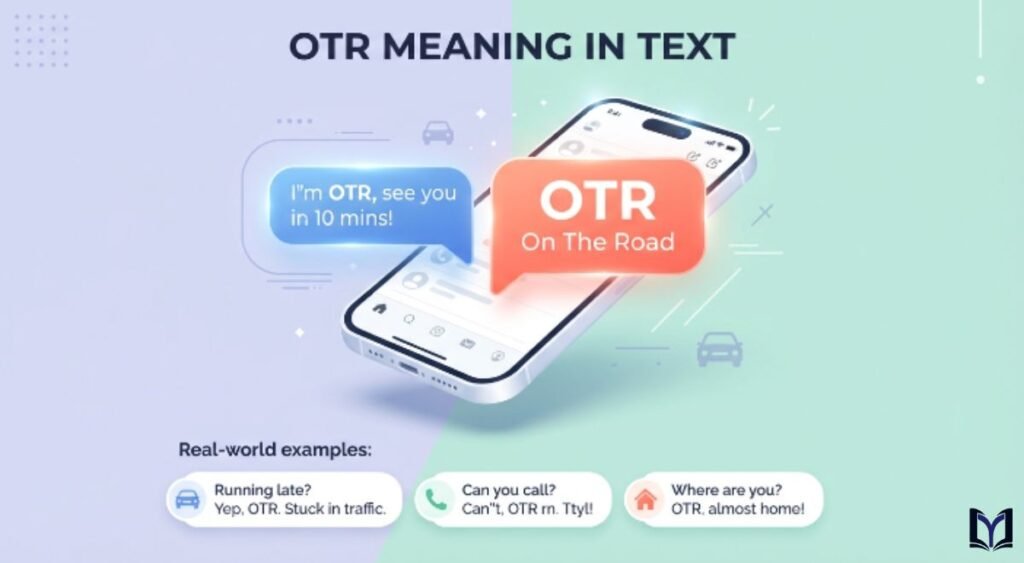
Real messages make OTR text meaning much easier to understand. Consider this exchange: “Where are you?” followed by “I’m OTR rn.” The second person is saying they’re currently traveling. In another chat, someone might say, “OTR, should be there soon.” Here, the person is on the way and expects to arrive shortly. If traffic becomes heavy, a message like “Still OTR, traffic is crazy” gives a clear travel status update. These examples show why OTR works well in fast-moving digital conversations. The abbreviation compresses a familiar phrase into three letters without changing the basic idea.
The phrase can also fit different relationships and situations. A friend might text, “OTR heading home,” while a family member could say, “I’m OTR, see you soon.” Someone meeting you for lunch might write, “OTR now, almost there.” In each case, the surrounding words reveal the intended meaning. Here’s a useful comparison of common situations:
| Conversation | OTR Example | Meaning |
| Location | “Where are you? — OTR rn.” | I’m traveling right now. |
| Home | “OTR heading home.” | I’m traveling home. |
| Meeting | “OTR, be there soon.” | I’m on the road and approaching. |
| Traffic | “Still OTR, traffic is bad.” | I’m traveling but delayed. |
| Phone call | “Can’t talk, OTR.” | I’m traveling and unavailable. |
| Trip | “We’re OTR for the weekend.” | We’re traveling for the weekend. |
| Arrival | “OTR, almost there.” | I’m traveling and nearly arrived. |
OTR Meaning in a Text Message: More Examples
The OTR meaning in a text message becomes especially clear when you place the abbreviation beside ordinary words. “I’m OTR right now” means the person is on the road. “OTR, call you later” suggests they’re traveling and not available for a conversation. “Still OTR” means the journey hasn’t finished. “OTR, be there soon” suggests the person is traveling toward a destination. These examples also show why OTR works as a shortened phrase rather than a complete sentence. It gives enough information for a casual exchange without slowing the conversation down.
When Should You Use OTR in a Text?
Use OTR when the person you’re messaging understands casual texting slang and the conversation involves movement or travel. It fits naturally when you’re heading somewhere, heading home, commuting, taking a road trip, or traveling between locations. You can also use it when you want to explain why your response might arrive later. For example, “OTR rn, I’ll message when I get there” clearly sets expectations. Among friends, relatives, and close contacts, this style feels normal because the message doesn’t need formal wording. The goal is simple communication rather than polished prose.
OTR also works well when you need a compact travel status update. Suppose someone asks whether you’ve left yet. “Yep, OTR now” answers the question immediately. Someone waiting for you might ask for an ETA, and you could reply, “OTR, arriving shortly.” Still, remember one important safety point: don’t type messages while driving. If you’re behind the wheel, wait until you reach a safe place before replying. A useful texting habit is to treat OTR as a status message you send before driving or after you’ve stopped. That keeps convenience from turning into a distraction.
| Situation | Natural OTR Example |
| Commuting | “OTR heading to work.” |
| Going home | “I’m OTR heading home.” |
| Meeting friends | “OTR, be there soon.” |
| Road trip | “We’re OTR for the weekend.” |
| Delayed reply | “OTR rn, text you later.” |
| Travel update | “Still OTR, almost there.” |
When Should You Avoid Using OTR?
Avoid OTR when clarity matters more than speed. Formal communication usually benefits from complete phrases because not every reader knows OTR texting slang. A workplace email, client message, academic assignment, official notice, or important instruction should normally say “I’m currently traveling” instead. The same applies when you’re communicating with someone who may interpret the abbreviation differently. If the reader has to stop and wonder what you mean, the shortcut has defeated its purpose. Good communication isn’t about using the shortest phrase possible. It’s about making the intended meaning obvious.
You should also avoid OTR when the situation could create a serious misunderstanding. For example, telling a customer “OTR” may not clearly explain whether you’re driving, traveling for work, or unavailable. A better message would be, “I’m currently traveling and will respond this afternoon.” In professional settings, plain English removes unnecessary ambiguity. This distinction matters because OTR acronym meanings vary across industries and conversations. A trucking professional might read OTR as “Over The Road,” while another reader may understand “On The Road.” When precision matters, write the full phrase.
Related Articles: What Does CYB Mean? Meaning, Examples, and Usage Explained
| Setting | Better Choice |
| Friends | “OTR rn.” |
| Family | “I’m OTR, see you soon.” |
| Casual DM | “OTR, text later.” |
| Workplace email | “I’m currently traveling.” |
| Client message | “I’m on the road and will reply later.” |
| Academic writing | Use the complete phrase. |
| Important instructions | Avoid unexplained abbreviations. |
What Are the Other Meanings of OTR?
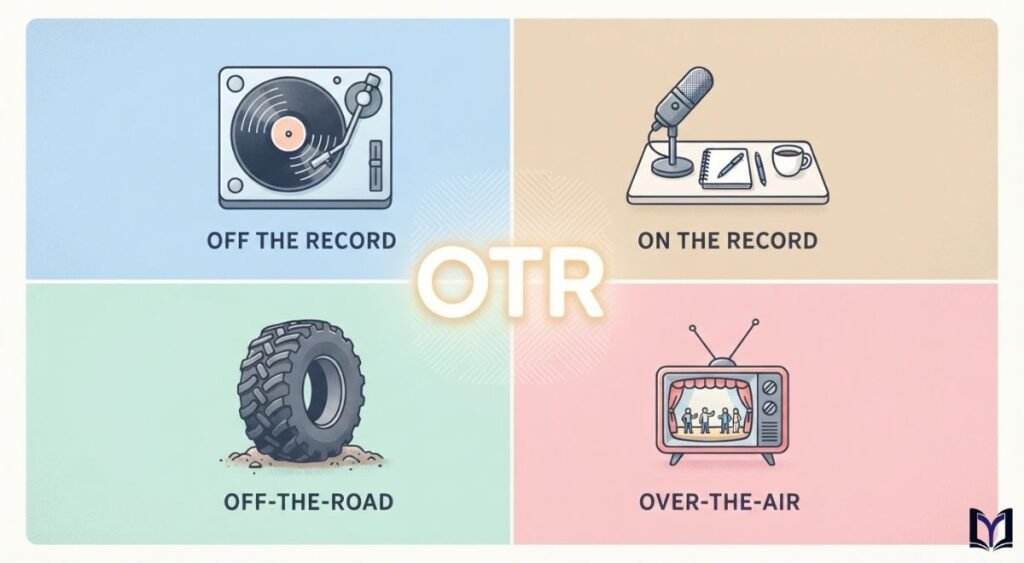
Although OTR meaning in texting often points to On The Road in travel conversations, the abbreviation has other established uses. One important alternative is Off The Record, which signals that information is private or unofficial. Another major meaning appears in trucking: Over The Road describes long-distance freight operations. The Oregon Department of Transportation defines OTR as “Over-The-Road” and uses it for long-haul trucking. Penske Logistics similarly describes over-the-road transportation as long-distance freight hauling, often across state or national borders. These meanings matter because the surrounding vocabulary can completely change the interpretation.
Context therefore acts like a compass. If the message says “OTR driver,” the trucking meaning becomes much more likely. If someone says “OTR, don’t share this,” the phrase may mean Off The Record rather than On The Road. If a friend texts “OTR rn, traffic is awful,” the travel meaning fits naturally. Some online sources also list additional niche interpretations, which means you shouldn’t treat any acronym as having only one universal definition. The safest approach is to examine the subject, nearby words, and relationship between the people communicating.
| OTR Meaning | Context | Example |
| On The Road | Casual travel | “I’m OTR rn.” |
| Off The Record | Private discussion | “OTR, keep this between us.” |
| Over The Road | Trucking | “He’s an OTR driver.” |
OTR vs OTW: What’s the Difference?
The difference between OTR vs OTW is small but useful. OTR generally focuses on being On The Road, while OTW means On The Way. Both can describe movement, yet they emphasize different ideas. “I’m OTR” tells you the person is traveling or on the road. “I’m OTW” usually tells you the person is traveling toward a particular destination. Think of OTR as describing the current travel situation. OTW places more attention on the direction or destination. That distinction becomes especially clear when someone is arranging a meeting.
For example, imagine your friend asks, “Are you coming to my house?” You could answer, “I’m OTW.” That directly means you’re on the way to the friend’s location. If you say, “I’m OTR,” you’re telling them that you’re traveling, though you haven’t necessarily stated where you’re going. The OTW meaning therefore has a stronger destination focus. Both expressions belong to the same family of casual online slang, yet they aren’t interchangeable in every situation.
| Abbreviation | Full Meaning | Main Idea | Example |
| OTR | On The Road | Traveling or on the road | “I’m OTR rn.” |
| OTW | On The Way | Traveling toward a destination | “I’m OTW to your place.” |
| ETA | Estimated Time of Arrival | Expected arrival time | “ETA 15 mins.” |
What Are Some Alternatives to OTR in Texting?
Several alternatives to OTR can communicate a similar idea, although each one has a slightly different purpose. OTW means On The Way, which works best when you’re traveling toward a specific destination. ETA means Estimated Time of Arrival, so it focuses on when you expect to arrive. OMW means “On My Way” and directly tells someone you’re heading toward them or another place. Other common OTR similar slang terms describe temporary absence rather than travel. For example, BRB means Be Right Back, while AFK means Away From Keyboard. These terms overlap in casual chats, but they don’t carry the same meaning.
The best choice depends on what you actually want to communicate. If you’re driving across town, “OTR” can describe your current travel status. If you’re heading to a friend’s house, “OTW” or “OMW” may sound more precise. If you need to tell someone when you’ll arrive, “ETA” gives them useful timing information. If you’re stepping away from a chat, BRB works better. Gamers may prefer AFK when they’re temporarily away from their device. GTG, meaning Got To Go, tells someone that you need to leave. These small differences make texting more precise without making it feel formal.
| Term | Meaning | Best Use |
| OTR | On The Road | Current travel status |
| OTW | On The Way | Traveling toward a destination |
| OMW | On My Way | Heading toward someone or somewhere |
| ETA | Estimated Time of Arrival | Sharing arrival time |
| BRB | Be Right Back | Temporarily leaving a chat |
| AFK | Away From Keyboard | Temporarily away online |
| GTG | Got To Go | Ending or leaving a conversation |
Final Thoughts
So, what does OTR mean in text? In a travel-related conversation, OTR usually means On The Road. It tells you that someone is traveling, driving, in transit, or otherwise on the move. You might see it in text messages, Snapchat chats, Instagram DMs, TikTok conversations, WhatsApp messages, or other casual online spaces. The abbreviation is useful because it delivers a quick location status without requiring a full sentence. “OTR rn” can simply mean “I’m on the road right now.” That’s the core OTR slang meaning most readers need when the conversation clearly involves travel.
However, don’t overlook context. OTR can also mean Off The Record or Over The Road, especially in private discussions and trucking contexts. When someone mentions traffic, a car, a trip, or arrival, On The Road makes sense. When they mention confidentiality, “Off The Record” may fit better. When they mention trucking or long-distance freight, “Over The Road” becomes more likely. Once you learn to read those clues, OTR stops looking like a random three-letter code. It becomes a quick, practical part of modern digital communication.
FAQ’s About What Does Otr Mean In Text
What does OTR mean in text?
OTR usually means “On The Road.” It describes someone who is traveling, driving, or currently away from a fixed location.
What does OTR mean in messages?
In messages, OTR generally means “On The Road.” For example, “I’m OTR rn” means “I’m on the road right now.”
What is OTR slang for?
OTR is commonly slang for “On The Road” in casual texting. Its exact meaning can change depending on context.
What is OTR short for?
OTR is short for “On The Road” in most travel-related conversations. It can have other meanings in different contexts.
What does OTR mean on Snapchat?
On Snapchat, OTR usually means “On The Road.” Someone may use it to say they’re traveling or unavailable while on the move.
Related Articles: What Does CYB Mean? Meaning, Examples, and Usage Explained

Welcome to Meanings There! I’m the creator and author behind this website, sharing useful meanings, explanations, and informative content to make words and phrases easier to understand.